Picking
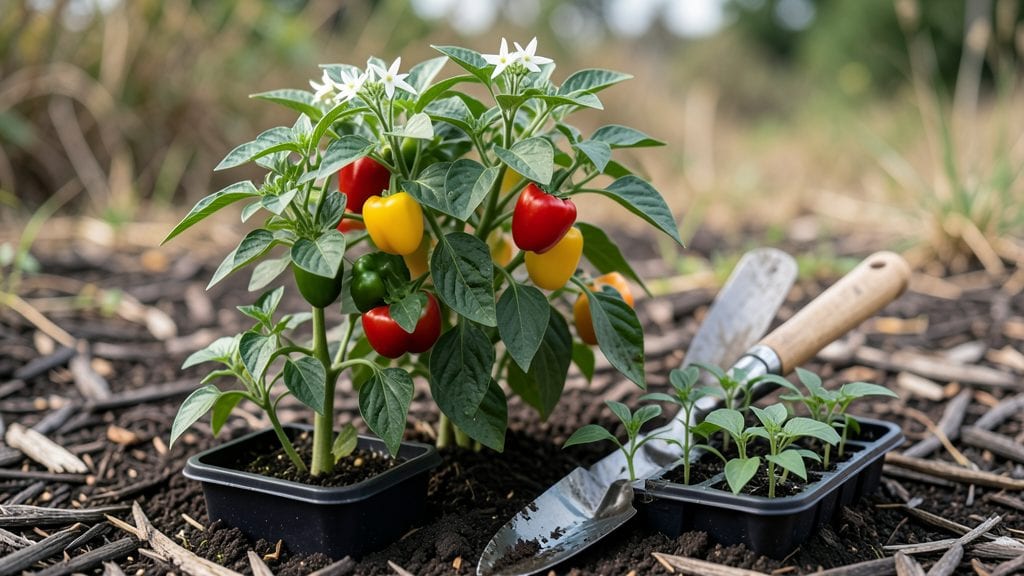
Planting with peppers is all about timing, warmth, and giving those seedlings the space they crave. 🌱 I learned the hard way that cramming pepper plants too close leads to crowded, disease-prone bushes—my first year, half my jalapenos rotted from poor airflow.
The secret lies in rich, well-draining soil, proper spacing, and waiting until nighttime temperatures stay above 55°F.
Start indoors 8-10 weeks before your last frost or sow directly after all danger of frost has passed. Peppers need full sun (6-8 hours daily) and soil that stays between 70-85°F—too cool, and they sulk.
For containers, use at least 1-gallon pots per plant, while in-ground spacing should be 18-24 inches apart. Mulch heavily to retain heat and moisture, which peppers love almost as much as they love sun.
What you’ll end up with is a thriving patch of heat-loving peppers—whether it’s sweet bell peppers, fiery habaneros, or everything in between. The plants grow bushy and productive, with glossy leaves and fruit that ripens evenly.
By midsummer, you’ll be harvesting more than you can give away, and the neighbors will start asking for cuttings.
This method works for both beginners and seasoned gardeners, whether you’re planting in raised beds, containers, or straight into warm soil. The key is patience—peppers take their time but reward you with a harvest that lasts from late summer through fall. Let’s get those seeds in the ground!
📚 In This Guide
- What you need
- Instructions
- Tips and common mistakes
- Wrapping up and next steps
What you need
- ● Peppers seeds or seedlings: Choose heat-loving varieties like Cayenne, Jalapeño, Habanero, or Ghost Pepper. Start with 3–5 plants (or 10+ seeds if growing from scratch).
- ● Well-draining potting mix: 1–2 cubic feet per pepper plant (or 10–12 gallons for container gardening). Use a mix with 50–70% compost for nutrient-rich soil.
- ● Containers or garden bed: Containers: 5-gallon pots or larger (minimum 12–18 inches deep) with drainage holes. 1 pot per pepper plant.
- ● Garden bed: Full sun (6–8+ hours daily) with loose, fertile soil. Space plants 18–24 inches apart in rows 2–3 feet apart.
- ● Fertilizer: Balanced organic fertilizer (e.g., 10-10-10 or 5-5-5) or compost tea. Apply every 4–6 weeks once plants are established.
- ● Watering can or hose with a gentle nozzle: Peppers hate soggy roots—aim for 1–1.5 inches of water per week (adjust for heat/drought).
- ● Mulch: 2–3 inches of straw or shredded leaves to retain moisture and regulate soil temperature.
- ○ Support (optional but helpful): Cages, stakes, or trellises for bushy varieties like Bell Peppers or Poblano to prevent sprawling.
- ● Soil pH test kit: Peppers prefer slightly acidic to neutral soil (pH 6.0–7.0). Adjust with lime or sulfur if needed.
- ● Row covers or shade cloth: Protect seedlings from frost or intense midday sun (30–50% shade cloth works well).
- ● Plant food boosters: Epsom salt (magnesium sulfate) for greener leaves or fish emulsion for extra protein.
- ● Pest deterrents: Neem oil, diatomaceous earth, or row covers to fend off aphids, spider mites, or hornworms.
- ● Grow lights (for indoor starters): LED or fluorescent lights on a 14–16 hour/day cycle for seedlings before transplanting.
Step-by-Step guide to planting heat-loving peppers
Here's the foolproof method I use to grow bold, productive pepper plants that thrive in hot conditions.
🌱 Step 1: Choose the Right Varieties and Start Early
Peppers need warmth to germinate and grow, so I always start seeds indoors 8-10 weeks before your last frost date. Select heat-loving varieties like 'Carolina Reaper', 'Habanero', or 'Jalapeño'—these handle the intense sun better than milder types. Fill your seed-starting trays with the seed-starting mix and plant seeds ¼ inch deep, spacing them ½ inch apart.
Cover the trays with plastic wrap to retain moisture and place them in a warm spot—75-85°F is ideal. You'll see sprouts in 7-14 days, depending on the variety. Once they emerge, remove the plastic and move them to a sunny window or under grow lights for 14-16 hours of light daily.
🪴 Step 2: Harden Off and Transplant After Warmth Arrives
Two weeks before your last frost, start hardening off your seedlings by placing them outside in a sheltered spot for 1-2 hours the first day. Gradually increase their outdoor time over 7-10 days, watching for signs of stress like wilting or yellowing leaves. Once nighttime temperatures stay above 55°F, they're ready for the garden.
Choose a sunny spot with 6-8 hours of direct sunlight and well-draining soil. If your garden soil is heavy, mix in 2-3 inches of compost to improve drainage. Dig holes 12-18 inches apart—peppers need space to grow strong and avoid disease. Plant deeply, burying ⅔ of the stem to encourage root growth.
☀️ Step 3: Mulch and Water Deeply for Heat Tolerance
Spread a 2-3 inch layer of mulch around each plant, leaving a gap near the stem to prevent rot. Mulch keeps roots cool in hot weather and retains moisture, which is critical for peppers. Water deeply 1-2 times per week, aiming for 1-1.5 inches of water per week, and always water at the base to avoid wetting leaves.
Peppers are sensitive to inconsistent moisture, so I check soil moisture by sticking my finger 1 inch deep—if it feels dry, it's time to water. Avoid overhead watering, especially in the evening, to prevent fungal diseases like powdery mildew. You'll know your plants are thriving when they produce strong, upright stems and glossy green leaves.
✂️ Step 4: Prune and Support for Maximum Yield
When plants reach 12-18 inches tall, pinch off the first few blooms to encourage stronger root and stem growth. This helps the plant focus on establishing itself before producing fruit. Use tomato cages or stakes to support taller varieties like 'Carolina Reaper'—peppers can get heavy with fruit.
Remove any suckers (side shoots) that form in the leaf axils to direct energy to fruit production. I also prune away any yellow or diseased leaves immediately to keep the plant healthy. By mid-summer, your peppers should be producing an abundance of fruit—harvest when they reach full color and firmness for the best flavor.
Tips & tricks for perfect heat-loving pepper planting
These simple secrets will help your peppers thrive in hot conditions and produce bold flavors.
The Heat Factor: Those 75-85°F germination temperatures are non-negotiable for heat-loving varieties. I use a seedling heat mat ($15 at garden centers) to maintain perfect warmth without fuss. If your home runs cooler, place trays on top of the fridge—it creates just the right heat zone. The 14-16 hours of light is equally critical; supplement with grow lights if your windows aren't sunny enough.
Harden Off Gradually: The 1-2 hours initial outdoor exposure in Step 2 might feel short, but trust me—rushing causes shock. I increase time by 30 minutes daily until they're fully hardened off. Watch for leaf curl or yellowing as warning signs to slow down. Once nighttime temps hit 55°F, your seedlings are ready for permanent planting, but don't rush—wait until morning temps are consistently warm.
Spacing Secret: The 12-18 inches apart spacing in Step 2 might seem generous, but it's essential for air circulation that prevents fungal diseases. I mark planting spots with sticks to avoid crowding, especially with tall varieties like 'Carolina Reaper'. If you're short on space, consider growing bushier varieties like 'Jalapeño' which tolerate slightly closer spacing.
Watering Wisdom: The 1-1.5 inches of water weekly guideline is perfect, but timing matters more than quantity. I water deeply in the morning so leaves have all day to dry—this prevents powdery mildew that thrives in evening moisture. Use a moisture meter ($10) to check that 1 inch deep soil stays consistently damp, not soggy.
Pro Tips for Planting With Peppers
- These simple secrets will help your peppers thrive in hot conditions and produce bold flavors.
- The Heat Factor: Those 75-85°F germination temperatures are non-negotiable for heat-loving varieties.
- Harden Off Gradually: The 1-2 hours initial outdoor exposure in Step 2 might feel short, but trust me—rushing causes shock.
Frequently asked questions
Got questions about planting with peppers?
You’re not alone! Here are answers to the most common queries to help you grow a thriving, spicy (or sweet) garden.
When is the best time to plant peppers?
Peppers thrive in warm soil—wait until after the last frost when nighttime temps stay above 50°F (10°C). Start indoors 8–12 weeks before your last frost date, or direct-sow after soil reaches 60°F (15°C). For cooler climates, use black plastic mulch to warm the soil faster!
How far apart should I space pepper plants?
Spacing depends on variety: bush peppers (12–18"), medium plants (18–24"), and large varieties (24–36"). Overcrowding reduces airflow, increasing disease risk. Pro tip: Use a ruler or spacing grid to mark rows for precision!
Can I plant peppers with other vegetables?
Yes! Peppers love companions like basil, onions, spinach, or tomatoes (they deter pests). Avoid planting near fennel or brassicas (cabbage family), which stunt growth. Bonus: Marigolds repel nematodes—plant them nearby for extra protection!
Why are my pepper plants wilting or turning yellow?
Common causes: underwatering (soil should stay moist but not soggy), overwatering (root rot!), or nutrient deficiency (yellow leaves = nitrogen lack). Check for pests (aphids, spider mites) and adjust care. Fix it: Water at the base, not leaves, and add compost for nutrients.
What’s the easiest pepper variety for beginners?
Start with ‘Jalapeño,’ ‘Bell Pepper,’ or ‘Shishito’—they’re forgiving and productive. ‘Carolina Reaper’? Save that for experts! Look for disease-resistant labels (like ‘Early Cal Wonder’) for hassle-free growing.
How do I extend the pepper-growing season in cold climates?
Use row covers, cold frames, or greenhouses to protect plants. Harvest before frost, then store peppers in a cool, dark place (50–55°F) for 2–3 weeks. Pro move: Plant early-maturing varieties (50–60 days to harvest) for a longer harvest window!
Wrapping up and next steps
Planting with peppers is a rewarding journey that brings bold flavors and vibrant colors to your garden! Whether you’re growing fiery jalapeños or sweet bell peppers, the key lies in sunlight, spacing, and soil—plus a dash of patience.
With the right heat-loving varieties and proper care, you’ll soon be harvesting a bounty to spice up every dish. 🌶️
Ready to take the next step? Start by sketching your garden layout—mark where each pepper plant will thrive based on its needs. Then, grab your seeds or seedlings and get planting! Your future meals (and bragging rights) will thank you.