How To
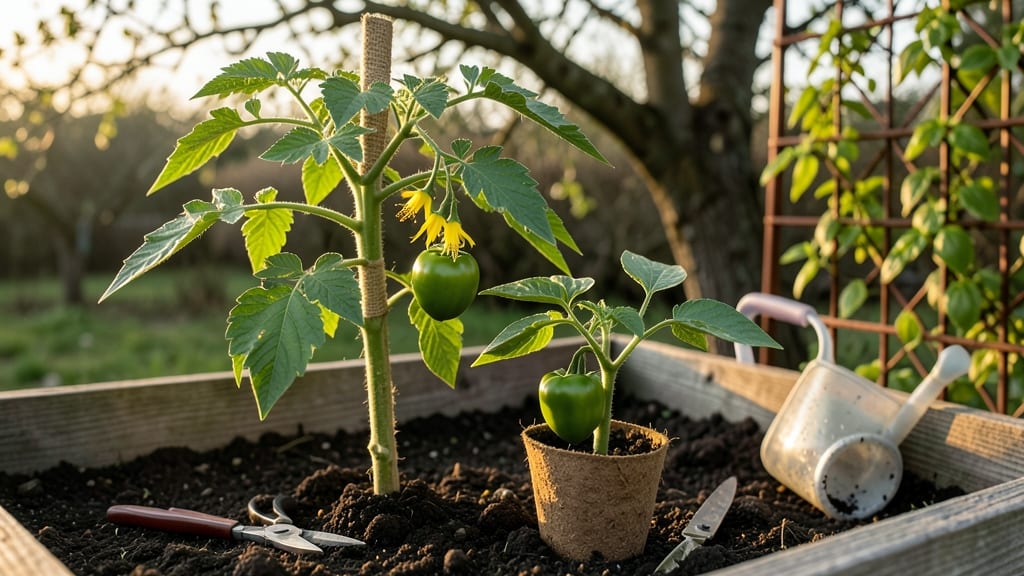
You can plant bell peppers next to tomatoes, but their close proximity increases disease risks like early blight and fusarium wilt, which thrive in shared soil. To minimize harm, maintain 18-24 inches between plants, avoid dense planting, and rotate crops annually to break disease cycles while still benefiting from their complementary growth patterns.
While bell peppers and tomatoes can coexist in the garden, their shared vulnerabilities make careful planning essential. 🌱 Both plants are susceptible to the same soil-borne pathogens, which spread through contaminated water or infected plant debris.
The key to success lies in spacing and soil health—proper airflow reduces humidity buildup, a major disease trigger. I’ve found that adding organic mulch around the base helps suppress fungal spores while keeping roots cool.
For better results, consider pairing tomatoes with basil or marigolds, which naturally repel pests and improve growth. If you must plant peppers nearby, prioritize disease-resistant varieties and monitor soil moisture closely. Rotating crops every 3-4 years further reduces pathogen buildup, ensuring both plants thrive without compromising each other’s health.
💡 In This Article
- Shared Diseases and Soil Risks Between Bell Peppers and Tomatoes
- Optimal Companion Plants for Tomatoes and Pepper Pairings
Shared diseases and soil risks between bell peppers and tomatoes
Here's what's actually happening when you plant bell peppers near tomatoes: both are susceptible to Phytophthora blight and Verticillium wilt, two soil-borne pathogens that thrive in warm, moist conditions. These fungi produce microscopic spores that linger in the soil for years, infecting plants through their root systems.
The key factor is their shared vulnerability—tomatoes and peppers both have thin, fibrous roots that absorb water efficiently, but this also makes them prime targets for fungal invasion. 🔥
The science behind this involves zoospore motility—under moist conditions, Phytophthora spores become flagellated and swim through soil water to infect roots. Warmth (ideal at 75-85°F) accelerates this process, while heavy irrigation or overhead watering creates the perfect breeding ground.
What most people don't realize is that even healthy-looking plants can harbor infected roots, silently spreading pathogens to nearby crops through contaminated soil particles or garden tools.
This works because both plants share similar pH preferences (6.0-6.8), which optimizes fungal growth. For example, early blight (Alternaria solani) thrives in these conditions, causing dark lesions on leaves that eventually kill foliage.
The disease spreads via windborne spores, but the initial infection always starts in the soil. That's why mulching with straw (not wood chips) helps—it reduces soil splash and maintains 60-70% soil moisture, keeping spores dormant.
Consider these environmental triggers that worsen the risk:
- Moisture: Soil moisture above 70% capacity creates anaerobic conditions that weaken plant defenses
- Temperature: Nighttime temps above 68°F extend fungal growth periods
- Nutrient stress: Over-fertilizing with nitrogen promotes lush foliage that attracts fungal spores
The worst-case scenario is fusarium wilt, which clogs a plant's xylem vessels with fungal mycelium, causing sudden wilting even in well-watered plants. This disease persists for 10+ years in infected soil, making crop rotation critical.
The economic impact is severe—studies show 30-50% yield losses in affected tomato and pepper crops when grown in contaminated beds. 💫
What helps is understanding the disease cycle: spores germinate when soil temps reach 60°F, infect roots within 7-14 days, then spread systemically.
The solution isn't just spacing—it's breaking this cycle through solarization (covering soil with clear plastic for 4-6 weeks at 110°F+) or planting cover crops like mustard that suppress fungal growth. This is how professional growers maintain healthy soil without chemicals.