
Aphids
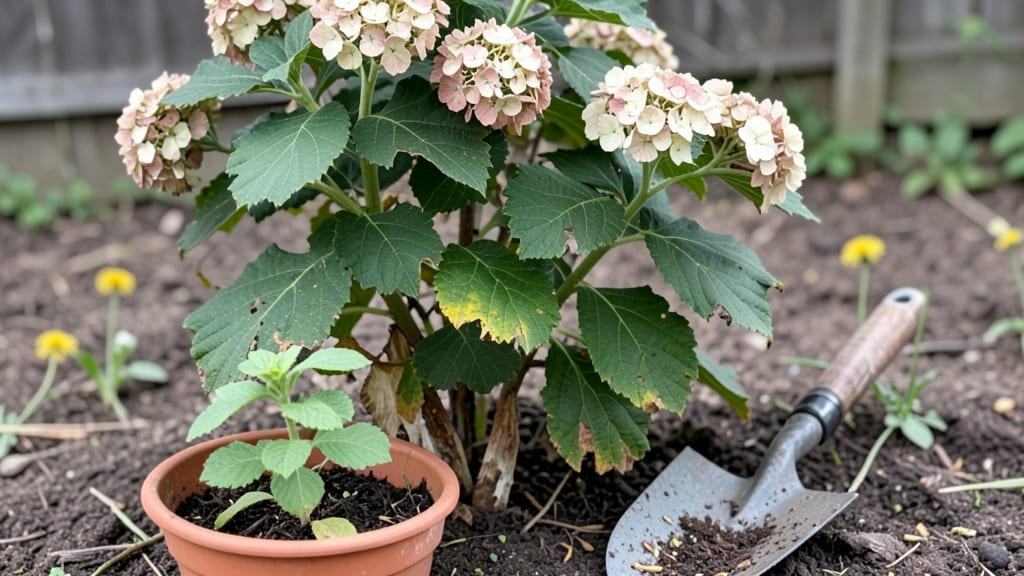
Planting oakleaf hydrangea in the right spot transforms your garden from ordinary to showstopping. 🌿 I learned the hard way that these beauties need morning sun and afternoon shade to keep their leaves fiery and blooms plentiful—anything less and they sulk.
The secret isn't just sunlight, though; it's about matching their love of well-draining soil with the perfect planting window.
Start by picking nursery stock with sturdy stems and vibrant green leaves—avoid anything leggy or sparse. Spring or early fall planting gives roots time to settle before summer heat or winter cold stress them.
Dig a hole twice as wide as the root ball but only as deep; burying too deep smothers the plant while shallow planting leaves roots exposed.
After planting, water deeply to settle the soil and keep moisture consistent for the first month. Mulch around the base to protect roots and lock in moisture, but keep it a few inches away from the trunk.
Within a season, you'll see those signature oak-shaped leaves unfurl, followed by clusters of blooms that last from summer into fall.
These hydrangeas thrive with minimal fuss once established, but their fall foliage—shades of burgundy, orange, and gold—is the real reward. The key is patience; it takes about three years for them to reach their full glory, but every season after that, they become the centerpiece of your garden.
📚 In This Guide
- What you need
- Instructions
- Tips and common mistakes
- Wrapping up and next steps
What you need
- ● Oakleaf hydrangea plants: 1-3 healthy nursery-grown plants (check for lush green leaves and sturdy stems).
- ● Garden soil: Well-draining, slightly acidic soil (pH 5.5–6.5). Mix in 2–3 inches of organic compost or aged manure for nutrients.
- ● Planting hole: Twice as wide and deep as the plant’s root ball.
- ● Mulch: 2–3 inches of pine bark, wood chips, or shredded leaves (avoid fresh mulch to prevent rot).
- ● Watering can or hose: With a gentle spray nozzle for hydration.
- ● Gloves: Heavy-duty gardening gloves to protect your hands.
- ● Pruning shears: Sterilized and sharp for trimming dead foliage.
- ● Slow-release fertilizer: 10-10-10 or acid-loving plant formula for extra nourishment.
- ● Soil pH tester: To ensure your soil meets the ideal acidity level.
- ● Plant support: Small stakes or cages for young plants in windy areas.
- ● Drip irrigation system: For consistent moisture (especially in hot climates).
- ● Epsom salt: A handful mixed into the soil to boost magnesium (great for vibrant blooms!).
Step-by-Step instructions for planting oakleaf hydrangea
Here’s the straightforward method I use to get those stunning oakleaf hydrangeas thriving in your yard.
🪴 Step 1: Choose the Perfect Planting Spot
Oakleaf hydrangeas love partial shade—think morning sun with afternoon shade—especially in hotter climates. I always look for a spot with 4-6 hours of sunlight daily, preferably where dappled light filters through nearby trees. This protects the delicate blooms from scorching while still giving them enough energy to flourish.
Test your spot by observing how sunlight moves across the area throughout the day. If the ground stays dry and warm by mid-afternoon, it’s likely too hot. A location with moist, well-draining soil is ideal—these plants hate soggy roots. Amend heavy clay soil with 2-3 inches of compost to improve drainage before planting.
🌱 Step 2: Dig the Hole and Prepare the Plant
Dig a hole twice as wide as the root ball but only as deep as the container’s base. This prevents burying the stem too deep, which can suffocate the plant. Gently remove the hydrangea from its container and loosen any circling roots with your fingers—this encourages outward growth instead of root-bound stress.
Place the plant in the hole so the top of the root ball sits 1 inch below the soil line. This slight depression helps retain moisture while keeping the stem from sitting exposed. If you’re planting multiple hydrangeas, space them 6-8 feet apart—they’ll spread over time, so give them room to grow.
💧 Step 3: Backfill and Water Thoroughly
Fill the hole with the remaining amended soil, pressing gently around the roots to remove air pockets. Avoid compacting too hard—you want the soil to stay loose for root expansion. Once the hole is full, create a small watering basin around the base by mounding soil slightly outward. This directs water straight to the roots.
Water deeply until the soil is evenly moist—you should see moisture reach 6-8 inches down. Oakleaf hydrangeas are thirsty plants, so the first watering is critical. After planting, mulch the area with 2-3 inches of organic mulch, keeping it 3 inches away from the stem to prevent rot. This helps retain moisture and regulates soil temperature.
☀️ Step 4: Monitor Light and Adjust as Needed
In the first 2-3 weeks, watch how your hydrangea responds to its new home. If leaves start curling or turning yellow, it might be getting too much direct sun. Move it slightly into shade or provide afternoon protection with a sheer fabric shade cloth. Conversely, if growth stalls, it may need more light—gradually increase exposure over a week.
Prune any damaged or leggy stems after planting to encourage bushier growth. I always wait until spring for major pruning, but light trimming now helps the plant focus energy on root establishment. Keep the soil consistently moist but not waterlogged—once a week should suffice unless you’re in a heatwave, then increase to every 2-3 days.
⏰ Step 5: Plan for Long-Term Care
Oakleaf hydrangeas reward patience with vibrant fall foliage and seasonal blooms, but they need consistent care. Fertilize in early spring with a balanced, slow-release fertilizer to support new growth. I avoid high-nitrogen fertilizers—they promote leafy growth at the expense of flowers.
Every 2-3 years, refresh the mulch and check for signs of stress, like yellowing leaves or sparse blooms. These usually indicate poor drainage, overwatering, or insufficient light. Adjust your care routine accordingly, and your hydrangea will thrive for decades. With the right spot and a little attention, you’ll have a showstopping shrub that’s the envy of the neighborhood.
Tips & tricks for planting oakleaf hydrangea
Getting your oakleaf hydrangea off to the right start makes all the difference for those stunning fall colors and seasonal blooms.
Light Observation is Key: In Step 1, when choosing your spot, I can't emphasize enough how important it is to actually observe sunlight patterns. Grab a notebook and track sunlight movement for a full day before planting. The 4-6 hours of morning sun with afternoon shade is crucial—this protects the delicate blooms from scorching while still giving them enough energy. I've seen too many hydrangeas struggle when planted in spots that seemed perfect on paper but turned out too hot in reality.
Root Preparation Matters: Don't skip loosening those circling roots in Step 2! I learned this the hard way after planting three hydrangeas that never thrived. Use your fingers to gently separate the roots—this encourages outward growth rather than keeping them bound in a tight circle. Also, that 1-inch depression below the soil line is critical for moisture retention without suffocating the stem. Think of it like creating a little moisture reservoir right where the roots need it most.
Watering Wisdom: The deep watering in Step 3 is where most people go wrong. You should see moisture reach 6-8 inches down—this means a thorough soaking, not just a quick sprinkle. I recommend using a moisture meter or digging down to check after watering. And that mulching tip? Keep it 3 inches away from the stem to prevent rot while still regulating soil temperature perfectly.
Long-Term Light Adjustments: Those first 2-3 weeks in Step 4 are your chance to fine-tune the perfect light conditions. If you notice leaves curling or yellowing, it's a clear sign of too much direct sun. I've had success using sheer fabric shade cloth during peak afternoon hours when the sun is most intense. Remember, oakleaf hydrangeas are adaptable—you can gradually increase light exposure if growth stalls, but always do it slowly over a week to avoid shocking the plant.
Pro Tips for Planting Oakleaf Hydrangea
- Getting your oakleaf hydrangea off to the right start makes all the difference for those stunning fall colors and seasonal blooms.
- Light Observation is Key: In Step 1, when choosing your spot, I can't emphasize enough how important it is to actually observe sunlight patterns.
- Root Preparation Matters: Don't skip loosening those circling roots in Step 2!
Frequently asked questions
Got questions about planting oakleaf hydrangeas?
You’re not alone! Here are answers to the most common queries to help you grow stunning, healthy plants with ease.
When is the best time to plant oakleaf hydrangeas?
Plant them in early spring or fall when temperatures are mild (50–70°F). Avoid extreme heat or frost—roots need time to establish before stress. If planting in summer, water deeply daily for the first 2 weeks to prevent shock.
How much sunlight do oakleaf hydrangeas really need?
They thrive in partial shade (morning sun + afternoon shade), but can handle full sun in cooler climates (like zones 5–8). Too much harsh afternoon sun can scorch leaves. Test your spot: if it’s hotter than a pizza oven at noon, opt for dappled shade.
Why aren’t my oakleaf hydrangeas blooming?
Check these 3 culprits:
- Over-fertilizing: Too much nitrogen = leafy growth, no flowers. Use a balanced, acid-loving fertilizer (like 10-10-10) in early spring.
- Pruning at the wrong time: Never trim after mid-summer—blooms form on old wood.
- Poor drainage: Soggy roots = stress. Amend heavy soil with compost or perlite.
Can I plant oakleaf hydrangeas in containers?
Use a large pot (15+ gallons) with drainage holes and a well-draining potting mix (add peat moss or pine bark). Move containers to shade during summer heat and water daily in containers—they dry out faster than in-ground plants.
How do I protect oakleaf hydrangeas from pests like aphids?
Aphids love tender new growth! Blast them off with a strong spray of water or use neem oil (mix 1 tbsp per quart of water). Encourage ladybugs—their natural predators! For severe infestations, try insecticidal soap (apply at dusk to avoid harming bees).
Do oakleaf hydrangeas need winter care?
In zones 5–6, mulch heavily (3–4 inches of straw or shredded leaves) after the ground freezes. In colder zones, wrap young plants with burlap. No need to cover mature plants—their deciduous leaves act as natural insulation!
Wrapping up and next steps
Planting oakleaf hydrangeas is a rewarding journey that brings vibrant color and lush foliage to your garden—especially when you nail the sunlight secrets! 🌞 These stunning shrubs thrive with a balance of morning sun and afternoon shade, ensuring bold blooms and rich leaves all season long.
Whether you’re a seasoned gardener or just starting, the key is patience and the right care.
Now that you’re armed with the know-how, roll up your sleeves and get planting! 🌱 Start by selecting the perfect spot, then follow the steps to give your oakleaf hydrangea the best possible start.
Before you know it, you’ll be admiring those show-stopping blooms and maybe even sharing tips with fellow gardeners. Happy growing!