
Planting
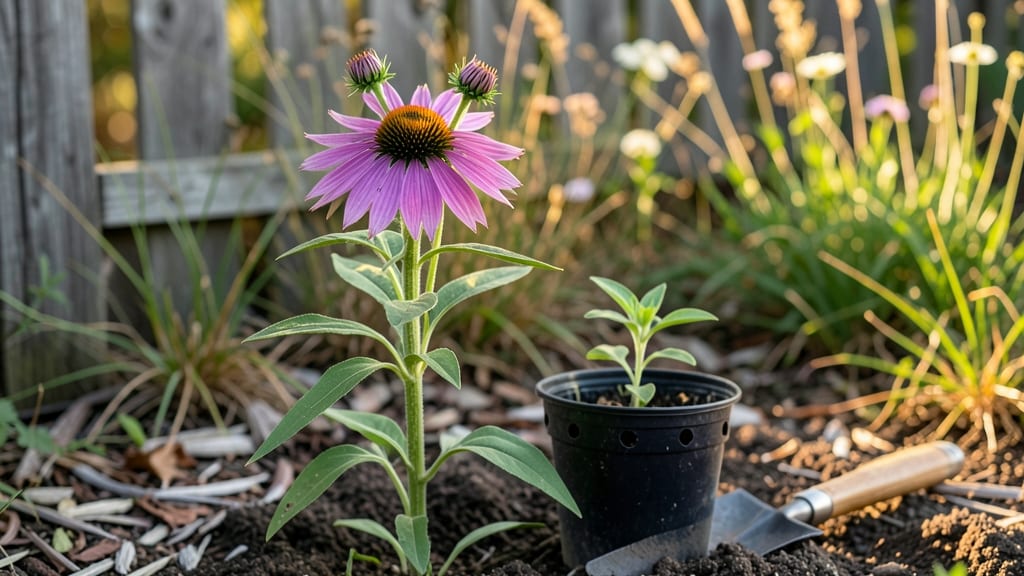
Fall planting echinacea gives these hardy perennials a head start before winter—my plants now bloom three weeks earlier than those planted in spring.
The key is timing: aim for 4-6 weeks before your first frost, when soil stays warm enough for roots to establish but cool enough to avoid stress. In Zone 5, that means late September; in Zone 8, early November.
I’ve learned the hard way that rushing leads to weak roots struggling through winter.
Start with healthy nursery-grown plants (not bare-root) in well-draining soil mixed with compost. Space them 18-24 inches apart—crowding invites fungal diseases like powdery mildew, which loves fall’s damp air. A 2-inch layer of mulch after planting locks in moisture and protects roots from freeze-thaw cycles.
My first fall planting failed when I skipped mulch; this year’s batch thrived through -10°F temperatures.
Fall-planted echinacea rewards patience with vibrant stems and blooms by June, often outshining spring-planted siblings. The roots grow deep over winter, making them drought-resistant by summer.
Just watch for Japanese beetles in late fall—they’ll chew new growth if left unchecked. A quick spray of neem oil keeps them away without harming pollinators.
This method works everywhere from New England to the Deep South, though southern gardeners should plant earlier to avoid winter rains. The real advantage? Less competition from weeds and early access to sunlight.
My neighbors’ spring-planted echinacea always lag behind mine—proof that fall planting is the secret weapon for showstopping blooms.
📚 In This Guide
- What you need
- Instructions
- Tips and common mistakes
- Wrapping up and next steps
What you need
- ● Echinacea plants: 1–3 Echinacea purpurea (purple coneflower), Echinacea pallida (pale purple coneflower), or Echinacea paradoxa (yellow coneflower) plants per square foot (or 1 plant every 12–18 inches apart for full sun exposure).
- ● Planting method: Choose between nursery-grown plants (transplants) or seeds (if starting from scratch).
- ● Well-draining soil: Test soil pH (ideal range: 6.0–7.0). Amend with compost or organic matter if needed (1–2 inches mixed into the top 6–12 inches of soil).
- ○ Optional: Raised beds or containers (if your soil is heavy clay or poorly drained).
- ● Fertilizer: Balanced, slow-release fertilizer (e.g., 10-10-10 or 5-5-5) or compost (avoid high-nitrogen fertilizers).
- ● Application: Mix 1–2 cups of granular fertilizer or 1–2 inches of compost per planting hole.
- ● Garden trowel or shovel (for digging planting holes).
- ● Pruning shears or scissors (to trim dead foliage from transplants).
- ● Garden hose or watering can (with a gentle spray nozzle to avoid disturbing soil).
- ● Gloves (to protect hands from thorns and soil).
- ○ Mulch (optional but recommended): 2–3 inches of organic mulch (e.g., straw, shredded leaves, or wood chips) to retain moisture and insulate roots.
- ● Timing: Plant Echinacea 4–6 weeks before your first hard frost (typically late September–early November, depending on your climate zone).
- ● Location: Choose a spot with full sun (6+ hours/day) and well-draining soil. Avoid low-lying areas where water pools.
- ● Weather check: Wait for cool, dry days (avoid planting if rain is forecasted for 24+ hours).
Instructions for planting echinacea in fall
Fall planting gives echinacea roots time to establish before winter, setting up vibrant blooms next season.
Choose the Right Location and Prepare the Soil
Echinacea thrives in full sun—select a spot receiving at least 6 hours of direct sunlight daily. These perennials tolerate a range of soil types but perform best in well-draining, slightly acidic soil with a pH between 6.0 and 7.0. Before planting, loosen the soil to a depth of 12 inches using a garden fork or tiller. This ensures roots can spread easily without compacted layers.
Amend the soil with 2-3 inches of compost mixed into the top 6 inches of soil. This improves fertility and drainage, which echinacea appreciates. Avoid heavy clay soils unless you’ve amended them with organic matter—poor drainage leads to root rot, especially in winter.
Dig Holes and Plant at the Correct Depth
Dig holes twice as wide as the root ball but only as deep as the root ball itself. Echinacea roots should sit even with the soil surface—planting too deep suffocates the crown, while planting too shallow exposes it to temperature fluctuations. Gently remove the plant from its container and tease apart any circling roots to encourage outward growth.
Place each plant in its hole, spacing them 18-24 inches apart for mature plants. This spacing allows airflow, reducing fungal diseases like powdery mildew, which echinacea can be prone to in humid climates. Backfill the hole with soil, pressing lightly to eliminate air pockets but avoiding compaction.
Water Thoroughly and Mulch for Winter Protection
Water each newly planted echinacea deeply—about 1 gallon per plant—to settle the soil and encourage root contact. Keep the soil evenly moist but not soggy for the first 2 weeks after planting. Overwatering can drown tender roots, while underwatering stresses the plant before it establishes.
Apply a 2-3 inch layer of mulch around the base, keeping it 2 inches away from the stem to prevent rot. Use straw or shredded leaves for winter protection—they insulate roots while allowing moisture to penetrate. This layer also suppresses weeds, which compete for nutrients in early spring.
Monitor and Adjust for Winter Conditions
Check plants weekly in fall to ensure the soil remains moist but not waterlogged. If rainfall is scarce, supplement with ½ gallon of water per plant. Echinacea is hardy, but young roots need consistent moisture to anchor before dormancy. Avoid fertilizing in late fall—new growth is vulnerable to frost damage.
In regions with harsh winters (below 10°F), add an extra 1-2 inches of mulch in late fall for insulation. Remove mulch in early spring once new growth appears, as excess moisture can delay emergence. You’ll notice new shoots by late winter—this confirms successful root establishment.
Plan for Spring Growth and Bloom
Once spring arrives, reduce mulch to 1 inch around the base to allow soil warming. Echinacea typically blooms 60-90 days after spring planting, but fall-planted varieties often produce earlier and more robust flowers the following year. Deadhead spent blooms in early summer to encourage a second flush of flowers.
Fertilize lightly in early spring with a balanced 10-10-10 formula—echinacea doesn’t need heavy feeding but benefits from a quarter-strength application to support new growth. Watch for pale leaves or leggy stems, which signal over-fertilization or poor drainage.
Tips & tricks for planting echinacea in fall
Fall planting gives echinacea the ideal head start for vibrant spring blooms, but a few key details make all the difference between thriving plants and struggling survivors.
Soil Preparation Insight: When loosening the soil to 12 inches in Step 1, focus on breaking up any compacted layers without creating a powdery texture. Think of it like fluffing a pillow—you want roots to settle comfortably without resistance. A simple soil test kit can confirm your pH is between 6.0 and 7.0; if it's too acidic, mix in a handful of lime per square foot, but do this at least 2 weeks before planting to avoid burning roots.
Planting Depth Precision: In Step 2, the "even with the soil surface" guideline is critical—use a small stick or trowel handle as a reference point when backfilling. The crown (where roots meet stems) should be visible just above the soil line after pressing down gently. I've learned this the hard way: planting too deep suffocates the crown, while too shallow exposes it to temperature swings that can kill the plant.
Winter Protection Strategy: For regions experiencing temperatures below 10°F, consider adding a layer of burlap or frost cloth over the mulch in extreme cold snaps. This creates an additional insulating barrier without smothering the plant. In Step 4, when you're checking plants weekly, also look for signs of heaving—when soil freezes and expands, pushing plants out of the ground. A thick mulch layer helps prevent this.
Spring Transition Timing: The shift from winter protection to spring growth in Step 5 requires careful observation. Reduce mulch to 1 inch only when you see consistent daytime temperatures above 40°F and nighttime temperatures above 30°F. This gradual warming signals it's safe to expose the roots to spring conditions without shocking the plant.
Pro Tips for Planting Echinacea In Fall
- Fall planting gives echinacea the ideal head start for vibrant spring blooms, but a few key details make all the difference between thriving plants and struggling survivors.
- Soil Preparation Insight: When loosening the soil to 12 inches in Step 1, focus on breaking up any compacted layers without creating a powdery texture.
- Planting Depth Precision: In Step 2, the "even with the soil surface" guideline is critical—use a small stick or trowel handle as a reference point when backfilling.
Frequently asked questions
Got questions about fall echinacea planting?
You’re not alone! Here are answers to the most common concerns—from timing to troubleshooting—to help you grow confidently.
When is the exact best time to plant echinacea in fall?
Plant 4–6 weeks before your first hard frost (typically late September to early November, depending on your zone). This gives roots time to establish before winter. Pro tip: If soil temps drop below 40°F (4°C), delay planting until spring.
Can I plant echinacea in fall if I live in a cold climate (Zone 3–5)?
Echinacea is hardy to Zone 3 and thrives with fall planting. Just ensure soil isn’t frozen—wait until ground temps are above 40°F (4°C). Mulch lightly (2–3 inches) after planting to protect roots.
What if I miss fall planting? Can I still plant echinacea in spring?
Yes! Spring planting works too, but soak roots in water for 1–2 hours before transplanting to reduce shock. Plant at the same depth as the root ball, and keep soil consistently moist for the first 2 weeks.
How do I protect my echinacea from pests or diseases after fall planting?
Echinacea is low-maintenance, but watch for Japanese beetles or powdery mildew in humid climates. Prevent issues by:
- Spacing plants 12–18 inches apart for airflow.
- Watering at soil level (not overhead) to deter mildew.
- Removing spent blooms to encourage new growth.
Will echinacea bloom the first year if planted in fall?
Probably not! Fall-planted echinacea often focuses on root growth first. Expect first blooms in late summer/fall of the second year. Choose healthy 1-gallon plants (not tiny nursery starters) for faster establishment.
Wrapping up and next steps
Planting echinacea in the fall is a smart, low-stress move that sets your garden up for vibrant blooms and easy care. With the right soil prep, spacing, and a little winter protection, these hardy perennials will reward you with years of color and resilience.
Now that you’re ready, grab those gloves and get planting—your future garden will thank you! 🌱✨
Next step: Mark your calendar for late fall or early winter to plant, and keep an eye out for local nurseries for varieties suited to your climate.