Succulent
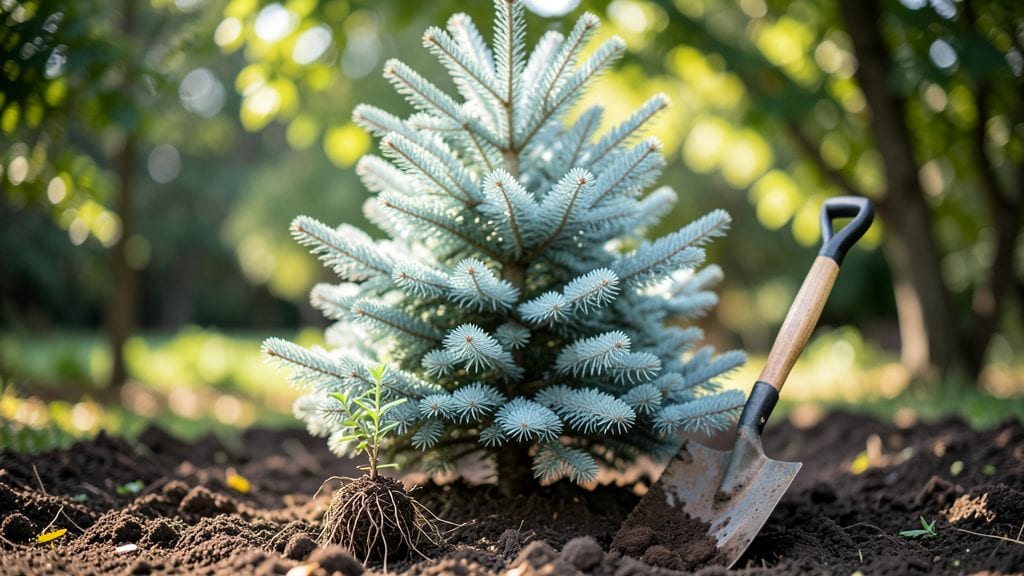
Planting blue spruce trees transforms your yard from an open space to a lush, year-round privacy screen. 🌿 I learned the hard way—my first attempt flopped because I ignored the soil and sunlight needs, but now I’ve got a thriving wall of blue-green needles that neighbors envy.
The secret isn’t complicated: pick the right spot, prep the soil, and give them space to grow.
You’ll need a sunny location with well-draining soil, a shovel, compost, and patience—blue spruce trees take time but reward you with minimal maintenance. Most people plant too close together, leading to stunted growth.
Space them 6 to 10 feet apart for a full, natural look. The best time to plant is early spring or fall, when temperatures are mild and roots can establish without stress.
After planting, water deeply once a week for the first year, keeping the soil moist but not soggy. Young trees need extra care—mulch around the base to protect roots and shield out weeds.
Within a few years, you’ll have a dense, fragrant hedge that blocks wind, noise, and prying eyes, all while adding value to your home.
This method works for any yard size, from small urban lots to sprawling backyards. The key is consistency—once they’re established, blue spruce trees thrive with almost no effort. Let’s get those roots in the ground!
📚 In This Guide
- What you need
- Instructions
- Tips and common mistakes
- Wrapping up and next steps
What you need
- ● Blue spruce saplings – 3-5 per 5-foot section (spaced 4-6 feet apart for full coverage). Choose 1-2 year old trees (4-6 feet tall) for faster growth.
- ● Shovel or spading fork – For digging holes 2x wider and 1.5x deeper than the root ball.
- ● Garden hose with spray nozzle – For deep watering (aim for 1-2 gallons per tree initially).
- ● Mulch (pine straw, wood chips, or shredded bark) – 2-3 inches around the base (keep 3-4 inches away from the trunk to prevent rot).
- ● Balanced fertilizer (10-10-10 or 20-20-20) – 1 tbsp per tree mixed into the planting hole.
- ● Stakes and soft ties – 2-3 stakes per tree (if planting in windy areas).
- ● Soil amendment – Compost or peat moss to improve drainage if your soil is heavy clay.
- ● Root stimulator gel – Dip roots in before planting for faster establishment.
- ● Weed barrier fabric – Landscape fabric to suppress weeds (install before mulch).
- ● Tree guard or wire basket – Protects young trunks from deer/browsing.
- ● Wheelbarrow – For hauling mulch, soil, or tools.
Step-by-Step instructions for planting blue spruce trees
Here's the straightforward method I use to create a lush, evergreen privacy screen that thrives for decades.
🪴 Step 1: Choose the Perfect Planting Location
Blue spruce trees need full sun to partial shade—at least 6 hours of direct sunlight daily for best color development. I always scout the site first, checking for overhead power lines or large trees that might cast permanent shade. The area should also have well-draining soil—spruce roots rot quickly in soggy conditions.
Measure the mature width of your trees (usually 10-15 feet wide at maturity) and space them 5-8 feet apart for a dense screen. Mark planting spots with stakes to visualize the final look. I like to plant in staggered rows for a more natural appearance—think of it like laying bricks where every other tree sits slightly forward.
🌿 Step 2: Dig Holes That Match Root Spread
Dig holes twice as wide as the root ball but only as deep as the container's height. Spruce roots are shallow and sensitive to burial—planting too deep suffocates them. Use a spade to loosen the soil another 6-12 inches around the hole for better root spread.
Remove the tree from its container and gently tease the roots if they're circling. I always check for root-bound plants by pulling back the outer roots—if they're tightly wrapped, I make 2-3 vertical cuts with pruners to encourage outward growth. This prevents future stress when the tree matures.
💧 Step 3: Plant and Water Thoroughly
Place the tree in the hole so the top of the root ball sits 1-2 inches above ground level. This prevents soil from washing into the root flare over time. Fill the hole with native soil (no amendments needed—spruce prefer natural conditions) and tamp gently to eliminate air pockets.
Water immediately with 5 gallons of water to settle the soil. You'll see the ground level slightly as moisture fills voids. After planting, add 2-3 inches of mulch around the base, keeping it 6 inches away from the trunk to prevent rot. This conserves moisture and regulates soil temperature.
☀️ Step 4: Provide Initial Care for Establishment
Keep the soil consistently moist for the first 2 years—spruce trees establish slowly. Water deeply once a week unless rainfall provides 1 inch of moisture. You'll know it's enough when water drains to 6 inches deep. Avoid wetting the needles to prevent fungal diseases.
Fertilize lightly in spring of the second year with a slow-release 10-10-10 fertilizer (use ½ pound per 100 square feet). Young spruce don't need much—over-fertilizing causes weak growth and disease susceptibility. I always check soil pH first; blue spruce prefer slightly acidic soil (pH 5.5-6.5).
✂️ Step 5: Prune and Maintain for Long-Term Health
Prune only to remove dead or damaged branches in late winter or early spring before new growth begins. Never "shear" blue spruce into formal shapes—they grow best with natural form. Use clean, sharp pruners to make cuts just outside the branch collar.
Monitor for spider mites or bagworms, which love spruce trees. I treat infestations immediately with horticultural oil or insecticidal soap. Space trees 8-10 feet apart as they mature to prevent overcrowding, which stresses trees and invites pests. With proper care, your screen will reach full height (30-60 feet) in 15-20 years.
Tips & tricks for planting blue spruce trees
A few simple strategies that'll help your blue spruce privacy screen grow strong and healthy for decades.
Location is Everything: I can't stress this enough—blue spruce need that 6 hours of direct sunlight daily for their signature blue-green color. If your yard only gets partial shade, plant them where they'll get the most sun possible. I've seen trees in shadier spots grow tall but lose their vibrant color, and that's a real shame for a privacy screen. Also, check for overhead power lines before planting—you don't want to wait years to realize you need to trim them every year.
Root Care Makes All the Difference: When you're loosening that 6-12 inches of soil around the hole in Step 2, think of it like giving your tree's roots a warm blanket. Spruce roots are shallow, so don't bury them too deep—the top of the root ball should sit 1-2 inches above ground level. And if you notice those roots circling in the container, give them a little "root haircut" with clean pruners. I learned this the hard way after losing a few trees to root-bound stress.
Watering Wisdom: That initial 5 gallons of water in Step 3 is crucial for settling the soil around the roots. But here's what nobody tells you—after planting, check how quickly the water drains. If it disappears within minutes, you might need to add more organic matter to your native soil. For the first 2 years, water deeply once a week unless you get 1 inch of rainfall. I use a rain gauge to track this, and it's made all the difference in keeping my spruce thriving.
Mulch Like a Pro: When you add that 2-3 inches of mulch, keep it 6 inches away from the trunk to prevent rot. I like to use pine straw or shredded bark mulch because it mimics the natural forest floor. And here's a pro move: refresh the mulch every spring—it breaks down over time and loses its moisture-retaining properties. Just don't pile it up against the trunk, or you'll create a perfect environment for fungal diseases.
Pro Tips for Planting Blue Spruce
- A few simple strategies that'll help your blue spruce privacy screen grow strong and healthy for decades.
- Location is Everything: I can't stress this enough—blue spruce need that 6 hours of direct sunlight daily for their signature blue-green color.
- Root Care Makes All the Difference: When you're loosening that 6-12 inches of soil around the hole in Step 2, think of it like giving your tree's roots a warm blanket.
Frequently asked questions
Got questions about planting your Blue Spruce? You’re not alone—this evergreen beauty is a favorite, but it comes with a few quirks! Here are answers to the most common queries to help you grow a thriving privacy screen with confidence.
When is the best time to plant a Blue Spruce?
The ideal window is early spring or fall—when temperatures are mild (40–70°F) and the ground isn’t frozen. Avoid planting in peak summer heat or winter, as extreme temps stress young roots. If you must plant in summer, water deeply 2–3 times weekly to keep soil moist.
How far apart should I space Blue Spruce trees for a privacy screen?
For a dense, fast-growing screen, plant 4–6 feet apart. If you want a tighter look (like a hedge), reduce spacing to 3–4 feet. Remember: Blue Spruces grow 1–2 feet per year, so give them room to mature without overcrowding.
Do Blue Spruce need a lot of water after planting?
Yes! Water deeply 2–3 times per week for the first year to encourage root growth. After that, they’re drought-tolerant but prefer 1 inch of water weekly during dry spells. Mulch around the base (2–3 inches deep) to retain moisture and protect roots.
What pests or diseases should I watch for with Blue Spruce?
Common issues include spruce spider mites (tiny webs on needles) and bagworms (pouch-like nests). For mites, spray with water to dislodge them or use horticultural oil. Bagworms? Handpick nests in late summer or use Bt (Bacillus thuringiensis) spray. Fungal issues like rhizoctonia (brown needles) can occur in wet soils—improve drainage if needed.
Can I plant Blue Spruce in clay soil, or should I amend it?
Blue Spruces tolerate clay soil, but amending with compost or sand improves drainage and aeration. If your soil is heavy, mix in 20–30% organic matter before planting. Avoid soggy spots—these trees hate “wet feet.” A slight mound (6 inches) when planting can help excess water drain away.
Still stumped? Drop your question in the comments—we’re happy to help your Blue Spruce thrive!
Wrapping up and next steps
Planting a blue spruce is a rewarding way to add year-round beauty and privacy to your landscape! 🌲 With the right location, soil prep, and care, these stunning evergreens will thrive for decades.
Whether you're a beginner or a seasoned gardener, the key is patience—watch your blue spruce grow into a majestic screen that brings color and serenity to your outdoor space.
Ready to take the next step? Mark your calendar for the best planting season (early spring or fall) and gather your supplies. Then, roll up your sleeves—your future privacy screen is waiting! 🌱