
Companion Plants
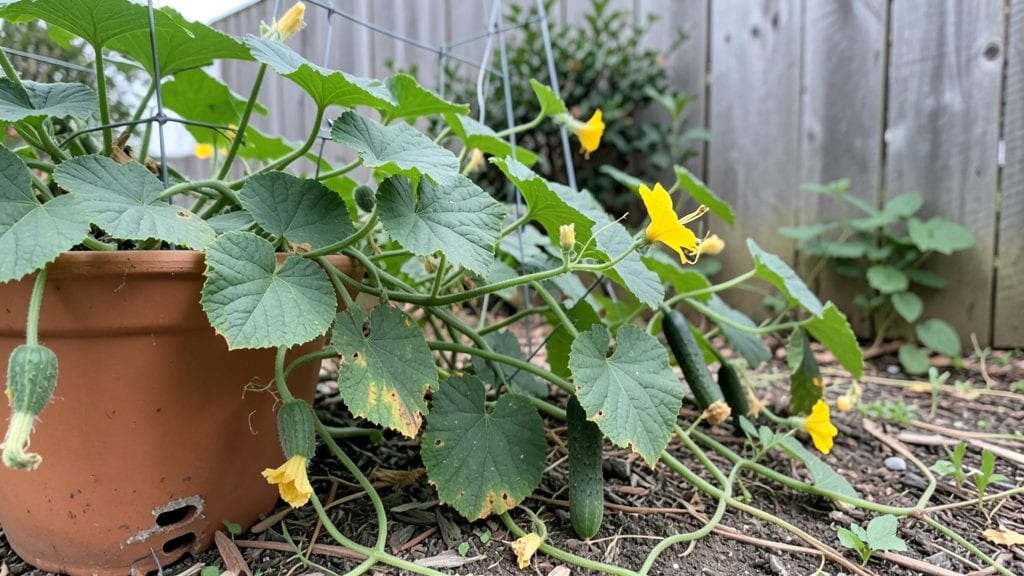
Patio cucumber plants can transform your small outdoor space into a productive oasis. 🌱 I’ve grown them in containers for years, and the key is matching the right variety to your space—bush types like 'Bush Champion' or 'Spacemaster' thrive in 5-gallon pots without sprawling everywhere.
The first harvest comes faster than you’d expect when you nail the sunlight and watering balance.
You’ll need containers with drainage, well-draining potting mix, and a spot that gets at least 6-8 hours of sun daily. Trellises or cages save space and keep vines off the ground, while regular watering keeps the soil consistently moist—not soggy.
Prune aggressively to encourage fruit production, and watch for pests like cucumber beetles early on.
By midsummer, you’ll be harvesting crisp, homegrown cucumbers straight from your patio. The plants stay productive for weeks, and the flavor beats anything store-bought. Just avoid overcrowding and keep an eye on powdery mildew in humid climates. This method works for apartments, balconies, or even sunny windowsills.
Once you master the basics, you can experiment with vertical growing systems or try different varieties like lemon cucumbers. The real reward? Fresh, vine-ripened cucumbers without needing a backyard. Ready to grow your own?
📚 In This Guide
- What you need
- Instructions
- Tips and common mistakes
- Wrapping up and next steps
What you need
- ● Cucumber plants: Seedlings: 2–4 healthy patio-friendly varieties (e.g., 'Bush Champion,' 'Spacemaster,' or 'Patio Snacker').
- ● Seeds: 3–5 seeds per container (if starting from scratch).
- ● Containers: 1–2 large pots (10–15 gallons each) or grow bags with drainage holes. Pro tip: 💡 Add a saucer underneath to catch excess water!
- ● Potting mix: 1 bag (2–3 cubic feet) of high-quality, well-draining vegetable or container mix (avoid garden soil—it compacts!).
- ● Support system: 1–2 trellises, cages, or stakes (4–6 ft tall) to encourage vertical growth and save space.
- ○ Optional: Twine or soft plant ties for securing vines.
- ● Gloves (to protect hands from prickly stems).
- ● Hand trowel or small shovel for planting.
- ● Watering can or hose with a gentle spray nozzle (cucumbers love consistent moisture!).
- ● Fertilizer: Balanced liquid fertilizer (e.g., 10-10-10) or compost for organic growth.
- ○ Optional: Slow-release granules mixed into the soil at planting.
- ● Mulch: Straw or shredded leaves (1–2 inches) to retain moisture and suppress weeds.
- ● Pruning shears (for trimming excess foliage or dead vines).
- ● A sunny patio with at least 6–8 hours of direct sunlight daily.
- ● Access to water (cucumbers need 1–2 inches per week).
- ● Patience! Cucumbers take 50–70 days to mature from seed.
Step-by-Step instructions for growing patio cucumber plants
Here’s how to cultivate thriving patio cucumbers that produce abundant harvests without taking over your space.
🪴 Step 1: Choose and Prepare Containers for Optimal Growth
Cucumbers need room to sprawl, so select 5-gallon containers (or larger) with multiple drainage holes—no fewer than three. I use fabric grow bags because they allow excess moisture to evaporate while preventing root circling, which stunts growth. Fill each container with sterile potting mix (never garden soil) mixed with compost for fertility.
Tap the container gently to settle the soil, then water it thoroughly until moisture runs freely from the drainage holes. This ensures even moisture distribution and prevents air pockets that can suffocate young roots. Leave the containers to drain completely before planting.
🌱 Step 2: Plant Seeds or Transplants at the Right Depth
If starting from seed, sow 1-2 seeds per container at a depth of ½ inch—deeper planting delays germination. For transplants, dig a hole just wider than the root ball and place the plant so the top of the root ball sits ½ inch below the soil surface. This prevents stem rot while keeping roots stable.
Gently firm the soil around the seeds or transplant to eliminate air gaps. Water lightly afterward to settle the soil without displacing the seeds. Place a moisture-retaining disk on the soil surface to help maintain humidity during germination, which typically takes 5-10 days in 70-80°F soil.
☀️ Step 3: Position for Maximum Sunlight and Support
Cucumbers thrive in full sun (6-8 hours daily), so place containers on a south- or west-facing patio. If your space gets afternoon shade, supplement with a grow light for 4-6 hours to ensure vigorous growth. Install a trellis or cage immediately—cucumbers grow fast, and vining varieties can reach 10-12 feet if unchecked.
Train vines along the trellis as they grow to improve airflow and reduce disease risk. You’ll notice faster fruit production when vines climb upward instead of sprawling. Water at the base 1 inch per week, avoiding wetting leaves to prevent powdery mildew.
💧 Step 4: Maintain Consistent Moisture and Fertility
Cucumbers have shallow roots, so keep the soil evenly moist—never soggy. Water early in the morning to allow foliage to dry before evening, which deters fungal issues. Use a balanced liquid fertilizer (10-10-10) every 2-3 weeks once flowers appear, following label rates. Over-fertilizing leads to leafy growth at the expense of fruit.
Watch for yellowing leaves, which signal either overwatering or nutrient deficiency. Adjust your routine: if the soil feels damp but leaves yellow, reduce watering; if dry, increase frequency. Harvest fruits when they reach 6-8 inches for peak flavor, and pinch off any that develop past this size to encourage more production.
✂️ Step 5: Prune and Harvest for Continuous Yields
Prune overly dense foliage to improve airflow, focusing on lower leaves that touch the soil. Use clean, sharp pruners to avoid tearing stems. Remove yellowed or diseased leaves immediately to prevent spread. For bush varieties, trim back overgrown vines to redirect energy into fruit production.
Harvest cucumbers every 2-3 days during peak season to stimulate more blooms. Store them in the fridge for up to 5 days or use immediately. If vines slow production, give them a light trim to rejuvenate growth. With consistent care, your patio cucumbers will reward you with a steady harvest all season long.
Tips & tricks for perfect patio cucumber plants
Here's what I've learned after growing patio cucumbers for years—these tricks will help you avoid common pitfalls and maximize your harvest.
Container Selection Matters: While 5-gallon containers work well, consider using slightly larger pots (7-10 gallons) for bush varieties—they need more root space to support heavy fruit production. Fabric grow bags are my top choice because they prevent root circling and allow excess moisture to evaporate, which is crucial for preventing root rot in containers. If using plastic pots, add extra drainage holes if the manufacturer hasn't provided enough.
Germination Secret: The 5-10 day germination window in 70-80°F soil can feel like forever! Speed up the process by placing containers on a seedling heat mat set to 80°F—this can cut germination time by nearly half. Also, keep the moisture-retaining disk consistently damp (not soggy) during this period. If you notice condensation forming on the inside of the container, that's a good sign—it means the humidity is ideal for sprouting.
Sunlight Strategy: The 6-8 hours of full sun requirement is non-negotiable, but here's how to maximize your space: position containers on a rolling plant stand so you can rotate them daily to ensure even sun exposure. If you're supplementing with grow lights for 4-6 hours, use LED grow lights—they're energy-efficient and produce less heat than traditional bulbs. Place lights about 6 inches above the plants and adjust as they grow to maintain consistent light exposure.
Pruning Technique: When pruning overly dense foliage in Step 5, focus on creating an "open vase" shape—this improves airflow and sunlight penetration to the lower leaves. I use clean pruning shears and make cuts at a 45-degree angle just above a leaf node. For bush varieties, trim back overgrown vines to about 12 inches from the base—this forces the plant to redirect energy into producing more fruit rather than just foliage. Always prune in the morning so any cuts have time to heal before evening moisture sets in.
Pro Tips for Patio Cucumber Plants
- Here's what I've learned after growing patio cucumbers for years—these tricks will help you avoid common pitfalls and maximize your harvest.
- Container Selection Matters: While 5-gallon containers work well, consider using slightly larger pots (7-10 gallons) for bush varieties—they need more root space to support heavy fruit production.
- Germination Secret: The 5-10 day germination window in 70-80°F soil can feel like forever!
Frequently asked questions
Got questions about growing patio cucumber plants? You’re not alone! Here are answers to the most common queries to help you cultivate a thriving harvest.
When is the best time to plant patio cucumbers?
For most regions, plant after the last frost when soil temperatures reach at least 60°F (15°C). In warmer climates, start in early spring; cooler areas may wait until late spring or early summer. If using containers, ensure they’re large enough (5+ gallons) and have drainage holes to prevent root rot.
How long does it take for patio cucumbers to produce fruit?
With proper care, expect 50–70 days from planting to harvest for bush varieties, while vining types may take 60–80 days. Speed up fruiting by providing full sun (6–8 hours/day), consistent watering, and balanced fertilizer. Patience pays off—early blooms may drop, but keep nurturing for a steady harvest!
What should I do if my patio cucumber leaves turn yellow?
Yellow leaves often signal overwatering, underwatering, or nutrient deficiencies. Check soil moisture—it should stay consistently damp but not soggy. If leaves curl or wilt, reduce watering. For yellowing edges, add compost or a balanced fertilizer. Pests like spider mites can also cause yellowing; inspect undersides of leaves and treat with neem oil if needed.
Can I grow patio cucumbers in containers without a trellis?
Yes! Bush cucumber varieties (like ‘Bush Champion’) thrive in containers without trellises, saving space. For vining types, use a small cage or spiral trellis to encourage upward growth and improve air circulation. Just ensure containers are at least 12–18 inches deep and wide enough for roots to spread.
Why aren’t my patio cucumbers flowering?
Lack of flowers? Check these fixes:
- Sunlight: Ensure 6+ hours of direct sun daily—cucumbers are sun-hungry!
- Temperature: Keep soil temps above 70°F (21°C) for pollination.
- Pollinators: Attract bees with nearby flowering plants (like marigolds or nasturtiums).
- Fertilizer: Use a low-nitrogen, high-phosphorus feed (like 5-10-10) to boost blooms.
Wrapping up and next steps
Growing patio cucumber plants is a rewarding way to enjoy fresh, homegrown produce—even in small spaces!
With the right sunlight, support, and companion plants, you’ll soon be harvesting crisp, delicious cucumbers straight from your balcony or garden. Start small, experiment with varieties, and don’t forget to savor the taste of your homegrown success!
Ready to dive in? Pick your favorite cucumber variety, gather your supplies, and get planting—your future harvest is waiting! 🌱🍉