
Fertilization
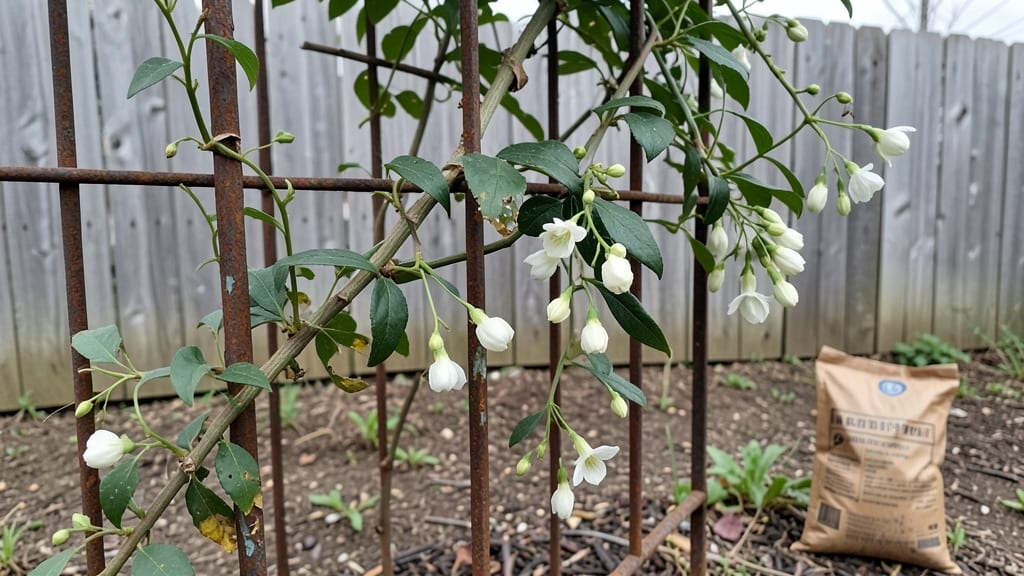
The right jasmine plant food makes all the difference—your fragrant vines will explode with blossoms instead of just green leaves. ✨ I’ve learned the hard way that jasmine isn’t fussy, but it does need the right balance of nitrogen for foliage and phosphorus for flowers.
Too much nitrogen, and you’ll end up with lush but flowerless vines. Too little, and growth stalls entirely.
Most gardeners reach for a balanced 10-10-10 or 20-20-20 fertilizer, but jasmine actually thrives on a slightly higher phosphorus kick—think 5-10-5 or 7-9-5. Organic options like fish emulsion or bone meal work wonders, too, especially if your soil is heavy clay or sandy.
The key is feeding lightly but consistently, every 4-6 weeks during growing season, then tapering off in winter when growth slows.
What you’ll notice after just one season of proper feeding is vines that climb faster, leaves that stay deep green, and clusters of intoxicating flowers that last from spring through fall.
The fragrance alone is worth the effort—imagine stepping outside to that sweet, heady scent wafting through your garden or patio. Even a single plant can transform a space into a sensory paradise.
Here’s the thing—jasmine doesn’t need fancy, expensive feeds. A simple mix of compost, a slow-release granular fertilizer, and occasional liquid feeds will do the trick. The real secret?
Pay attention to the leaves. Yellowing? You’re overdoing it. Wilting or crispy edges? Time to water and check your fertilizer schedule. Let’s get those vines blooming like crazy.
📚 In This Guide
- What you need
- Instructions
- Tips and common mistakes
- Wrapping up and next steps
What you need
- ● Balanced liquid fertilizer (10-10-10 or 20-20-20 NPK ratio) – 1 tbsp per gallon of water (for general feeding).
- ● High-phosphorus fertilizer (5-10-5 or 10-30-20 NPK ratio) – 1 tsp per gallon of water (to encourage blooms).
- ● Epsom salt (magnesium sulfate) – 1 tbsp per gallon of water (boosts green growth and fragrance).
- ● Compost or worm castings – ½ cup per plant (top-dressed or mixed into soil) (organic slow-release nutrients).
- ● Watering can or spray bottle – For even distribution.
- ● Measuring spoons or scale – Precision is key!
- ● Banana peel tea – Steep 1-2 peels in 2 cups hot water for 24 hours (adds potassium for blooms).
- ● Coffee grounds (used, composted) – ¼ cup per plant (mixed into soil) (acid-loving jasmine thrives!).
- ● Fish emulsion or seaweed extract – 1 tsp per gallon of water (extra micronutrients for resilience).
- ● Citric acid (for acid-loving varieties) – ¼ tsp per gallon (adjusts soil pH if needed).
- ● Slow-release fertilizer granules – 1 cup per plant (sprinkled and watered in) (for monthly feeding).
- ● 🌡️ Mature jasmine plant (at least 6 months old; avoid fertilizing new cuttings!).
- ● 🌧️ Well-draining soil (jasmine hates soggy roots—amend clay soil with perlite or sand).
- ● 🕒 Timing: Feed every 4-6 weeks in spring/summer; reduce to once every 2 months in fall/winter.
- ○ 🧤 Gloves (optional but recommended for handling Epsom salt or coffee grounds).
Step-by-Step guide for feeding your jasmine plant
Here's how I keep my jasmine blooming heavily all season long—simple adjustments that make a big difference.
🌿 Step 1: Understand Your Jasmine's Nutritional Needs
Jasmine thrives on a balanced approach: half the recommended fertilizer dose every 4-6 weeks during active growth (spring through fall). I use a 10-10-10 all-purpose fertilizer because it provides equal parts nitrogen, phosphorus, and potassium—critical for both lush foliage and abundant flowers.
The key is timing. Feed your jasmine right before new growth begins—you'll notice fresh leaves unfurling or buds forming. This ensures the plant uses nutrients for development rather than storage. For winter months, skip fertilizing entirely unless you're growing in a heated indoor space.
💧 Step 2: Prepare the Fertilizer Solution
Measure out 1 teaspoon of 10-10-10 fertilizer for every gallon of water you'll use. I always mix this in a clean watering can to avoid clumping. Stir gently but thoroughly—you want a completely dissolved solution so roots absorb nutrients evenly.
Here's the thing—jasmine roots are sensitive to salt buildup. If you're using tap water with high mineral content, let it sit out overnight before mixing fertilizer. This reduces mineral accumulation that can burn delicate roots over time.
☀️ Step 3: Apply Fertilizer at the Right Time
Water your jasmine thoroughly the day before fertilizing. This ensures the soil is moist and ready to absorb nutrients. In the morning, apply your mixed fertilizer solution directly to the soil at the plant's base—avoid getting leaves wet, as this can cause chemical burns.
Watch for first signs of new growth after application. Within 7-10 days, you should see fresh leaves or flower buds developing. If you notice yellowing leaves or brown tips, you've overdone it—flush the soil with plain water immediately and reduce fertilizer strength by half next time.
⏰ Step 4: Maintain a Consistent Feeding Schedule
During the growing season, feed your jasmine every 4-6 weeks using the same diluted solution. I mark my calendar with reminders—jasmine responds best to regular, light feedings rather than heavy doses sporadically.
As temperatures drop below 50°F, reduce feeding to every 8-10 weeks. Jasmine goes semi-dormant in cooler months, and excess nutrients can actually harm the plant. You'll know you're on track when your plant shows steady, healthy growth without sudden spikes in new leaves or flowers.
🌱 Step 5: Supplement for Extra Bloom Power
For a real bloom boost, add a phosphate-rich fertilizer (like 0-10-10) once during peak flowering season. Mix ½ teaspoon per gallon and apply when you see buds forming but haven't opened yet. This encourages more flowers to develop.
I also sprinkle 1 tablespoon of compost around the base every few months. The slow-release nutrients help maintain soil health without risking over-fertilization. Water lightly after applying to help nutrients settle into the soil.
Tips & tricks for perfect jasmine plant food
These simple adjustments will transform your jasmine into a fragrant powerhouse—trust me, your garden will thank you.
Timing Secret: The 4-6 week feeding schedule in Step 1 is your golden rule, but here's what nobody tells you—watch for those tiny new leaves or flower buds forming. That's your cue to fertilize, not just following the calendar. I've learned this the hard way after over-fertilizing in winter when my plant was already dormant.
Water Quality Matters: Before mixing your 1 teaspoon per gallon solution in Step 2, give your tap water the overnight treatment if you live in an area with hard water. I tested this after noticing brown leaf tips—turns out my local water had high mineral content that was burning the roots. The overnight sitting reduces those minerals significantly.
Bloom Boost Strategy: For that extra floral punch in Step 5, I've found that adding the phosphate-rich fertilizer (½ teaspoon per gallon) works best when buds are just starting to form but haven't opened yet. This timing gives your jasmine the phosphorus kick it needs to develop more flowers without wasting nutrients on already-open blooms.
Seasonal Adjustment: That 50°F threshold in Step 4 is critical—when temperatures drop below this, your jasmine's growth slows dramatically. I've seen plants that kept getting regular feedings in winter develop yellow leaves and weak stems. The 8-10 week winter schedule gives your plant time to rest and store energy for next season's blooms.
Pro Tips for Jasmine Plant Food
- These simple adjustments will transform your jasmine into a fragrant powerhouse—trust me, your garden will thank you.
- Timing Secret: The 4-6 week feeding schedule in Step 1 is your golden rule, but here's what nobody tells you—watch for those tiny new leaves or flower buds forming.
- Water Quality Matters: Before mixing your 1 teaspoon per gallon solution in Step 2, give your tap water the overnight treatment if you live in an area with hard water.
Frequently asked questions
How often should I feed my jasmine plant with fertilizer?
For healthy growth, feed your jasmine plant every 4–6 weeks during spring and summer when it’s actively growing. Reduce feeding to once every 2–3 months in fall and winter since growth slows. Over-fertilizing can burn roots—always dilute fertilizer to half-strength if unsure!
Can I use regular houseplant food on my jasmine?
Yes! A balanced, water-soluble fertilizer (10-10-10 or 20-20-20) works well, but jasmine loves a slightly higher nitrogen boost for lush foliage. For extra fragrance, switch to a phosphorus-heavy formula (like 5-10-5) when buds form. Always check the label for plant-specific recommendations!
What if my jasmine leaves turn yellow after fertilizing?
Yellowing leaves often mean over-fertilization or root burn. Flush the soil with water (3–4 times the pot’s volume) to leach excess salts, then hold off on feeding for 4–6 weeks. Ensure your pot has drainage holes and avoid soggy soil—jasmine hates "wet feet."
Is organic jasmine plant food better than synthetic?
Both work, but organic options (like fish emulsion or compost tea) improve soil health long-term and release nutrients slowly. Synthetic fertilizers offer precise nutrient control and faster results. Choose based on your preference: organic = slow-release, eco-friendly; synthetic = quick, targeted boosts.
How do I encourage more blooms with fertilizer?
For bloom-heavy jasmine, use a high-phosphorus fertilizer (like 7-9-5) when buds appear (spring/early summer). Prune spent flowers to redirect energy, and ensure 6+ hours of sunlight daily. Avoid heavy nitrogen—it fuels leaves, not flowers!
Wrapping up and next steps
Choosing the right jasmine plant food is your secret to lush, fragrant blooms that fill your space with sweet aromas year-round! 🌸 Whether you opt for organic compost, balanced synthetic fertilizers, or homemade tea blends, consistency and proper application are key.
With the right nutrients, your jasmine will thrive, rewarding you with vibrant growth and intoxicating fragrance.
Now’s the perfect time to take action!
Start by assessing your jasmine’s needs—soil, sunlight, and growth stage—and pick a fertilizer that aligns with your gardening style. Ready to transform your green thumb into a bloom master? Grab your supplies, follow the steps, and watch your jasmine flourish like never before! 🌿✨