Pruning
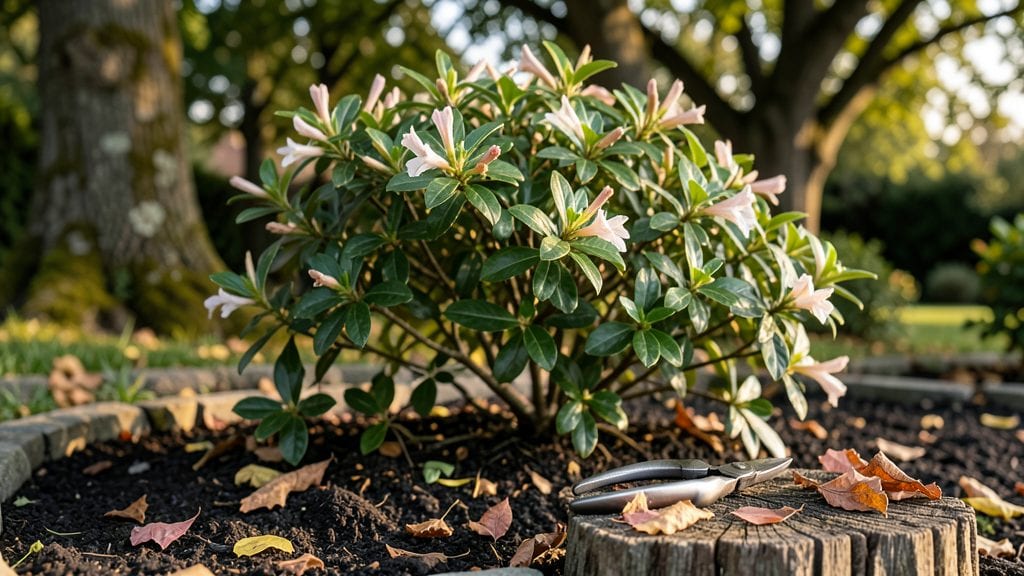
Abelia pruning transforms a leggy mess into a lush, blooming shrub that neighbors will envy. ✨ I’ve pruned mine every year since I planted it, and the difference between a well-shaped abelia and one left to its own devices is night and day—more flowers, denser foliage, and a shape that actually fits my small yard.
Timing matters most: prune lightly after blooms fade in late spring, then do the heavy shaping in late winter or early spring before new growth starts. You’ll need sharp pruners, gloves, and a clear vision for your plant’s shape—whether you want a tidy hedge or a loose, natural look.
The key is cutting back one-third of the oldest stems to encourage fresh growth while keeping the rest intact.
After pruning, your abelia will bounce back with new shoots within 2-3 weeks, and by summer, you’ll have more blooms than before. The secret? Never cut into old wood—always leave a bud or leaf node to spur new growth.
And skip the harsh shears: clean cuts heal faster, so take your time with each snip.
This method works for all abelia varieties, whether you’re dealing with a compact ‘Kaleidoscope’ or a taller ‘Francis Mason.’ Just avoid pruning in fall—it stresses the plant before winter—and you’ll have a thriving, blooming shrub year after year. Let’s get those shears ready!
📚 In This Guide
- What you need
- Instructions
- Tips and common mistakes
- Wrapping up and next steps
What you need
- ● Sharp bypass pruners (1 pair) – For clean cuts on small to medium stems (avoid dull blades to prevent tearing).
- ● Loppers (1 pair) – For thicker branches (up to 2 inches in diameter). Look for bypass-style loppers for precision.
- ● Hand pruners (felco or equivalent) (1 pair) – For finer trimming and shaping.
- ● Garden gloves (1 pair) – Protect your hands from thorns and sap (nitrile-coated for durability).
- ● Disinfectant (70% isopropyl alcohol or rubbing alcohol) – A small spray bottle or wipe to sterilize tools between cuts (prevents disease spread).
- ● Rag or paper towels – For wiping tools and cleaning sap.
- ● Extension pole saw (if your Abelia is tall) – For hard-to-reach branches.
- ● Hedge shears – If you’re giving your Abelia a neat, formal shape.
- ● Plant tie or twine – To secure heavy branches after pruning.
- ○ Pruning sealant – For large cuts (optional; helps prevent disease in some cases).
- ● Bucket or trash bag – For collecting pruned branches.
- ● Check the weather: Prune on a dry, overcast day to reduce stress on the plant.
- ● Have a clear plan: Sketch or visualize where you’ll make cuts for balance and airflow.
- ● Wear comfortable clothing: Long sleeves and closed-toe shoes protect from scratches and sap.
Step-by-Step guide to pruning your Abelia plant
Here's how I keep my Abelia blooming beautifully year-round with minimal effort.
✂️ Step 1: Prune After Spring Blooms
Wait until late spring, after your Abelia finishes flowering. This is the best time to shape the plant and encourage new growth. I always grab my clean, sharp pruners and make cuts just above a leaf node or bud—this ensures fresh growth will sprout from that spot.
Remove any dead, damaged, or crossing branches first. These are easy to spot—they're brown, brittle, or growing inward. Cut them back to healthy wood. For shaping, I trim back about 1/3 of the plant's height to maintain its natural shape while encouraging bushier growth.
✂️ Step 2: Light Summer Pruning for Airflow
In early summer, give your Abelia a light trim to improve airflow and prevent disease. Focus on thinning out the center of the plant by removing about 10-15% of the foliage. This keeps the plant from getting too dense, which can lead to fungal issues.
Look for branches that are rubbing against each other or growing in awkward directions. Cut these back to a healthy bud or leaf node. Avoid heavy pruning now—you don’t want to remove too many flowers before they open. A little maintenance goes a long way in keeping your Abelia looking its best.
✂️ Step 3: Minimal Fall Pruning for Winter Prep
In late fall, after the first frost, do a quick cleanup. Remove any dead or diseased branches that might harbor pests or fungi over winter. I also trim back any leggy growth that’s stretched too far—this helps the plant focus its energy on root development.
Keep cuts clean and angled slightly away from the bud. Avoid heavy pruning now, as the plant needs to harden off for winter. A light trim is all you need to tidy things up before the cold sets in.
⏰ Step 4: Post-Winter Pruning for New Growth
In very early spring, just as new growth begins to appear, do a final light pruning. This is your chance to shape the plant before the main growing season kicks in. I usually cut back about 5-10% of the plant to encourage fresh, vigorous growth.
Watch for any branches that didn’t survive the winter or look weak. Cut these back to healthy wood. Avoid pruning too late in spring—you want to give the plant time to recover before summer heat sets in.
🌿 Step 5: Year-Round Maintenance Tips
Between pruning sessions, keep an eye out for any branches that need trimming. If you notice a branch growing in an odd direction or rubbing against another, snip it back immediately. Regular light maintenance keeps your Abelia looking neat and encourages healthy growth.
I also like to fertilize lightly after pruning to give the plant a boost. A balanced fertilizer in early spring helps it recover and grow strong for the season ahead. With consistent care, your Abelia will stay lush, blooming, and beautiful all year long.
Tips & tricks for perfect Abelia plant pruning
Here's what I've learned over years of keeping my Abelia thriving—simple tricks that make all the difference in keeping your plant healthy and blooming.
The Right Time Factor: Timing is everything with Abelia pruning. In Step 1, wait until you see no more flowers and some new leaves appear—this signals the plant has finished blooming. I've made the mistake of pruning too early, which can cut off next year's flowers. Trust me, patience here pays off with bigger blooms later!
Tool Technique: Your pruners are more important than you might think. Always use clean, sharp pruners—dull blades tear the plant, making it vulnerable to disease. I sterilize mine with rubbing alcohol between cuts when dealing with diseased branches. For thick branches, use bypass pruners instead of anvil pruners to avoid crushing the stem.
Pruning Precision: When making cuts in Step 1 or Step 4, aim just above a leaf node or bud at a 45-degree angle. This creates a natural shield that protects the cut from rain and disease. I draw an imaginary line between the bud and the branch to visualize where to cut—this simple trick makes all the difference in how well your plant recovers.
Seasonal Strategy: The 10-15% thinning in Step 2 might seem small, but it's crucial for airflow. I think of it like giving my Abelia a spa day—removing just enough to let light and air circulate prevents those pesky fungal issues. In Step 3, focus on cleanup rather than shaping, letting the plant rest before winter.
Pro Tips for Abelia Plant Pruning
- Here's what I've learned over years of keeping my Abelia thriving—simple tricks that make all the difference in keeping your plant healthy and blooming.
- The Right Time Factor: Timing is everything with Abelia pruning.
- Tool Technique: Your pruners are more important than you might think.
Frequently asked questions
Got questions about keeping your Abelia looking its best? We’ve got answers!
Whether you’re a newbie gardener or just need a quick refresher, these FAQs cover the most common concerns about pruning—from timing to troubleshooting.
When is the best time to prune Abelia?
The ideal time is late winter or early spring (just before new growth starts) to encourage fresh blooms. You can also do a light pruning after flowering to shape the plant. Avoid heavy pruning in fall—it reduces winter hardiness.
How much can I prune my Abelia without harming it?
Abelia is highly resilient—you can safely prune up to one-third of the plant in a single session. For shaping, focus on removing dead, crossing, or overcrowded branches. If you go heavier, the plant may take longer to recover but will bounce back!
What should I do if my Abelia isn’t blooming after pruning?
Lack of blooms often means pruning too late (after mid-summer) or cutting back flowering stems. Always leave some current season’s growth to ensure next year’s blooms. Fertilize lightly in spring to encourage flowering!
Can I prune Abelia in hot or cold weather?
Avoid pruning during heatwaves or extreme cold (below 40°F or above 90°F). Stress from temperature swings can slow recovery. Early morning on a mild day is perfect—just give your Abelia time to heal before harsh conditions!
What’s the difference between pruning for shape vs. rejuvenation?
Shaping pruning
(light cuts) keeps the plant tidy year-round. Rejuvenation pruning (harder cuts) is for overgrown or leggy Abelia—cut back half the plant in stages over 2-3 years. Patience pays off!
My Abelia leaves are yellowing after pruning—what’s wrong?
Yellow leaves usually mean over-pruning or stress. If it’s just a few leaves, it’s normal. If widespread, reduce watering (Abelia dislikes soggy roots) and fertilize lightly. Avoid pruning again until new growth appears!
Wrapping up and next steps
Mastering Abelia plant pruning is your ticket to a lush, vibrant garden year-round! Whether you’re shaping for aesthetics or boosting blooms, the key is timing, technique, and a little patience.
With the right tools and knowledge, your Abelia will thrive and reward you with stunning foliage and flowers for seasons to come.
Ready to take the next step? Grab your pruners and schedule that first trim—your Abelia is waiting! 🌿✨