
Pruning
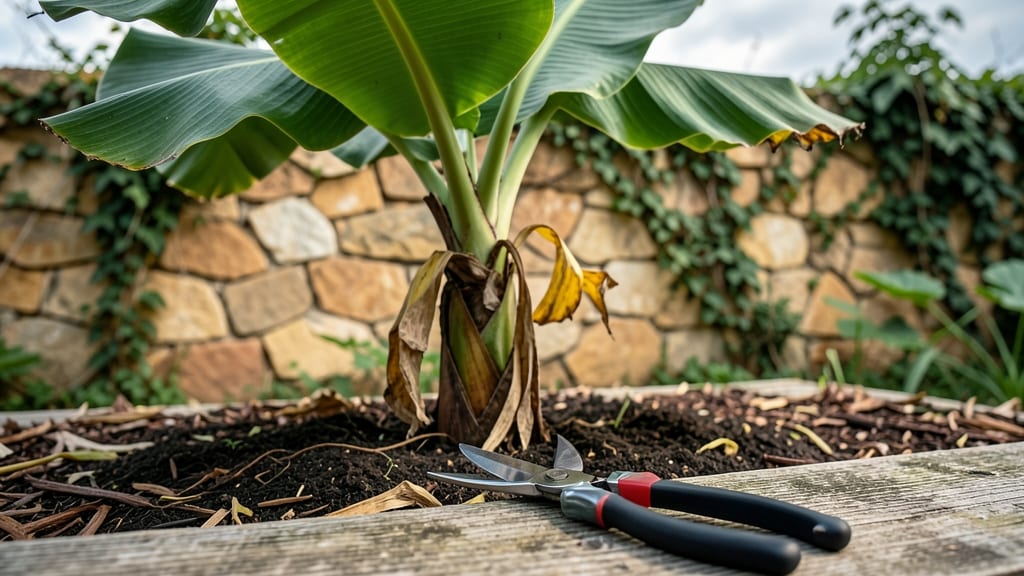
Trimming banana plants isn't just about cleaning up—it's the secret to keeping them productive year after year. 🌿 I've learned that skipping this step means fewer bunches of fruit and more wasted energy in the plant.
The right cuts redirect growth to where you want it, and once you master it, your banana plant will reward you with bigger harvests and healthier foliage.
You only need three things: sharp pruners, a clean bucket for clippings, and a sunny afternoon. The timing matters too—trim after harvest or when the plant starts looking ragged, but never when it's actively flowering.
Most mistakes come from cutting too aggressively or leaving stubs that rot, so focus on clean cuts at the base of dead leaves or damaged pseudostems.
What you'll end up with is a banana plant that looks tidier and produces more fruit. The new shoots emerge faster, and pests have fewer places to hide in the dense foliage.
Within a few weeks, you'll notice fresh green leaves pushing out from the center, signaling that the plant is putting energy into growth instead of maintenance.
This works for both dwarf and large banana varieties, though the scale changes. If you're in a cooler climate, you might trim more lightly during dormancy, but the principles stay the same. Let's get those plants looking—and performing—their best.
📚 In This Guide
- What you need
- Instructions
- Tips and common mistakes
- Wrapping up and next steps
What you need
- ● Sharp pruning shears or loppers – Choose bypass-style (for clean cuts) or anvil-style (for thicker stems). Size: 6–10 inches (for small plants) or 12–16 inches (for mature, woody stems).
- ● Disinfectant (70% isopropyl alcohol or bleach solution) – 1 part bleach to 9 parts water to sterilize tools and prevent disease.
- ● Gloves (heavy-duty, cut-resistant) – Banana leaves are razor-sharp—protect your hands!
- ○ Compost bin or large container – For collecting trimmed leaves and pseudostems (optional but eco-friendly!).
- ● Rake or broom – To clear debris after trimming.
- ● Pruning saw – For thick, woody pseudostems that shears can’t handle.
- ● Plant food (balanced fertilizer, 10-10-10) – Apply after trimming to boost regrowth.
- ● Mulch (straw or wood chips) – To protect the base and retain moisture.
- ● Camera or phone – Document your plant’s progress (because before-and-after pics are satisfying!).
How to trim banana plants for healthy year-round growth
Keep your banana plant thriving with these simple trimming techniques—no pruning shears required.
🌱 Step 1: Identify and Remove Dead or Yellowing Leaves
Start by inspecting your banana plant for leaves that are completely brown, yellowed, or brittle. These are dead and no longer contributing to the plant’s health. Use clean, sharp pruning shears or a knife to cut them off at the base, about ½ inch above the stem. This prevents disease from spreading into the healthy parts of the plant.
I always look for leaves that feel dry and crunchy when touched—those are ready to go. Never pull leaves by hand, as this can tear the plant tissue and leave it vulnerable to infection. Focus on removing only the worst offenders; a few yellowing leaves with green streaks can stay for now.
✂️ Step 2: Prune Suckers to Encourage Stronger Growth
Banana plants produce suckers—small shoots that grow from the base of the main stem. These can compete with your primary plant for nutrients. Wait until the main stem has at least 3-4 mature leaves before trimming any suckers. Use clean shears to cut them off at the base, leaving a small bump where they grew.
Here’s the thing—if you have more than 2-3 healthy suckers, thin them out to the strongest one or two. You’ll know which ones to keep by their vibrant green color and upright growth. Removing excess suckers redirects energy to the main plant, resulting in bigger, healthier fruit.
☀️ Step 3: Trim Flower Stems for Fruit Production (Optional)
If your banana plant produces a flower stalk (called a "bunch"), you can choose to trim it for better fruit quality. Using clean shears, cut the stalk about 12-18 inches below the base of the flower. This encourages the plant to focus energy on developing larger, more flavorful bananas instead of supporting a massive flower.
I only do this with mature plants that have already produced fruit at least once. Younger plants should keep their flower stalks to build strength. After trimming, watch for new leaves to emerge from the center of the plant—a sign the energy is redirecting to growth.
🌿 Step 4: Clean Up and Monitor for Regrowth
After trimming, remove all cut leaves and debris from the base of the plant. This reduces the risk of pests or disease. Water the plant deeply to help it recover, and keep the soil moist but not soggy for the next 1-2 weeks. You’ll see new growth within 2-4 weeks, depending on your climate.
Real talk: If your plant looks a little bare after trimming, don’t worry. Banana plants store energy in their pseudostems (the thick, false trunk), so they bounce back quickly. Just keep an eye out for new leaves sprouting from the center—this is your plant’s way of telling you it’s happy and healthy.
Tips & tricks for perfect banana plant trimming
Here’s what I’ve learned after years of keeping banana plants—these little tricks make all the difference for long-term health.
Tool Prep: Always sterilize your pruning shears or knife with rubbing alcohol before trimming. I learned this the hard way after my plant developed fungal spots—clean tools prevent disease from spreading through cuts. For extra safety, wipe down the blade between cuts, especially when dealing with suckers or flower stalks.
Sucker Selection: When choosing which suckers to keep in Step 2, look for ones that are growing at about a 45-degree angle from the main stem. These tend to be the strongest and will produce the healthiest fruit. Avoid keeping suckers that are growing straight up or too close to the main stem—they’ll compete for nutrients instead of supporting growth.
Flower Trimming Timing: For the optional flower stalk trimming in Step 3, do it in the morning when temperatures are cooler. This reduces stress on the plant and gives it time to recover before the heat of the day. I’ve found that plants trimmed in the morning show new growth within 7-10 days instead of the usual 2-4 weeks.
Post-Trim Care: After cleaning up in Step 4, I always add a 1-inch layer of mulch around the base of the plant. This helps retain moisture during the critical 1-2 week recovery period and prevents weeds from competing with your banana plant for nutrients. Just avoid piling mulch directly against the stem.
Pro Tips for Trim Banana Plants
- Here’s what I’ve learned after years of keeping banana plants—these little tricks make all the difference for long-term health.
- Tool Prep: Always sterilize your pruning shears or knife with rubbing alcohol before trimming.
- Sucker Selection: When choosing which suckers to keep in Step 2, look for ones that are growing at about a 45-degree angle from the main stem.
Frequently asked questions
Got questions about trimming banana plants? You’re not alone! Here are some of the most common concerns—plus straightforward answers to keep your plants thriving.
When is the best time to trim banana plants?
Trim banana plants after they’ve fruited or during their dormant season (late fall/winter in cooler climates). Avoid heavy pruning in spring when new growth is just starting. For tropical zones, you can trim year-round—but always remove dead leaves first to prevent disease.
How do I know which leaves to cut?
Focus on yellow, brown, or torn leaves first—they’re dead weight. For mature plants, trim leaves that are dry at the base or have black spots. Save the healthy green leaves (they’re photosynthesizing!). Never cut more than 1/3 of the plant at once—this can stress it.
What if my banana plant looks sad after trimming?
Don’t panic! A healthy plant will bounce back with new shoots in 2–4 weeks. If it’s wilting, yellowing, or oozing sap, you may have cut too aggressively. Reduce watering temporarily, apply a balanced fertilizer, and keep it in bright, indirect light until it recovers.
Can I use banana plant trimmings for anything else?
Compost
the healthy leaves (they’re nitrogen-rich), or use them as mulch to retain soil moisture. The pseudostems (the "trunk") can even be chopped into chips for mulch—just let them dry first. Avoid burning them (they release toxins when burned).
Will trimming my banana plant affect next year’s fruit?
No—trimming doesn’t reduce future harvests! In fact, it boosts productivity by redirecting energy to new growth. Just avoid heavy pruning right before flowering season. Most banana varieties produce one main bunch per year, but trimming helps the plant recover faster for the next cycle.
Wrapping up and next steps
Trimming your banana plants isn’t just about aesthetics—it’s the secret to stronger growth, bigger yields, and healthier fruit! 🌱 By following these three simple steps, you’ll keep your plants thriving year-round while preventing pests and diseases.
Whether you’re a seasoned gardener or just starting, every snip brings you closer to a bountiful harvest.
Ready to take the next step? Monitor your plant’s progress after trimming—watch for new shoots, adjust your routine as needed, and soon, you’ll be enjoying juicy, homegrown bananas like a pro! 🍌✨