
Pruning
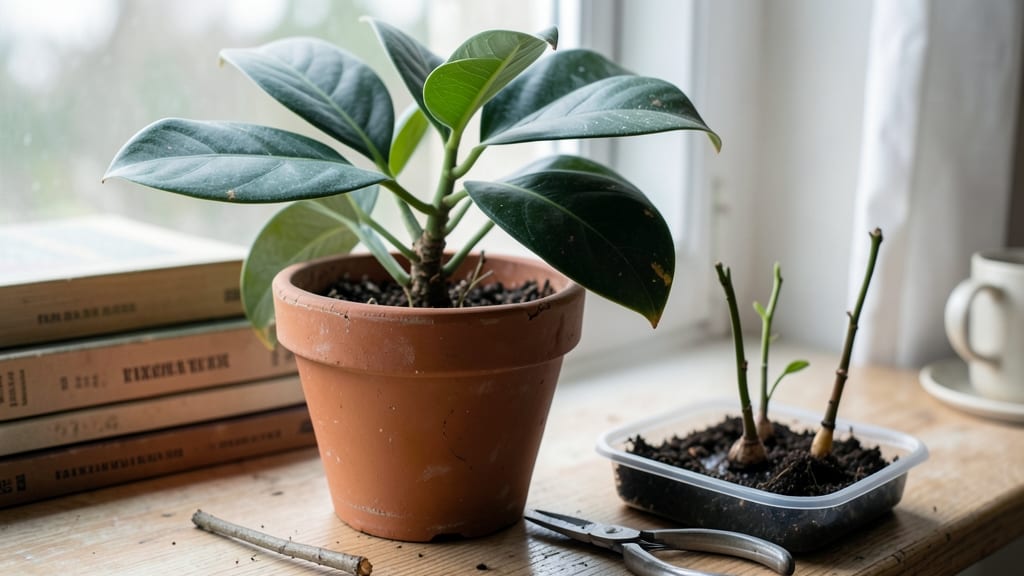
Pruning indoor plants isn't just about trimming—it's the secret to keeping them lush and productive year-round. ✨ I used to avoid it, worried I'd mess up my snake plant or fiddle-leaf fig, but three simple cuts changed everything.
The right snips encourage fuller growth, prevent leggy stems, and even help plants recover from stress.
You only need three tools: clean scissors, rubbing alcohol for sterilizing, and a small bowl for clippings. Most plants respond well to pruning anytime, but spring and early summer are ideal for a major shape-up. Even a tiny trim every few months keeps plants compact and healthy—no green thumb required.
By the end of this, your pothos will have bushier vines, your fiddle-leaf fig will fill out faster, and you'll spot new growth within weeks. The best part? You'll save money by avoiding overgrown, sad-looking plants that need costly replacements.
Works for nearly every common houseplant—from trailing pothos to bold monstera leaves. Let's get those shears ready and turn your plants into thriving showstoppers.
📚 In This Guide
- What you need
- Instructions
- Tips and common mistakes
- Wrapping up and next steps
What you need
- ● Sharp pruning shears – Choose bypass pruners (for small stems) or anvil pruners (for thicker branches). Disinfect with rubbing alcohol before and after use.
- ● Clean, sharp scissors or small knives – For delicate plants like pothos or snake plants (sterilize with rubbing alcohol).
- ● Rubbing alcohol (70% isopropyl) or hydrogen peroxide – 1 small bottle (4–8 oz) to sanitize tools and prevent disease.
- ○ Gloves (optional but recommended) – A pair of gardening gloves to protect your hands from sap or thorns.
- ● Newspaper or a tray – To catch fallen leaves/debris and keep your workspace clean.
- ● Rooting hormone – A small tube (1 oz) to encourage faster growth in cuttings.
- ● Small pots or water jars – For propagating cuttings (2–3 small pots or a clear jar for water propagation).
- ● Plant food or compost – A small bag of balanced fertilizer (e.g., 10-10-10) or worm castings to nourish pruned plants.
- ● Twine or plant ties – For supporting leggy stems post-pruning.
- ● Spray bottle with water – To mist cut areas and reduce stress on the plant.
Step-by-Step instructions for pruning indoor plants
Here's the straightforward method I use to keep my indoor plants thriving all year.
✂️ Step 1: Identify the Right Cuts for Health
Start by examining your plant for three key areas that need attention: leggy growth, yellowing leaves, and overcrowded stems. Leggy growth happens when plants stretch toward light, creating weak stems that can't support themselves. Look for stems that are longer than 6 inches with sparse leaves.
Yellowing leaves often signal overwatering or nutrient stress, but they also create an unsightly mess. Pinch off any leaves that are more than 25% yellow at the base of the stem. This encourages fresh, green growth. For overcrowded stems, focus on the bottom third of the plant where branches compete for light and nutrients.
✂️ Step 2: Sterilize Tools and Make Clean Cuts
Before you cut anything, wipe your pruning shears or scissors with rubbing alcohol to prevent spreading disease. I always sterilize my tools between plants to keep my indoor garden healthy. Use sharp shears to make clean cuts at a 45-degree angle, about ¼ inch above a leaf node or where a branch meets the main stem.
Never rip or tear stems—this damages the plant and invites infections. For larger stems, I use my fingers to gently pull the branch away from the main stem before cutting at the base. This ensures a smooth cut that heals quickly. If you're pruning a woody plant like a fiddle-leaf fig, make your cut just outside the leaf node to encourage new growth.
✂️ Step 3: Encourage Bushier Growth and Prevent Overgrowth
To promote bushier growth, trim the topmost set of leaves on leggy stems. This signals the plant to focus energy on lateral branches instead of reaching upward. For plants like pothos or spider plants, I cut just above a leaf node to encourage two new shoots to grow from that spot.
If your plant has become too tall or top-heavy, you can also prune the top 2-3 inches to balance its shape. This is especially useful for plants like snake plants or ZZ plants, which can grow quite tall indoors. After pruning, place the cuttings in water to propagate new plants—it’s a great way to expand your indoor garden without spending a dime.
💧 Step 4: Care for the Plant After Pruning
After pruning, reduce watering for 3-5 days to allow the plant to recover. Pruning creates small wounds, and overwatering can lead to rot or fungal issues. Check the soil with your finger—if it feels dry to the touch 1 inch below the surface, it’s time to water.
Place your pruned plant in a spot with bright, indirect light for a few days to help it recover. Avoid placing it in direct sunlight immediately, as this can stress the plant further. You’ll notice new growth within 2-4 weeks, depending on the plant species. Monitor the pruned areas for any signs of stress, like wilting or browning, and adjust care as needed.
Tips & tricks for pruning indoor plants
Here's what I've learned from years of pruning my own indoor plants—these tricks will help you avoid common mistakes and keep your greenery thriving.
Leaf Node Location: In Step 2, when making those clean cuts at a 45-degree angle, focus on cutting just above a leaf node—this is where new growth will emerge. For woody plants like fiddle-leaf figs, cutting just outside the node encourages stronger branches. I always count nodes from the base to ensure I'm cutting in the right spot. This small detail makes all the difference in how quickly your plant recovers and grows back bushier.
Timing Secret: The 3-5 day watering break after pruning (Step 4) is crucial—it gives your plant time to seal those small wounds. I've made the mistake of watering too soon, and my plants developed fungal spots. Instead, think of it like giving your plant a mini vacation from water. You'll notice the new growth coming in much stronger when you do resume watering.
Propagation Hack: Those cuttings you take in Step 3? Don't toss them! Place them in water with just a few inches submerged, and you'll have new plants ready in about 2-4 weeks. I've propagated everything from pothos to snake plants this way. Just be patient—some plants like ZZ plants take a little longer to root. This is a great way to expand your plant collection without spending a dime!
Light Adjustment: After pruning, that bright indirect light recommendation in Step 4 is key. Direct sunlight can stress newly pruned plants, causing leaf burn. I learned this the hard way when my newly pruned spider plant got too much sun and developed brown patches. Move your plant to a spot where it gets morning sun but afternoon shade for the first few days after pruning.
Pro Tips for Prune Indoor Plants
- Here's what I've learned from years of pruning my own indoor plants—these tricks will help you avoid common mistakes and keep your greenery thriving.
- Leaf Node Location: In Step 2, when making those clean cuts at a 45-degree angle, focus on cutting just above a leaf node—this is where new growth will emerge.
- Timing Secret: The 3-5 day watering break after pruning (Step 4) is crucial—it gives your plant time to seal those small wounds.
Frequently asked questions
Got questions about pruning your indoor plants? You’re not alone! Here are some of the most common concerns—plus quick, actionable answers to keep your green friends thriving.
When is the best time to prune indoor plants?
Prune indoor plants anytime they need it—there’s no strict seasonal rule! Focus on removing yellow, brown, or overgrown leaves year-round. However, avoid heavy pruning during major growth spurts (like spring/summer) unless necessary, as it can stress the plant. Think of it like trimming your hair: small adjustments are easier to recover from!
How do I know if I’m pruning too much?
If you’re cutting more than 1/3 of the plant’s foliage at once, you’re likely overdoing it. Signs of over-pruning include sudden wilting, stunted growth, or bare stems. For sensitive plants (like ferns or calatheas), stick to light trims—think "haircut," not "makeover." When in doubt, prune less and observe for 2–3 weeks before repeating.
Can I propagate with my pruned cuttings?
Many indoor plants (like pothos, snake plants, or ZZ plants) root easily from cuttings. Simply place healthy stems in water or moist soil, and keep them in bright, indirect light. Avoid woody stems (like those from a rubber plant) unless you’re experienced—some plants propagate better than others. Pro tip: Label your cuttings so you remember what they are!
What should I do if my plant looks sad after pruning?
Don’t panic! A "sad" plant usually just needs time and TLC. Move it to a spot with bright, indirect light and avoid overwatering (pruned plants need less initially). If leaves yellow or drop, it might be adjusting—keep an eye out for pests or rot. Most plants bounce back in 2–4 weeks if the cut wasn’t too severe.
How often should I prune indoor plants?
There’s no one-size-fits-all rule, but most indoor plants benefit from monthly light pruning (removing dead/dying leaves) and a quarterly deep trim (shaping or controlling size). Fast growers (like spider plants) may need more frequent attention, while slow growers (like snake plants) can go longer between prunes. Always check for pests or disease while you’re at it!
Wrapping up and next steps
Pruning your indoor plants doesn’t have to be intimidating—just a few simple cuts can transform their health and appearance! Remember to use clean tools, identify the right spots, and follow seasonal cues to keep your greenery thriving year-round. 🌿✂️
Now that you’re ready to prune like a pro, pick one plant this week and give it a fresh start. Your green companions will thank you with lush growth, and you’ll enjoy the satisfaction of a well-maintained indoor jungle! Happy pruning!