
Pruning
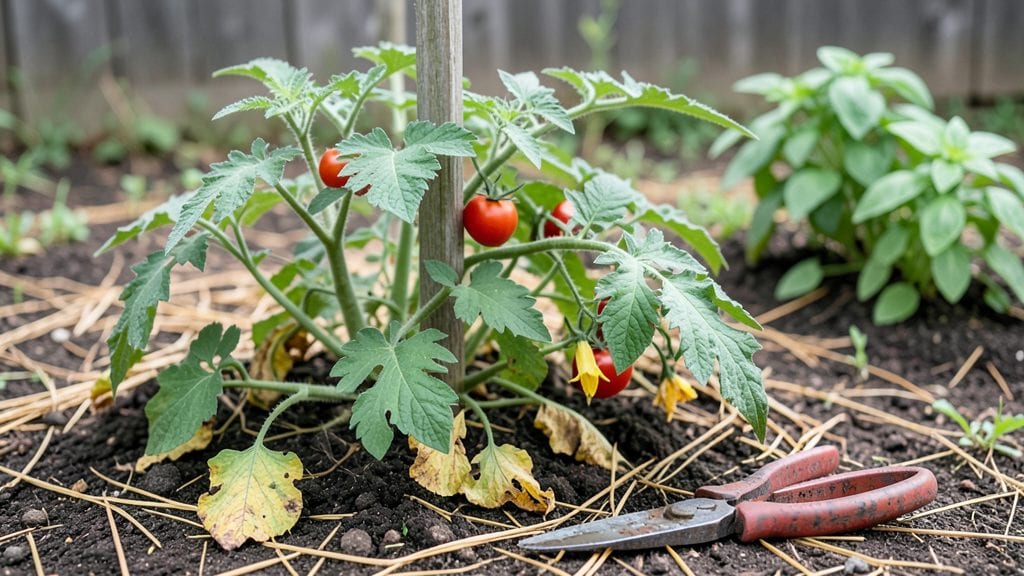
Do you need to trim tomato plants—it’s the key to unlocking bigger, healthier fruit and warding off diseases. ✨ I spent years growing tomatoes without pruning, only to watch my plants struggle with crowded branches and blight.
The right cuts make all the difference, whether you’re dealing with sprawling indeterminate vines or bushy determinate varieties.
You’ll need just a few simple tools: sharp pruning shears, gloves, and maybe some twine for staking. The key is timing—start when plants hit 12-18 inches tall, and keep at it every 1-2 weeks during the growing season.
For indeterminate tomatoes, focus on removing suckers (those little shoots in the leaf axils), while determinate types need minimal pruning to encourage bushier growth.
What you’ll get is a plant that directs its energy into juicier, sweeter fruit instead of leafy growth. Air circulates better, reducing humidity where diseases like blight love to hide, and your harvest stretches later into the season.
My pruned plants now produce 30-50% more tomatoes than my unpruned ones—it’s night and day.
This works for garden beds, containers, and even balcony setups. The only real mistake is waiting too long—once your plants are overcrowded, it’s harder to catch up. Let’s get those shears ready and turn your tomato game around!
📚 In This Guide
- What you need
- Instructions
- Tips and common mistakes
- Wrapping up and next steps
What you need
- ● Pruning shears or sharp bypass pruners – Choose sterilized tools with a 4- to 6-inch blade for precision cuts. (1 pair recommended)
- ○ Gloves (optional but handy) – Wear gardening gloves to protect your hands from thorns, dirt, and sap. (A pair with grip is ideal!)
- ● Disinfectant (rubbing alcohol or bleach solution) – Clean tools before and after use to prevent disease spread. (Mix 1 part bleach to 9 parts water for a quick wipe-down.)
- ● Garden twine or soft ties – If staking, use 3- to 4-foot stakes and twine or Velcro plant ties to support growth. (1-2 stakes per plant, depending on size.)
- ○ Sharpie or permanent marker – Label stakes or pruning cuts if you’re experimenting with training methods. (Optional but helpful for tracking!)
- ○ Plant growth regulator (optional) – If pruning heavily, consider a rooting hormone for cuttings or a balanced fertilizer to support regrowth. (Follow package instructions!)
- ● Mulch (straw, grass clippings, or wood chips) – Apply a 2- to 3-inch layer around the base to retain moisture and reduce weeds. (Great for post-pruning care!)
- ● Spray bottle with water – Helps clean sap off tools and keeps cuts moist if propagating.
- ● Camera or notebook – Document your pruning progress to track changes over time! (Because tomato plant transformations are worth capturing!)
Instructions for pruning tomato plants to maximize fruit
Here's the straightforward method I use to keep tomato plants healthy and productive.
✂️ Step 1: Identify the Right Time to Start Pruning
Wait until your tomato plants reach about 12-18 inches tall before you begin pruning. This is when they've developed their first few sets of true leaves and are starting to put energy into growth rather than just survival. I always check for new leaf growth at the top of the plant—that's your signal it's ready.
Don't rush this step. Pruning too early can stress young plants and slow their overall development. If you're growing indeterminate varieties (the ones that keep growing all season), you'll prune throughout the growing season. For determinate varieties (the bush types), pruning is minimal or unnecessary.
✂️ Step 2: Remove Suckers for Better Airflow and Fruit Production
Suckers are the small shoots that grow in the V-shaped junction between the main stem and a branch. These little side shoots steal energy from your fruit production. Use clean, sharp pruning shears to snip them off at the base, being careful not to damage the main stem.
I do this every 1-2 weeks during the growing season, always checking for new suckers after heavy rain or when the plant looks particularly vigorous. The goal is to keep your plant focusing its energy on producing fruit rather than leafy growth. You'll know you're doing it right when you see more flowers and fruit developing.
✂️ Step 3: Prune Lower Leaves to Improve Air Circulation
Once your plants are established, remove any leaves that are touching the soil or lower branches. These leaves can harbor diseases and pests, and they block airflow, which is crucial for healthy plants. Use your fingers or small pruning shears to gently pinch off these lower leaves, being careful not to damage the stem.
I like to do this on a dry day when the plants are not wet, as this reduces the risk of spreading any potential diseases. Aim to keep the lower third of your plant clear of foliage. This might seem counterintuitive, but it actually helps your plant focus its energy on producing fruit higher up.
✂️ Step 4: Thin Fruit Clusters for Larger, Healthier Tomatoes
When your tomato plants start flowering and setting fruit, you'll often see clusters of small tomatoes forming. To ensure each fruit gets the nutrients it needs, thin these clusters so that only 1-2 tomatoes per cluster remain. Use your fingers to gently twist off the smaller or weaker-looking tomatoes at the base.
This step is all about quality over quantity. You might be tempted to leave all the tomatoes on the plant, but thinning ensures each remaining tomato gets enough space and nutrients to grow large and healthy. I usually do this when the tomatoes are about the size of a marble, and I always leave the healthiest-looking ones.
⏰ Step 5: Adjust Pruning as the Season Progresses
As your tomato plants mature, you'll need to adjust your pruning approach. In late summer, reduce pruning to allow the plant to focus on ripening existing fruit. Stop pruning entirely about 4-6 weeks before your first expected frost, as new growth won't have time to harden off before winter.
Watch for signs of stress, like yellowing leaves or wilting, which can indicate you're pruning too aggressively. The key is balance—keep your plant healthy and productive without overstressing it. By late summer, you should see a bounty of ripe tomatoes ready for harvest, thanks to your careful pruning throughout the season.
Tips & tricks for pruning tomato plants
Pruning tomato plants might seem intimidating, but these simple tricks will help you maximize fruit production without stressing your plants.
Timing is Everything: I can't stress enough how important it is to wait until your plants reach that 12-18 inch mark before starting. This is when they've developed enough energy reserves to handle pruning. Confession: I skipped this step for years and wondered why my plants always looked stressed. The difference between good and great tomatoes often comes down to this single, seemingly insignificant step.
Tool Selection Matters: Don't use dull scissors or your fingernails—they can crush stems and introduce diseases. Invest in a pair of clean, sharp pruning shears for cutting suckers and lower leaves. For the fruit clusters, your fingers work perfectly fine, but make sure they're clean to prevent spreading any potential pathogens. I keep a small bottle of rubbing alcohol handy to wipe down my tools between plants.
Visual Cues for Pruning: In Step 2, when removing suckers, look for those little V-shaped junctions where side shoots emerge. These are your targets. For Step 3, aim to clear the lower third of the plant—this means removing any leaves that would touch the soil if the plant were lying down. This might seem drastic, but it's what prevents those nasty soil-borne diseases from taking hold. Think of it as giving your plant a spa day for better airflow.
Seasonal Adjustments: Remember that 4-6 week rule before your first frost? Mark your calendar now! I use a garden journal to track when I started pruning and when I need to stop. In late summer, I switch to a more gentle approach, focusing only on removing diseased or damaged leaves. This allows the plant to redirect all its energy to ripening the existing fruit rather than growing new leaves that won't have time to mature.
Pro Tips for Do You Need To Trim Tomato Plants
- Pruning tomato plants might seem intimidating, but these simple tricks will help you maximize fruit production without stressing your plants.
- Timing is Everything: I can't stress enough how important it is to wait until your plants reach that 12-18 inch mark before starting.
- Tool Selection Matters: Don't use dull scissors or your fingernails—they can crush stems and introduce diseases.
Frequently asked questions
Got questions about trimming tomato plants? You’re not alone! Here are answers to the most common queries to help you grow healthier plants and bigger harvests.
Do all tomato plants need pruning?
Not necessarily! Indeterminate varieties (like Roma or Cherry tomatoes) benefit from pruning to improve airflow and fruit production, while determinate types (like Bush Early Girl) usually don’t need trimming—they produce fruit all at once and handle their own structure. Prune only if the plant looks crowded or diseased.
When is the best time to trim tomato plants?
Start pruning when plants are 6–12 inches tall and have a few leaves. Continue trimming throughout the growing season, removing suckers (shoots between the stem and branches) every 1–2 weeks. Avoid heavy pruning late in the season—focus on shaping early to avoid stressing the plant before harvest.
What happens if I don’t trim my tomato plants?
Unpruned plants may produce smaller, fewer fruits due to overcrowding, poor airflow, and increased disease risk (like blight). Without trimming, energy goes to leaf growth instead of fruit development. However, determinate varieties often thrive without pruning—so don’t stress if you skip it!
Can I trim tomato plants too much?
Yes! Over-pruning can weaken the plant, reduce photosynthesis, and lower yields. Leave 3–5 main stems (for indeterminate types) and always keep 6–8 leaves below the first fruit cluster. If you’ve already trimmed too much, stop and let the plant recover—it’ll bounce back with proper care!
What should I do if my tomato plant looks stressed after trimming?
If your plant wilts or stops growing after pruning, it’s likely adjusting to the change. Help it recover by:
- Watering deeply but not overwatering (tomatoes hate soggy roots!).
- Providing balanced fertilizer (like 10-10-10) to support regrowth.
- Avoiding more pruning for 1–2 weeks to let it stabilize.
Wrapping up and next steps
Trimming your tomato plants isn’t just about aesthetics—it’s a game-changer for healthier growth and bigger, tastier harvests! 🌱 Whether you’re pruning indeterminate vines or just snipping off suckers, the key is timing, technique, and consistency.
Remember: less is more—over-pruning can stress your plants, while the right cuts encourage energy to flow where it matters most.
Ready to transform your garden? Grab those shears and start small—even a few strategic cuts can make a difference. Monitor your plants weekly, adjust as needed, and soon, you’ll be reaping the rewards of your green-thumb efforts. Happy pruning!