
Plants
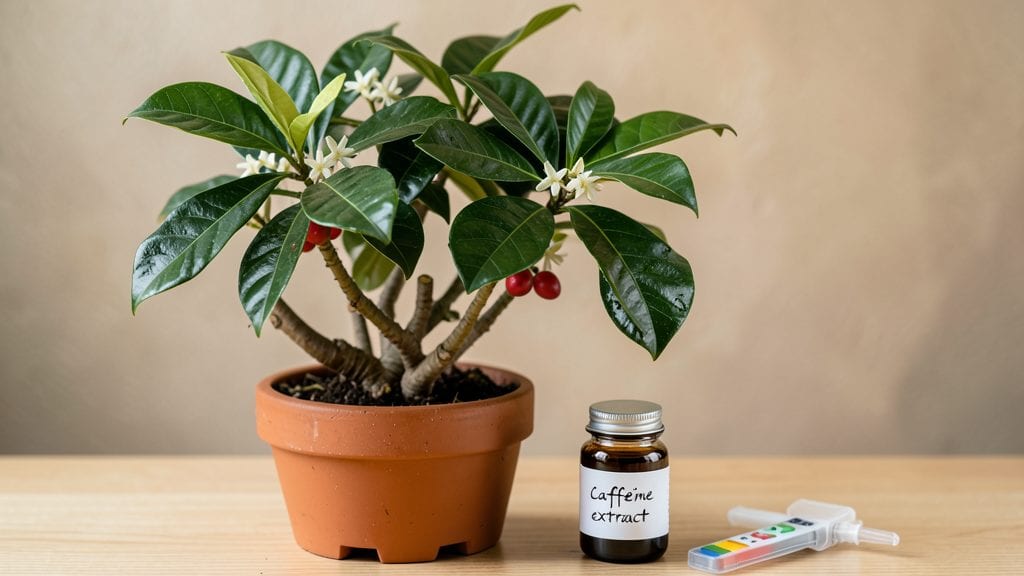
Caffeine in plants affects growth by slowing root development and delaying seed sprouting, but it also boosts resilience against environmental stress in crops like coffee and tea. Balanced amounts improve light absorption, while overproduction can harm cellular functions and nutrient processing.
This natural compound acts like a plant's built-in survival tool, helping species like coffee thrive in harsh conditions. 🌱 For example, caffeine in tea plants enhances drought tolerance by reducing water loss through leaves, while in coffee, it regulates growth to prioritize bean development over excessive foliage.
The key lies in balance—too little caffeine leaves plants vulnerable, but too much can stunt their overall health, making proper cultivation techniques critical for growers.
Research shows that caffeine-producing plants often allocate resources differently than non-producing varieties. For instance, cacao plants with higher caffeine levels invest more energy into protective compounds rather than rapid growth. Understanding these trade-offs helps gardeners and farmers optimize yields without compromising plant vitality.
💡 In This Article
- How Caffeine Alters Plant Physiology and Development
- Optimizing Caffeine Levels for Cultivation Success
How caffeine alters plant physiology and development
Caffeine functions as a secondary metabolite in plants, meaning it's not directly involved in growth but plays a crucial role in survival strategies. In coffee plants, for example, caffeine accumulates primarily in the beans and leaves, where it acts as a natural pesticide by deterring herbivores.
This chemical defense comes at a physiological cost: caffeine interferes with the plant's natural growth hormones like auxin, which regulates cell elongation. Studies show that caffeine concentrations of 1-2% dry weight in coffee beans can reduce root growth by 20-30% while simultaneously increasing the plant's tolerance to drought conditions.
The biochemical pathway begins with the amino acid theanine, which converts into caffeine through a series of enzymatic reactions involving methyltransferases and N-methylputrescine oxidase.
In tea plants, caffeine synthesis peaks during leaf maturation, reaching concentrations of 2-4% dry weight—a level that triggers stress responses by activating abscisic acid (ABA) pathways. ABA is the plant's "stress hormone," helping it close stomata (pores) to conserve water during drought.
This dual role explains why caffeine-producing plants often thrive in marginal environments where non-producing species would struggle. 🌿 The trade-off? Slower initial growth in favor of long-term resilience.
Comparing caffeine's effects across species reveals fascinating adaptations. In cacao plants, caffeine concentrations of 0.1-0.5% enhance resistance to fungal pathogens by disrupting microbial cell membranes. Meanwhile, non-caffeinated plants like wheat or corn rely entirely on physical defenses (like waxy cuticles) and rapid growth to outcompete pests.
The key difference lies in resource allocation: caffeine plants invest energy in chemical defenses, while non-producers prioritize biomass accumulation. This explains why coffee plants produce fewer but higher-quality beans compared to their faster-growing, lower-caffeine relatives.
Hormonal interactions create a delicate balance. Caffeine doesn't just passively accumulate—it actively modulates plant hormones. In coffee, it suppresses ethylene (a growth-promoting gas), which would otherwise trigger premature flowering. Instead, caffeine helps maintain vegetative growth until environmental conditions are optimal for fruiting.
This hormonal fine-tuning is why coffee plants can delay flowering for 3-5 years while still developing robust root systems capable of accessing deep water sources. The result? A plant that's slower to mature but far more resilient once established.
What happens when caffeine levels get too high? Excessive accumulation—beyond 5% dry weight—disrupts cellular metabolism by interfering with chloroplast function. Photosynthesis efficiency drops as caffeine binds to enzymes in the Calvin cycle, reducing the plant's ability to convert light into energy.
This explains why some high-caffeine coffee varieties show stunted growth when cultivated in nutrient-rich soils: the plant's resources become overwhelmed by caffeine production rather than growth. The lesson? Nature's survival strategies have limits, and growers must carefully manage these biochemical trade-offs. ✨
Understanding these mechanisms helps explain why caffeine-producing plants often require different cultivation approaches. For instance, tea bushes grown in shaded conditions produce leaves with 30-50% higher caffeine than sun-exposed plants—a response to increased stress from limited light.
This adaptive flexibility demonstrates how caffeine isn't just a static compound but an active participant in the plant's physiological responses to its environment.
The same principles apply across the plant kingdom, from the 1-2% caffeine in kola nuts to the 0.05% in yerba mate, each concentration fine-tuned to the species' ecological niche.