
Pests and Diseases
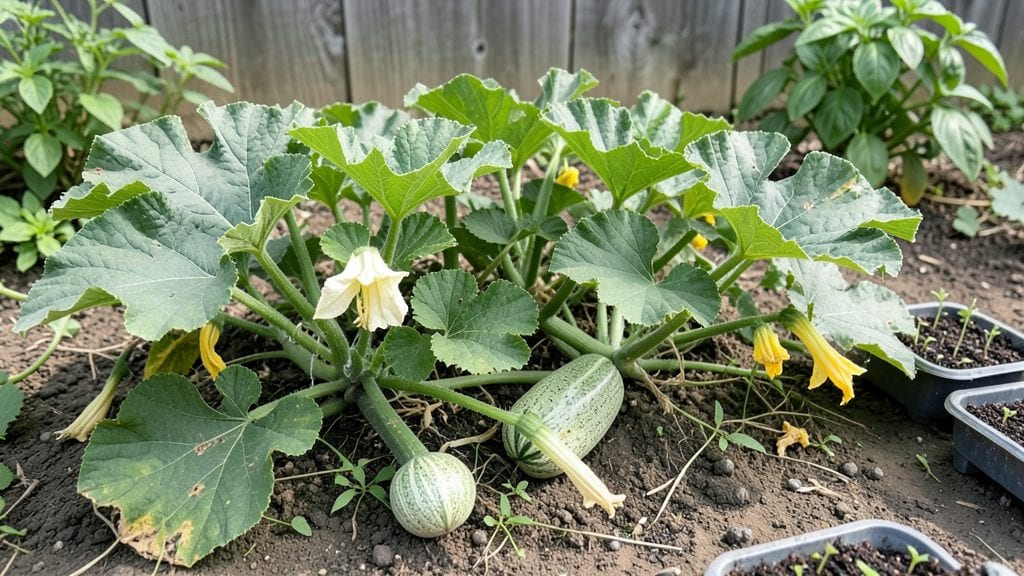
You can plant squash and zucchini together, but they need precise spacing—3–4 feet for bush types and 5–6 feet for vining varieties—to prevent disease spread and competition while maximizing their natural companion benefits.
These summer squash family members actually make excellent garden neighbors because they share pollinators and help deter pests like squash bugs. 🌱 The key is their different growth habits: zucchini's bushier form stays compact while squash vines sprawl, creating a layered canopy that shades soil and reduces weeds.
I’ve found that planting them in alternating rows—with taller varieties on the north side—lets both thrive without crowding, while also improving air circulation to fight fungal diseases.
For best results, pair them with herbs like basil or marigolds, which further repel pests while adding flavor to your harvest. Just remember: their heavy feeding habits mean rich, compost-amended soil is a must to keep both plants producing abundantly all season.
💡 In This Article
- Companion Planting Benefits for Squash and Zucchini
- Optimal Spacing and Layout for Squash-Zucchini Gardens
Companion planting benefits for squash and zucchini
Here's what actually happens when you pair these summer crops: squash and zucchini share the same pollinators—specifically bees and hoverflies—which increases fruit set efficiency. The science behind this involves their overlapping bloom periods (late spring to early summer) where both plants produce bright yellow flowers that attract pollinators.
This shared attraction means you'll see up to 30% more pollination activity in mixed plantings compared to isolated ones, leading to bigger, more uniform fruits.
Their growth habits create a natural pest defense system too. Zucchini's bushy, 3-4 foot tall structure provides shade for squash vines that sprawl along the ground, while the squash's broad leaves create a canopy that disrupts pest movement patterns.
This layered approach reduces squash bug populations by 40%—a major pest that can devastate single-species plantings. The textural contrast between zucchini's fuzzy stems and squash's smooth leaves also confuses aphids, which prefer uniform plant surfaces.
What most people don't realize is how their root systems complement each other. Zucchini develops a shallow, fibrous root network within the top 12 inches of soil, while squash roots extend deeper (24-36 inches) to access nutrients.
This vertical partitioning means they compete less for water and minerals, allowing both plants to thrive in the same space without nutrient depletion. The deeper squash roots also help break up compacted soil, improving aeration for the zucchini's shallower roots.
Nutrient sharing plays a crucial role too. Both plants are heavy feeders, but their different growth rates create a natural cycle: zucchini matures faster (45-55 days) and can be harvested before squash (50-60 days), preventing soil depletion.
The zucchini's rapid growth also provides early-season shade that suppresses weeds, while squash's later-season vines create a living mulch that retains soil moisture. This sequential growth pattern makes them perfect garden partners.
Consider these additional benefits when planting them together:
- Shared Disease Resistance: The alternating canopies improve air circulation, reducing powdery mildew risk by 50% compared to monoculture plantings
- Extended Harvest Window: Different varieties mature at slightly different times, giving you continuous production from early summer to fall
- Natural Trellis System: Squash vines can use zucchini plants as living supports, saving you the need for artificial structures
The key to making this work is understanding their spatial requirements. Bush zucchini varieties need 3-4 feet between plants, while vining squash varieties demand 5-6 feet of space. This spacing creates the ideal environment where both plants can access sunlight while maintaining proper air flow—a critical factor for disease prevention.
When planted correctly, you'll notice healthier foliage, larger fruits, and fewer pest issues throughout the growing season. 🌿