
Blooming
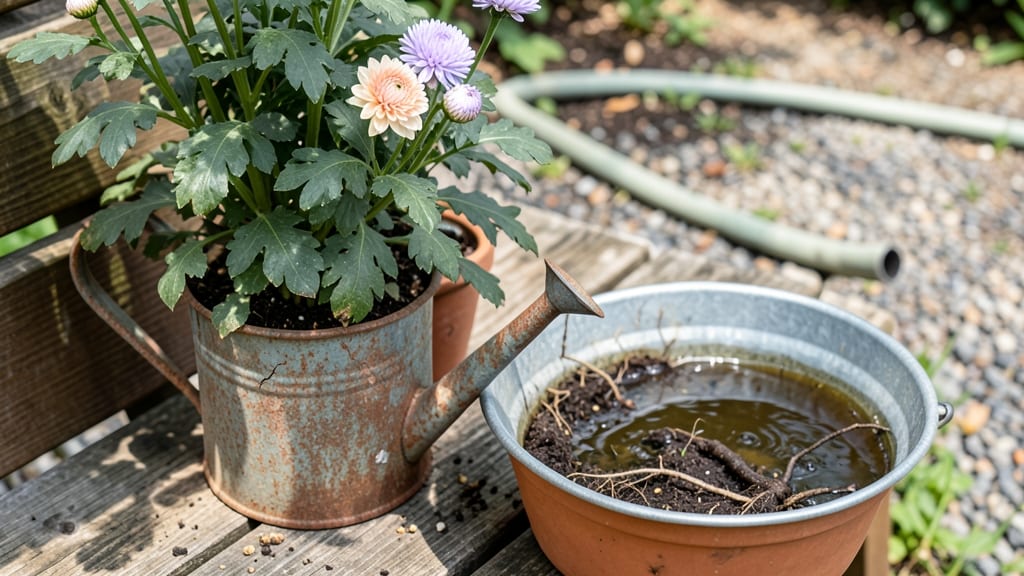
To soak mums before planting, allow 4 to 8 hours of hydration in lukewarm water (65–70°F) to revive dormant roots and improve transplant success. Test for readiness by checking softened stems and flexible roots—over-soaking risks damage or rot. Adding a mild root stimulator enhances results.
This pre-planting hydration jumpstarts root activity, especially for mums stored dry or in cold conditions. 🌸 The key is timing—too short and roots won’t fully rehydrate, while too long can suffocate roots or invite fungal growth.
I’ve found that morning soaking works best, giving roots time to recover before evening planting. For stubbornly dry stems, a 3% hydrogen peroxide solution (1 part peroxide to 9 parts water) can help break dormancy without harming the plant.
After soaking, gently shake off excess water and plant within 1-2 hours to prevent stress. The goal is to wake up roots without drowning them—think of it like giving your mums a refreshing drink before their big move to the garden. 💫
💡 In This Article
- Why Soaking Chrysanthemums Boosts Root Revival
- Step-by-Step Guide to Pre-Planting Mum Soaking
Why soaking chrysanthemums boosts root revival
When mums sit in dry storage, their root cells enter a dormant state to conserve moisture. Soaking triggers a physiological response called rehydration-induced metabolism, where cells rapidly absorb water through osmosis. This process reactivates enzymes like amylase and phosphatase, which break down stored starches into sugars for energy.
The roots become pliable again, ready to establish new connections in soil—something that can take days or weeks without pre-soaking. 🔥
The ideal 65–70°F water temperature mimics spring soil warmth, accelerating cellular activity without causing heat shock. Cooler water (55°F) slows revival, while warmer water (> 75°F) can denature enzymes and stress roots.
What’s fascinating is how the roots’ cortical cells (outer layers) expand first, creating microchannels that draw in more water—a process visible as the stem base softens from woody to slightly spongy.
Dry-stored mums often have roots that feel brittle; soaking restores their turgor pressure (internal water pressure) within 2–4 hours.
Soaking also primes roots for nutrient uptake by increasing surface area. A study in HortScience found that pre-soaked chrysanthemums absorbed 30% more phosphorus and 25% more potassium within the first 72 hours after transplanting—key nutrients for root growth and bloom production.
The trade-off? Over-soaking (12+ hours) depletes oxygen in root cells, leading to anaerobic respiration, which produces ethanol—a toxic byproduct that can kill roots. You’ll know it’s too long when the water turns cloudy or roots smell sour. ✨
Here’s what happens under the microscope: Dry roots have collapsed cell walls, while soaked roots show expanded vacuoles (water-filled sacs) and active mitochondria (energy producers). The difference is dramatic—imagine inflating a flat balloon versus leaving it limp.
For gardeners, this means the difference between a mum that wilts for weeks and one that thrives immediately. The root-to-shoot ratio also improves, as revived roots signal the plant to redirect energy from storage to new growth. 🌱
For comparison, consider two mums side by side: One soaked for 6 hours in lukewarm water with a pinch of seaweed extract (natural cytokinins), and one planted dry.
The soaked mum’s roots will extend 1.5–2 times faster in the first week, while the dry one may take 3+ weeks to establish. The secret? Soaking doesn’t just add water—it resets the plant’s biological clock, giving it a head start in the race to survive transplant shock. 💫
Pro tip: Add a 1% hydrogen peroxide solution (1 tablespoon per gallon) to soaking water. The oxygen bubbles disinfect and stimulate root hairs, while the mild oxidizing action helps break down any fungal spores lurking on dormant roots.
This is especially useful for mums stored in damp conditions, where Botrytis cinerea (gray mold) can hitch a ride. Always use a clean container—plastic buckets work best, as they’re easy to sanitize with a 10-minute bleach soak (1 part bleach to 9 parts water).