
How To
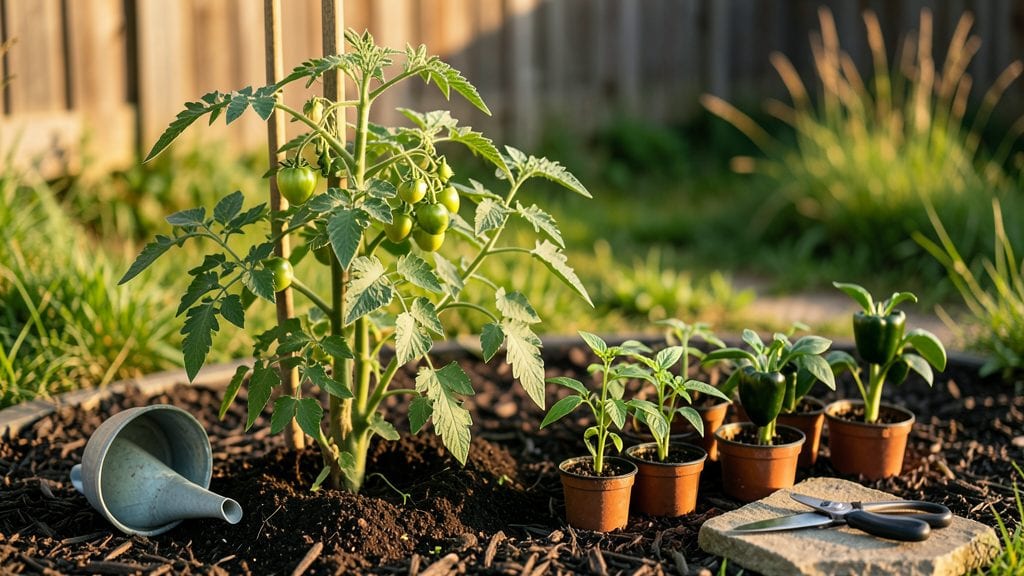
You can plant peppers with tomatoes, but they must be spaced at least 18-24 inches apart to avoid nutrient competition, sunlight blocking, and shared diseases like early blight. Both plants love warm climates but need different support—tomatoes prefer cages or trellises while peppers do best with individual stakes.
Peppers and tomatoes make great garden neighbors because they share similar growing conditions—warm soil, full sun, and consistent moisture—but their spacing needs differ based on variety. 🌱 For example, large bell peppers need more room than jalapeños, so adjusting spacing prevents overcrowding.
I’ve found that adding basil between rows deters pests naturally while improving airflow, which reduces disease risk. The key is balancing their proximity for companion benefits while preventing competition for resources.
When planning your layout, consider planting tomatoes along the north side of your garden to avoid shading peppers. This simple adjustment maximizes sunlight exposure for both crops. Rotating their locations yearly also prevents soil depletion and disease buildup, ensuring healthier plants in future seasons.
💡 In This Article
- Compatibility Factors for Growing Peppers and Tomatoes Together
- Spacing and Layout Strategies for High-Yield Gardens
Compatibility factors for growing peppers and tomatoes together
Both peppers and tomatoes thrive in warm climates with similar soil preferences, making them excellent companions in the garden. They both prefer well-draining soil with a slightly acidic to neutral pH range of 6.0-6.8, which supports nutrient uptake for healthy foliage and fruit development.
The key factor is their shared susceptibility to diseases like verticillium wilt and early blight, which spread through soil and splashing water. 🌿 This is why proper spacing and airflow become critical when growing them together.
Sunlight needs are nearly identical, with both plants requiring 6-8 hours of direct sunlight daily for optimal fruit production. Tomatoes, especially indeterminate varieties, can grow quite tall and spread outward, while peppers remain more compact.
This difference means tomatoes should be positioned to avoid shading peppers, which need consistent light to develop their signature flavors and vibrant colors. The ideal transplant timing is also synchronized—both should be planted after the last frost when soil temperatures reach at least 60°F.
One of their biggest compatibility benefits is pest deterrence. Basil, when planted between rows, repels thrips and whiteflies that target both crops, while marigolds deter nematodes. However, this mutual protection requires careful spacing—peppers need 18-24 inches apart to prevent fungal diseases from spreading through crowded foliage.
Tomatoes, especially large varieties, may need 24-36 inches between plants to support their weight and improve airflow.
Nutrient competition is another critical factor. Both plants are heavy feeders, particularly during fruiting, and will deplete nitrogen, phosphorus, and potassium if not properly fertilized. A balanced 10-10-10 fertilizer applied every 3-4 weeks helps sustain growth, but organic matter like compost should be worked into the soil before planting.
The risk of nutrient depletion increases when plants are too close, leading to stunted growth and reduced yields.
Here’s what actually happens when you ignore spacing: Peppers left too close to tomatoes may develop yellowing leaves from nutrient starvation, while tomatoes suffer from poor air circulation, making them more vulnerable to blight.
The solution? Use a staggered planting layout where peppers occupy the outer edges, allowing tomatoes to grow inward with their support structures. This maximizes sunlight exposure for both while maintaining disease prevention. ✨