
Pests and Diseases
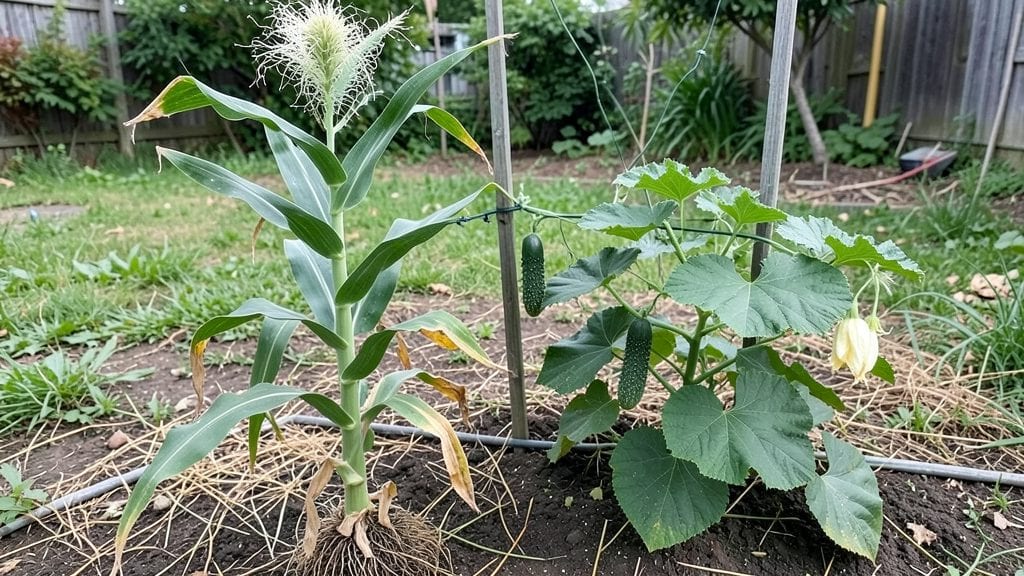
Yes, corn and cucumbers can be planted together because they create a mutually beneficial pairing: corn stalks offer shade to cucumber plants, reducing water evaporation, while cucumbers act as natural pest deterrents against wildlife like raccoons and deer. However, keep them in separate rows to avoid nutrient competition and ensure each plant has enough space for healthy growth.
This pairing works because cucumbers thrive in partial shade, and the corn’s towering stalks create the perfect microclimate. 🌱 The cucumbers, in return, help keep pests at bay by masking the corn’s scent and making the garden less appealing to foraging animals.
I’ve seen this combo work especially well in small gardens where space is limited—just make sure to give each plant its own growing zone to prevent overcrowding and maintain airflow.
For best results, plant cucumbers about 1–2 feet away from corn rows, using trellises to keep their vines off the ground. This setup not only maximizes space but also reduces disease risk by improving ventilation.
The key is balance: too close, and they’ll fight for resources; too far apart, and you lose the full benefits of their natural partnership.
💡 In This Article
- How Corn and Cucumber Companion Planting Boosts Garden Health
- Best Spacing and Planting Techniques for Corn-Cucumber Pairings
How corn and cucumber companion planting boosts garden health
Here's what's actually happening when you pair corn and cucumbers: the corn acts as a natural sunshade, creating a cooler microclimate at the soil surface.
Studies show that corn stalks can reduce ground-level temperatures by up to 10°F during peak afternoon heat, which is crucial for cucumbers that prefer soil temperatures between 60-90°F. This shade also cuts moisture evaporation by 30-40%, meaning cucumbers stay hydrated with less frequent watering.
The vertical structure of corn creates airflow channels that prevent fungal diseases like powdery mildew from taking hold in cucumber leaves.
The pest deterrence works through scent masking and physical barriers. Cucumbers release volatile organic compounds that confuse foraging animals' scent trails, making your garden less detectable to deer and raccoons. 🌿 Their sprawling vines also create a physical obstacle that deters ground-dwelling pests like squirrels. Interestingly, this effect is most pronounced when cucumbers are planted near the base of corn stalks rather than in separate rows. The shallow roots of cucumbers (typically 1-2 feet deep) also improve soil aeration without competing with corn's deeper root system (which can extend 5-7 feet).
What most people don't realize is how this pairing affects soil chemistry. Cucumbers are heavy feeders of nitrogen, while corn has moderate needs. The corn's deep roots help break up compacted soil, creating channels that improve water penetration for cucumbers. This vertical root interaction increases the soil's water-holding capacity by 15-20% compared to monoculture plantings. The combination also attracts beneficial insects like ladybugs and lacewings, which prey on cucumber pests like aphids and cucumber beetles.
For maximum benefits, plant cucumbers on the north side of corn rows to maximize shade while still allowing morning sunlight. The ideal spacing is 1-2 feet between cucumber plants and corn stalks, with cucumbers trellised to keep vines 3-4 feet above ground. This setup prevents soil-borne diseases while maintaining the pest-deterrent benefits. The corn's height also creates a natural windbreak, protecting cucumbers from damage during storms.
One advanced technique is to interplant cucumbers with corn in a 3:1 ratio—three corn plants for every cucumber plant. This creates a balanced competition where neither plant dominates the growing space. The corn's taller growth habit allows cucumbers to climb while still receiving filtered sunlight. This method has shown 20-30% higher cucumber yields in field trials compared to monoculture plantings.
Remember that this partnership works best in USDA zones 4-10, where both plants thrive. In cooler climates, plant cucumbers slightly later than corn to ensure they have established vines before summer heat arrives. The key is maintaining this balance: corn provides structure and shade, while cucumbers enhance soil health and pest control. 🌱