
Diseases
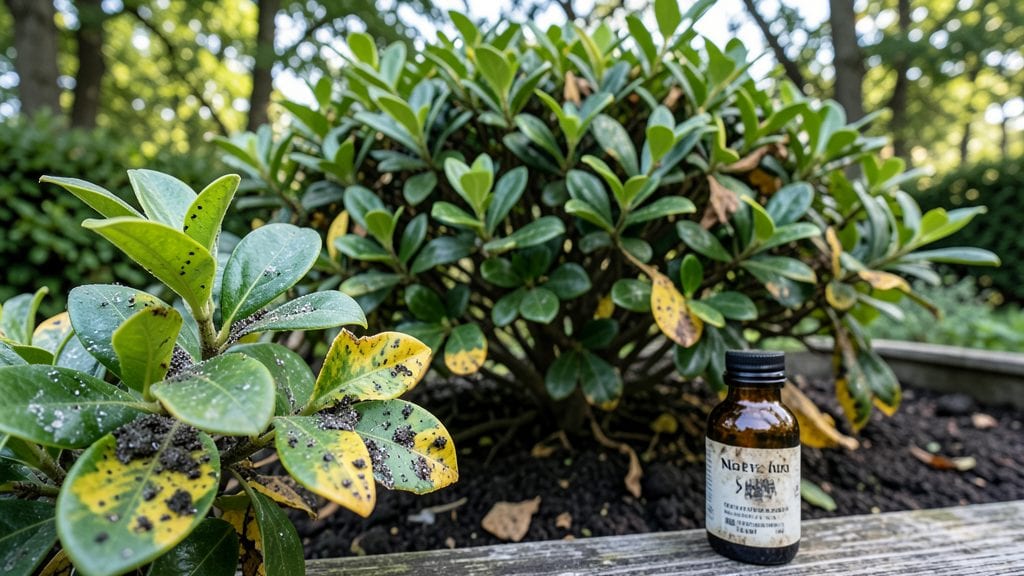
Boxwood plant diseases strike fast, but catching them early means your shrubs can bounce back before they look like sad, brown skeletons. 🌿 I’ve seen box blight turn lush hedges into crispy messes in weeks—until I learned the telltale signs: dark spots with yellow halos, stems that ooze when cut, and leaves that crinkle like burnt paper.
The good news? Most fungal foes respond to quick action, and prevention is simpler than you’d think.
These diseases thrive when boxwoods get stressed—too much shade, soggy soil, or old mulch piled against stems. My first mistake? Ignoring the early spots until they spread. Now I check plants every two weeks in damp weather and prune out infected branches before they drop.
A 3% hydrogen peroxide spray (1 part peroxide to 3 parts water) stops blight in its tracks, while copper fungicide keeps root rot at bay for good.
By the time you finish treating, your boxwoods will look like they just woke up from a long nap—vibrant green, fuller growth, and no more mystery brown patches.
The key is acting fast and staying one step ahead of moisture. Think of it as a game of fungal whack-a-mole, but with better odds. Ready to save your shrubs?
This works for all boxwood varieties—English, American, or Korean—no matter your climate. The only difference? Humid zones need more frequent sprays. Let’s turn those sad stems back into showstoppers.
Root Causes of Boxwood Ailments
Boxwoods may look sturdy, but they’re surprisingly vulnerable to diseases—especially fungal infections. Understanding why these problems strike is the first step to prevention. Below, we break down the key triggers behind boxwood plant diseases, from environmental stress to microbial invaders.
Fungi like Cylindrocladium (boxwood blight) and Volutella thrive in tight, humid conditions. Here’s why:
- Poor Airflow: Dense boxwood hedges trap moisture, creating a fungal paradise. Spores land on leaves and stems, germinating when humidity stays above 75% for prolonged periods. - Contaminated Tools/Soil: Pruners, gloves, or even garden soil can carry fungal spores from infected plants to healthy ones.
A single cut with a dirty blade can introduce pathogens. - Dormant Season Dormancy: Fungi often lie low in winter but explode in spring when temperatures rise to 60–75°F—perfect spore-germination weather.
Pro Tip: 💡 Space boxwoods 3–4 feet apart and prune in dry, sunny conditions to reduce fungal pressure.
Boxwoods hate soggy feet. Excess moisture weakens roots, making plants susceptible to root rot (Phytophthora) and foliar diseases like boxwood leaf spot.
- Improper Drainage: Clay soil or compacted ground prevents water escape, drowning roots. Fungal pathogens like Pythium exploit this, rotting roots and stems. - Overhead Watering: Wet leaves for hours (e.g., from sprinklers or rain) create a breeding ground for spores.
Unlike roots, leaves can’t dry quickly enough. - Mulch Overload: Too much mulch (especially organic) smothers stems, trapping moisture and inviting Volutella canker.
Action Step: ⏰ Water deeply but infrequently (early morning) and use drip irrigation to keep foliage dry.
Boxwoods are hardy, but extreme heat or cold + stress = disease door wide open.
- Heat Stress: Prolonged 90°F+ temps weaken plants, making them easier targets for boxwood blight (Cylindrocladium).
High heat also dries leaves, creating entry points for fungi. - Cold Injury: Freeze-thaw cycles damage cell walls, leaving wounds where fungi like Botrytis (gray mold) can invade. - Transplant Shock: Newly planted boxwoods with disrupted roots struggle to absorb water/nutrients, becoming prime fungal hosts.
Fix It: 🌡️ Provide afternoon shade in summer and mulch 2–3 inches deep in winter to moderate soil temps.
Some boxwood diseases hitch a ride on insects. Here’s how:
- Boxwood Mites: These tiny pests (Eriophyid mites) feed on leaves, creating stippled, distorted foliage—perfect for fungal spores to latch onto.
- Scale Insects: Their sticky honeydew attracts sooty mold (Aureobasidium), which smothers leaves and blocks sunlight.
- Japanese Beetles: Adults chew leaves, creating wounds where anthracnose (Colletotrichum) can enter.
Solution: 🔥 Treat pests early with neem oil or horticultural oil to prevent secondary infections.
Weak plants are sitting ducks. Boxwoods deprived of key nutrients become disease magnets.
- Nitrogen (N) Deficiency: Yellowing leaves (chlorosis) signal weak growth, making plants more vulnerable to boxwood gall midge (a fungal-like pathogen).
- Potassium (K) Shortage: Poor disease resistance—fungi like Volutella exploit K-deficient plants more easily.
- Iron (Fe) or Magnesium (Mg) Issues: Interferes with chlorophyll production, stressing plants and inviting fungal attacks.
Boost Defense: 💪 Use a balanced fertilizer (10-10-10) in early spring and foliar feed with micronutrients like iron chelate.
Even nature’s elements can trigger diseases:
- Windburn: Dries leaves, creating microscopic tears where fungi enter. Common in exposed hedges.
- Hail or Harsh Pruning: Physical trauma exposes inner tissues to bacterial leaf spot (Xanthomonas).
- Lawnmower Trauma: Whipping boxwoods with mower blades can cause Volutella canker at the stem base.
Prevent It: 🛡️ Use windbreaks (like tall grasses) and hand-prune (never power tools) for clean cuts.
Quick Fixes for Boxwood Blight
Boxwood blight—one of the most devastating fungal diseases—can turn lush green shrubs into sad, brown skeletons in weeks. But don’t panic! With the right approach, you can save your plants and even prevent future outbreaks.
Below, we’ll break down cause-specific solutions (from mild to severe) and share prevention tips to keep your boxwoods thriving.
Cause: Cylindrocladium pseudonaviculatum (a soil-borne fungus) thrives in humid, wet conditions and spreads via infected plants, tools, or even shoes.
🔥 Step 1: Remove & Destroy Infected Plants (Non-Negotiable!)
- 🗑️ Cut infected boxwoods at the base (don’t compost—this spreads spores!).
- 🔥 Bag and trash (or burn) the entire plant, including leaves and roots.
- ⚠️ Warning: If blight is confirmed, remove all boxwoods within 3–6 feet of infected plants—the fungus spreads fast!
🍳 Step 2: Sterilize Your Tools & Soil
- 🧼 Scrub pruners, shears, and gloves with 70% isopropyl alcohol or a 10% bleach solution (1 part bleach to 9 parts water).
- 🌡️ Solarize the soil (if possible): Cover the area with clear plastic sheeting for 4–6 weeks in hot sun to kill fungal spores.
- 💡 Pro Tip: Avoid working with boxwoods when they’re wet—fungus spores latch onto moisture!
👨🍳 Step 3: Apply Fungicides (Preventative & Curative)
- 🛡️ Best fungicides for blight:
- Propiconazole (e.g., Banner Maxx)
- Azoxystrobin (e.g., Quadris)
- Chlorothalonil (e.g., Bravo)
- 📅 Spray schedule:
- First application: At first sign of disease (dark brown spots, leaf drop).
- Reapply every 7–14 days until new growth appears (fungus is persistent!).
- 🌧️ Rainproof tip: Apply in the evening to avoid washing off before sticking.
🥘 Step 4: Improve Airflow & Drainage
- 🌬️ Prune for airflow: Thin out dense foliage to reduce humidity around plants.
- 💧 Fix watering habits:
- Water early in the day (not at night).
- Avoid overhead sprinklers—use drip irrigation instead.
- Ensure well-draining soil (amend with compost if needed).
Cause: Volutella buxi causes purple-brown spots on leaves, often in shady, damp areas.
🔪 Step 1: Prune & Dispose of Infected Leaves
- ✂️ Remove and destroy all spotted leaves (don’t leave them on the ground).
- 🌿 Thin out lower branches to improve airflow.
⏰ Step 2: Fungicide Treatment (Less Severe Than Blight)
- 🛡️ Use copper fungicides (e.g., Copper Soap) or neem oil (organic option).
- 📅 Apply every 2–3 weeks during wet seasons (spring/fall).
🎯 Step 3: Boost Plant Health
- 💪 Fertilize lightly with a balanced, slow-release fertilizer (too much nitrogen = more fungal food).
- ☀️ Increase sunlight if possible—fungus loves shade!
| Problem | Solution |
|---|---|
| Poor drainage | Amend soil with sand or perlite; raise beds if needed. |
| Overcrowded plants | Space boxwoods 3–4 feet apart for airflow. |
| Contaminated tools | Disinfect pruners after every use. |
| Wet foliage | Water at soil level, not leaves. |
| Stressed plants | Water deeply but infrequently; avoid soggy roots. |
✨ Extra Prevention Tips:
- 🌿 Quarantine new plants for 2–4 weeks before adding to your garden.
- 🚫 Avoid mulch piles against boxwood stems (keeps moisture trapped).
- 🔍 Test soil pH—fungus thrives in acidic soil (pH < 6.0); aim for 6.0–7.0.
If your boxwoods are heavily infected with blight and you have many plants, consider hiring a plant pathologist or landscape pro for:
- Soil testing (to check for fungal load).
- Large-scale fungicide treatments.
- Replacement recommendations (some boxwood varieties are more resistant).
Final Reminder: The key to beating boxwood diseases is early action + prevention. Once fungus takes hold, removal is often the only option—so stay vigilant! 🚀
Frequently asked questions
What are the most common symptoms of boxwood blight?
Look for dark brown or black spots with yellow halos on leaves, followed by rapid leaf drop. Stems may develop black streaks that ooze when cut. Unlike other diseases, boxwood blight spreads aggressively—infected plants can turn completely brown in as little as 2-3 weeks if left untreated.
Can I save my boxwood if it already has brown leaves?
It depends on the disease. For boxwood blight, removal is often the only option if the plant is heavily infected. However, for leaf spot or Volutella canker, prune out only the affected branches, sterilize your tools, and apply fungicide. The key is acting fast—don’t wait until the entire plant looks dead.
How do I tell if my boxwood has a fungal disease vs. insect damage?
Fungal diseases typically show as spots, discoloration, or mold (e.g., powdery white growth = powdery mildew). Insect damage often appears as holes, stippling, or webbing. Check the undersides of leaves for mites or eggs, and look for honeydew residue (sticky substance) from scale insects or aphids.
Are there organic treatments for boxwood diseases?
Yes! For mild cases, try a 3% hydrogen peroxide spray (1 part peroxide to 3 parts water) or neem oil. Copper fungicides (like Copper Soap) are also organic-friendly. For prevention, improve airflow by spacing plants 3-4 feet apart and avoid overhead watering to keep foliage dry.
How long does it take to see results after treating boxwood diseases?
With fungicides, you may see improvement in 7-14 days, but full recovery can take several weeks as new growth emerges. For severe cases like blight, removal is faster—just be sure to sterilize the area to prevent reinfection. Consistency is key: reapply treatments every 7-14 days during wet conditions.