
Diseases
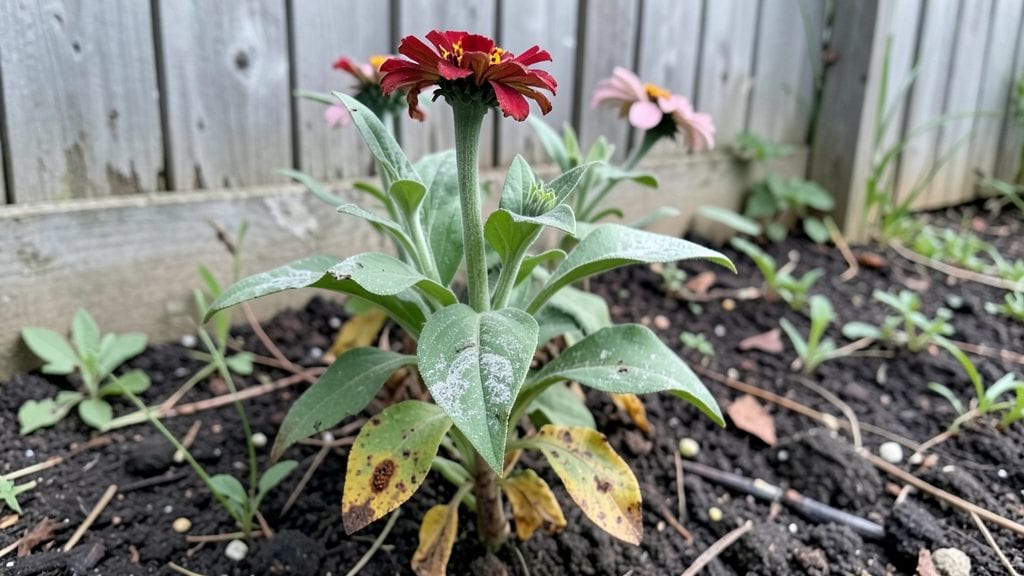
Zinnia plant diseases can turn vibrant blooms into sad, spotted messes in no time. ✨ I’ve seen powdery mildew turn my bright zinnias into ghostly white skeletons, and bacterial leaf spot turn their leaves into Swiss cheese—both before I even got to enjoy the flowers.
The good news? Most of these problems have simple fixes once you know what you’re dealing with.
Powdery mildew and bacterial leaf spot are the two most common zinnia killers, but they thrive because of the same mistakes: overcrowded plants, wet leaves, and poor airflow. My zinnias stayed healthy after I adjusted spacing to 12 inches apart and watered at the base instead of overhead.
That small change cut my disease problems by half in one season.
You’ll spot these diseases early by checking the undersides of leaves for white powder or dark spots with yellow halos. Once you catch them, a mix of neem oil spray and proper spacing keeps them from spreading.
For severe cases, removing infected plants saves the rest of your garden—trust me, I’ve learned that the hard way.
Prevention is easier than cleanup, and it only takes a few tweaks: prune for airflow, avoid late-day watering, and rotate crops next year. Your zinnias will reward you with bold blooms all summer if you stay ahead of these sneaky threats.
Root Causes of Zinnia Struggles
Zinnia plants, with their vibrant blooms and easygoing nature, can still fall prey to diseases that disrupt their growth. Understanding why these issues arise is the first step to prevention and recovery.
Let’s break down the key factors that make zinnias vulnerable—and how environmental and cultural conditions create the perfect storm for trouble.
Zinnias thrive in open spaces, but when planted too closely together, their leaves brush against one another, trapping moisture. This damp environment is a breeding ground for fungal spores, like those causing powdery mildew or gray mold.
Poor airflow also prevents water from evaporating quickly, keeping foliage persistently wet—a condition fungi love.
Why it happens:
- Density issues: Overcrowded zinnias (especially in garden beds or containers) restrict airflow, creating a humid microclimate.
- Water retention: Compacted soil or thick mulch layers slow drainage, keeping roots soggy and stressing the plant.
- Fungal hitchhikers: Spores from neighboring infected plants or soilborne pathogens spread effortlessly in stagnant air.
Actionable fix: Space zinnias 12–18 inches apart (or follow seed packet guidelines) and prune regularly to improve circulation. Avoid overhead watering—stick to drip irrigation or soaker hoses to keep leaves dry.
Zinnias are drought-tolerant once established, but inconsistent watering creates stress that weakens their defenses. Overwatering leads to root rot (caused by Phytophthora or Pythium), while underwatering stresses plants, making them susceptible to bacterial leaf spot or powdery mildew.
Why it happens:
- Soggy soil: Waterlogged conditions deplete oxygen in the root zone, inviting anaerobic bacteria and fungi.
- Drought stress: When soil dries out completely, zinnias wilt, and their cell walls become compromised—easy entry points for pathogens.
- Night watering: Wet foliage at night (from evening watering) prolongs moisture, giving fungi like Botrytis (gray mold) a 24-hour head start.
Actionable fix:
- Water deeply 1–2 times per week (adjust for climate) at the base of the plant, not the leaves.
- Use well-draining soil (amend with compost or perlite if needed) and raise beds in heavy clay areas.
- Morning watering is ideal—leaves dry quickly in sunlight, reducing fungal risk.
Zinnias deprived of essential nutrients—especially potassium, phosphorus, or nitrogen—become weak and stunted, making them easy targets for diseases. Poor soil health also disrupts the plant’s natural cuticle barrier, allowing pathogens to penetrate leaves and stems.
Why it happens:
- Nitrogen deficiency: Leads to yellowing leaves (chlorosis), weakening the plant’s immune response.
- Potassium deficiency: Reduces cell wall strength, making zinnias more prone to bacterial infections.
- Excessive fertilizer: Overfeeding (especially with high-nitrogen fertilizers) promotes lush, soft growth that’s more susceptible to fungal diseases like downy mildew.
Actionable fix:
- Test your soil (pH 6.0–7.0 is ideal for zinnias) and amend with balanced fertilizer (e.g., 10-10-10) at planting and mid-season.
- Side-dress with compost or a low-nitrogen, high-potassium supplement (like wood ash or banana peel tea) to boost resistance.
- Avoid fresh manure—it can introduce harmful bacteria and imbalances.
Zinnias prefer warm, sunny conditions, but sudden temperature shifts or high humidity create stress that opens the door to diseases.
For example: - Cool, damp springs (below 60°F) slow zinnia growth, delaying hardening and making them vulnerable to powdery mildew. - Hot, humid summers (above 90°F with high humidity) encourage bacterial leaf spot and gray mold.
Why it happens:
- Condensation buildup: Greenhouses or shaded areas trap humidity, creating a fungal paradise.
- Temperature stress: Fluctuations (e.g., nighttime chills) weaken the plant’s cuticle, allowing pathogens to invade.
- Rainy seasons: Prolonged leaf wetness (from rain or overhead watering) gives bacteria and fungi up to 48 hours to infect.
Actionable fix:
- Choose disease-resistant varieties (e.g., ‘Benary’s Giant’ or ‘Profusion’) if your climate is humid.
- Improve airflow with trellises or pruning in shaded areas.
- Mulch with straw (not plastic) to regulate soil temperature and reduce splashing water.
While not diseases themselves, pests like aphids, spider mites, and thrips damage zinnia leaves, creating open wounds that bacteria and fungi exploit.
For example: - Aphids excrete honeydew, a sugary film that promotes sooty mold (a secondary fungal issue). - Spider mites weaken plants with fine webbing, making them prone to powdery mildew.
Why it happens:
- Pest feeding disrupts the epidermal layer of leaves, providing entry points for pathogens.
- Honeydew buildup creates a sticky surface where fungal spores land and germinate.
- Stressed plants attract more pests, creating a vicious cycle of damage and disease.
Actionable fix:
- Inspect plants weekly for pests (especially undersides of leaves).
- Blast off pests with a strong spray of water or use neem oil (a natural fungicide and insect repellent).
- Introduce beneficial insects (like ladybugs) to control aphids naturally.
How to Fix Zinnia Ailments
Now that you’ve identified the trouble, let’s roll up our sleeves and get your zinnias back to their vibrant best! Each disease or pest requires a targeted approach, but the good news is that most fixes are simple, effective, and—best of all—preventable.
Below, we’ve mapped out step-by-step solutions for every common issue, plus pro tips to keep your zinnias thriving long-term.
Fungi thrive in damp, crowded conditions, so your first line of defense is airflow and dryness. Act fast—once spores take hold, they’re hard to erase.
🔥 Powdery Mildew: Scrub and Shield
Cause: White, powdery coating on leaves (like dust, but sticky). Fix: 1. 🧼 Trim the Damage – Snip off heavily infected leaves and a few inches below the affected area to prevent spread. Dispose of clippings in the trash (not compost).
- 💦 Spray with Baking Soda – Mix 1 tsp baking soda + 1 tsp dish soap + 1 quart water in a spray bottle. Coat leaves undersides too—this disrupts fungal spores. Reapply every 5–7 days until clear.
- 🌿 Improve Airflow – Space plants 12–18 inches apart and avoid overhead watering. If growing in containers, ensure pots have drainage holes.
- ☀️ Sunlight Boost – Powdery mildew loves shade. If possible, move plants to a sunnier spot (6+ hours of light daily).
💡 Pro Tip: Resistant varieties like ‘Benary’s Giant’ or ‘Crystal’ zinnias handle humidity better. For severe cases, use neem oil (1 tbsp per quart water) as a fungicide.
🍅 Alternaria Leaf Spot: Cleanse and Rotate
Cause: Dark, concentric rings on leaves that expand and drop. Fix:
- ✂️ Prune Aggressively – Remove all spotted leaves immediately. Sterilize pruners with rubbing alcohol between cuts.
- 🌧️ Water at the Base – Avoid wetting foliage.
Use a soaker hose or water early in the day so leaves dry by evening. 3. 🧴 Fungicide Spray – Apply copper fungicide (follow label rates) or a homemade mix: 1 tbsp hydrogen peroxide (3%) + 1 quart water.
Spray every 7–10 days. 4. 🌱 Crop Rotation – If this happens yearly, don’t replant zinnias in the same spot for at least 2 years.
💡 Pro Tip: Mulch with straw (not wood chips) to reduce soil splashing onto leaves.
🍄 Rust Fungus: Isolate and Starve
Cause: Orange pustules on leaf undersides. Fix:
- 🚫 Isolate Plants – Move infected zinnias 10+ feet away from healthy ones to prevent spore drift.
- 🍂 Remove Infected Foliage – Burn or trash heavily rusted leaves (don’t compost).
- 🌿 Copper or Sulfur Spray – Use copper fungicide or wettable sulfur (mix per label) every 10 days until new growth is rust-free.
- 🌱 Soil Sterilization – For repeat offenders, solarize soil (cover with clear plastic for 4–6 weeks in summer) to kill spores.
💡 Pro Tip: Avoid overhead irrigation—use drip lines instead.
Bacteria spread via water, tools, and even your hands. Prevention is key—once bacteria infect zinnias, there’s no cure.
💀 Bacterial Leaf Spot: Cut It Out
Cause: Water-soaked brown spots with yellow halos. Fix: 1. ⚔️ Surgical Pruning – Snip off only the infected leaves. Do not compost—bag and trash them.
- 🧼 Sterilize Tools – Dip pruners in bleach water (1 part bleach to 10 parts water) between cuts.
- 🚰 Adjust Watering – Water only at soil level, early in the day. Avoid evening watering to prevent moisture buildup.
- 🌿 Copper Bactericide – Spray with copper hydroxide (e.g., Kocide) every 7–10 days as a preventive.
💡 Pro Tip: Rotate crops—never plant zinnias (or other Asteraceae family plants like marigolds) in the same spot next year.
🦠 Soft Rot: Drain and Disinfect
Cause: Mushy stems, foul odor, wilting (often from overwatering + bacteria). Fix: 1. 💦 Drain the Soil – Let soil dry completely between waterings. Stick your finger 1 inch deep—if damp, wait.
- 🪴 Repot or Replace – If in containers, sterilize pots with bleach solution (1:10 ratio) before replanting. For garden beds, amend soil with perlite to improve drainage.
- 🧴 Hydrogen Peroxide Soak – For potted zinnias, water with 3% hydrogen peroxide (1 tbsp per gallon) to kill bacteria in the root zone.
- 🚫 Quarantine – If only a few plants are affected, remove and destroy them immediately.
💡 Pro Tip: Test your soil—zinnias hate soggy roots. Aim for well-draining soil with a pH of 6.0–7.0.
Not all zinnia problems are fungal—pests like Japanese beetles, aphids, and spider mites can defoliate plants in days.
🐞 Japanese Beetles: Trap and Trap Again
Cause: Skeletons of leaves, chewed flowers. Fix: 1. 🪲 Set Beetle Traps – Place Japanese beetle traps (with attractant) far from your garden (they lure more beetles!).
- 🕷️ Handpick Early – Drop beetles into soapy water in the morning when they’re sluggish.
- 🌿 Neem Oil Spray – Mix 2 tbsp neem oil + 1 tsp mild soap + 1 quart water. Spray every 3–4 days until beetles vanish.
- 🌱 Plant Sacrifices – Grow roses or grapes nearby—beetles prefer these over zinnias!
💡 Pro Tip: Water deeply in the morning—beetles are less active when foliage is wet.
🐜 Aphids & Spider Mites: Blast and Blast Again
Cause: Sticky residue (aphids) or webbing (mites) on leaves. Fix: 1. 💦 Blast with Water – Use a strong hose spray to knock off aphids. Repeat daily for 3 days.
- 🍋 Soap Spray – Mix 1 tbsp castile soap + 1 quart water. Spray directly on pests (avoid flowers). Reapply every 5 days.
- 🐝 Introduce Predators – Ladybugs and lacewings devour aphids. Buy them online or attract them with dill or fennel plants.
- 🌿 Neem Oil for Mites – Spray neem oil + water (1:1 ratio) on both leaf sides every 7 days.
💡 Pro Tip: Reflective mulch (aluminum foil or silver plastic) confuses mites—try it under pots!
The best cure? Stop problems before they start. Here’s your disease-proofing checklist:
| Problem | Prevention Tip |
|---|---|
| Fungal Spread | Space plants 12–18" apart, water at base only, avoid evening watering. |
| Bacterial Infections | Ster
Frequently asked questions about zinnia plant diseases
What are the most common zinnia plant diseases I should watch for?
The top offenders are powdery mildew (white powdery coating), bacterial leaf spot (water-soaked brown spots with yellow halos), and rust fungus (orange pustules on leaf undersides). These thrive in crowded, damp conditions, so proper spacing and airflow are your first defenses.
How do I tell if my zinnias have a fungal or bacterial infection?
Fungal diseases like powdery mildew or rust create visible coatings or pustules, while bacterial infections like leaf spot show up as watery, oily-looking spots that often have yellow borders. Fungi also spread slower than bacteria, which can explode across plants in warm, wet weather.
Can I save a zinnia plant that already has powdery mildew?
Yes, but act fast! Prune off heavily infected leaves, then spray with a baking soda solution (1 tsp baking soda + 1 tsp dish soap per quart of water) every 5-7 days. Improve airflow by spacing plants 12-18 inches apart and watering at the base only. Severe cases may require removing the plant entirely to protect others.
Why do my zinnias keep getting bacterial leaf spot even after treatment?
Bacterial leaf spot spreads through water and tools, so sterilize pruners with bleach water (1:10 ratio) between cuts and avoid overhead watering. The bacteria also thrive in humid conditions, so improve airflow and consider crop rotation—don’t replant zinnias in the same spot for at least 2 years.
Are there zinnia varieties that resist diseases better?
Yes! Look for disease-resistant hybrids like ‘Benary’s Giant’ or ‘Profusion’ series, which handle humidity better. Tall varieties also benefit from improved airflow when staked properly. For organic gardens, interplanting with marigolds or basil can help deter pests and diseases naturally.