
Pests
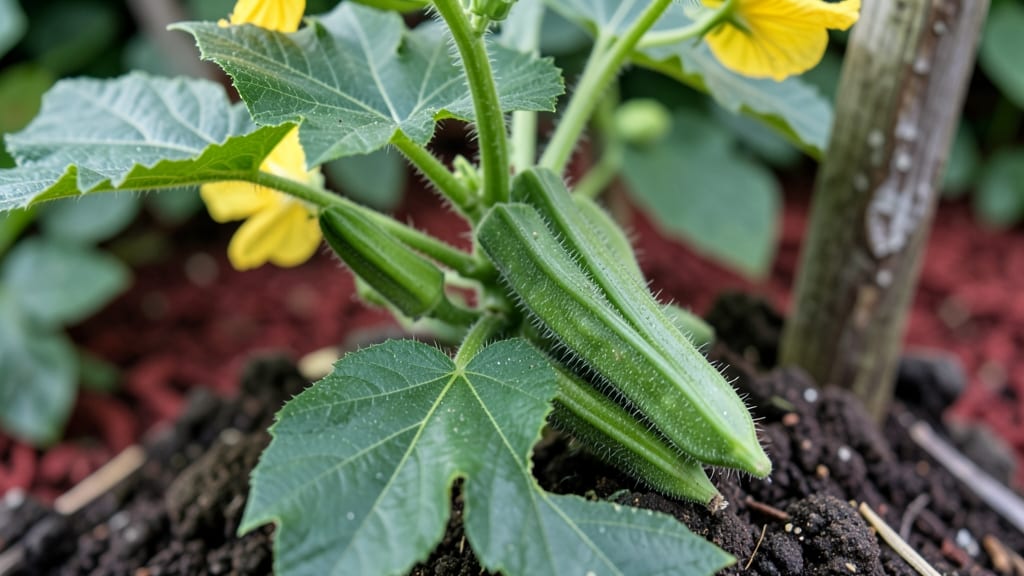
Deer are opportunistic foragers that particularly target young, nutrient-rich plants like okra seedlings, which lack the fibrous toughness of mature pods. 🌱 The plant's mild flavor and soft leaves make them an easy snack, especially during late spring and summer when deer are actively searching for fresh greens.
Unlike some garden pests, deer don't discriminate heavily between okra varieties - they'll sample any accessible plant, making prevention strategies essential for protecting your crop.
What makes this particularly frustrating for gardeners is how quickly deer can strip a garden of young okra plants. A single deer can consume several plants in one night, leaving you with nothing to harvest.
The good news is that mature okra plants with fully developed pods become less appealing, but only if they reach that stage before deer get to them. This creates a race against time that many gardeners face each growing season.
💡 In This Article
- Why Deer Target Okra Plants in Gardens
- Effective Deer-Resistant Okra Growing Strategies
Why deer target okra plants in gardens
Deer are selective browsers that prioritize plants with high moisture and nitrogen content—exactly what young okra seedlings offer.
The tender leaves and stems contain 15-20% water and 3-4% protein by weight, making them an energy-rich snack. 🌱 This nutritional profile aligns perfectly with deer's dietary needs, especially during late spring when fawns are being weaned and require extra protein.
The soft texture of young okra requires minimal chewing, which is particularly appealing to deer with developing teeth or limited time to forage.
The plant's growth stages dramatically affect deer interest. Seedlings (2-4 inches tall) are most vulnerable, with deer consuming entire plants in minutes. As okra matures, the pods develop a fibrous outer layer containing 10-12% fiber, which deer find less palatable.
However, the pods' mild flavor and crisp texture can still attract deer when other food sources are scarce. Regional variations play a role too—deer in northern climates may target okra more aggressively during late summer droughts when other greens have dried up.
Here's what's actually happening chemically: Okra contains mucilage, a gel-like polysaccharide that becomes more pronounced as pods mature.
While this makes the plant less appealing to deer, the young leaves lack this fibrous quality entirely. 🌿 The plant's mild flavor profile—similar to green beans but with a slightly earthy note—also makes it unobtrusive to deer's sensitive palates, unlike strongly scented herbs that might deter them.
This explains why deer often overlook mature okra plants but systematically strip young growth.
Comparing okra to other common garden plants reveals its relative vulnerability. While deer might avoid strongly aromatic plants like rosemary or thyme, okra's neutral flavor makes it an easy target.
Even mature okra pods (typically 3-6 inches long) contain 85-90% water, which is highly attractive to deer during dry periods. What most people don't realize is that deer have been observed returning to the same okra patch night after night, suggesting they develop preferences for particularly tender plants.
Seasonal behavior patterns further explain this targeting. Deer are most active at dawn and dusk, when they'll systematically browse garden edges where okra is often planted.
The plant's rapid growth (up to 2 inches per day under ideal conditions) creates a moving feast that keeps deer returning. 🌱 In urban-suburban interfaces, deer may become habituated to finding okra in gardens, making prevention even more critical.
The key factor is that okra provides both immediate nutrition and minimal resistance, creating a perfect foraging scenario for deer.
Interestingly, regional deer populations show different preferences. In the southeastern U.S., where okra is native, deer have developed some tolerance for the plant's mature form. However, in northern climates where okra is less common, deer show virtually no discrimination between growth stages.
This regional variation stems from both genetic adaptation and learned behavior patterns within local deer herds.
Understanding this behavior helps explain why some gardeners report minimal deer damage while others face complete crop loss.
The difference often comes down to timing—planting okra after deer have moved on to other food sources can significantly reduce damage. 🌱 The plant's growth cycle creates a window of vulnerability that lasts only 4-6 weeks before becoming less appealing to deer, making early protection strategies essential for successful cultivation.