Watering
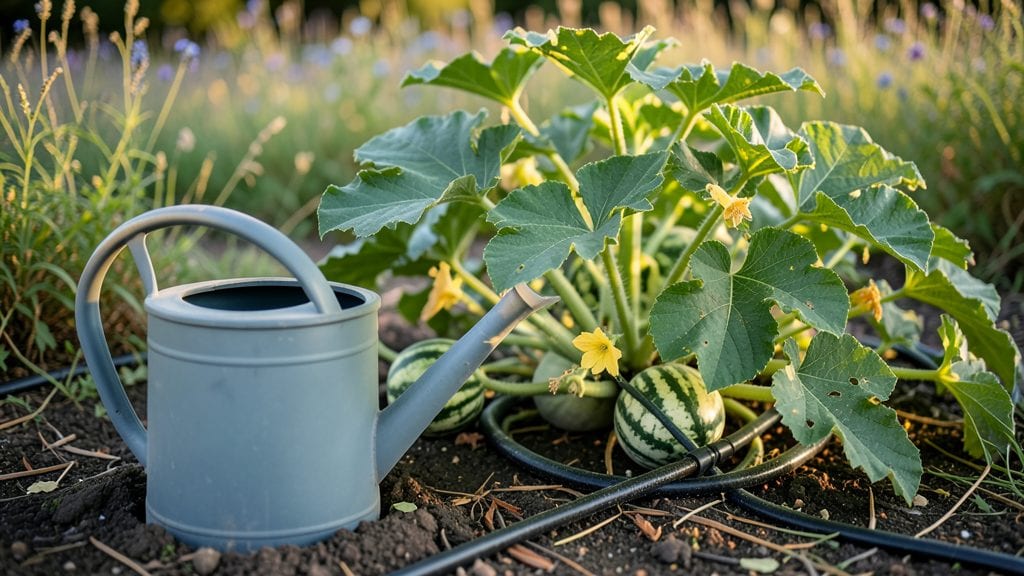
Watermelon plants need deep-soaked roots to grow those juicy, sweet fruits you crave—dry, shallow watering leads to bitter, small melons every time. 🌿 I learned this the hard way after my first crop tasted like cardboard, but now my vines produce melons so sweet they disappear before harvest.
The secret isn’t frequent sprinkling; it’s watering deeply enough to encourage strong root growth and even moisture levels.
Start with 1-2 inches of water per week, delivered all at once rather than little sips. Use a garden trowel to check soil moisture: if the top 2 inches feel dry, it’s time to water.
Mulch with straw or grass clippings to lock in moisture and keep roots cool—this cuts watering needs by nearly half during hot summer days. Young seedlings need consistent moisture, but once the vines spread, focus on deep, infrequent watering to prevent surface crusting.
Watch for signs of trouble: yellowing leaves mean overwatering, while wilting in the afternoon signals thirst. Watermelons need more water during flowering and fruiting—2-3 inches weekly—but cut back slightly as the melons near maturity to concentrate sugars.
The key is balance: too much water dilutes flavor, too little stunts growth. With the right rhythm, you’ll end up with melons so sweet they’ll have neighbors asking for seeds.
Adjust for your climate: in dry heat, water in the early morning to reduce evaporation; in humid areas, let the soil dry slightly between waterings. Container-grown melons dry out faster—check daily—and always use pots with drainage holes. Once you master this, you’ll never buy store-bought watermelons again.
📚 In This Guide
- What you need
- Instructions
- Tips and common mistakes
- Wrapping up and next steps
What you need
- ● Water source: Hose with adjustable nozzle or a watering can (5+ gallons capacity for deep watering).
- ● Soaker hoses or drip irrigation: ¼-inch tubing (length depends on garden size) to deliver water directly to roots.
- ● Mulch: Straw, black plastic, or wood chips (2–3 inches thick) to retain moisture and suppress weeds.
- ○ pH testing kit: Optional but helpful to ensure soil pH is between 6.0–7.0 (ideal for watermelons).
- ● Garden fork or trowel: For loosening soil around roots (especially in clay-heavy soil).
- ● Timer (for irrigation systems): Programmable to water early morning (2–3 AM) for efficiency.
- ● Rain gauge: To monitor natural rainfall and adjust watering accordingly.
- ● Moisture meter: Soil probe to check moisture levels (aim for 1–2 inches dry before watering).
- ● Organic compost: Mix into soil at planting for better water retention.
- ● Shade cloth: Lightweight cover to protect young plants from scorching if watering isn’t possible during heatwaves.
Step-by-step instructions for watering watermelon plants
Here’s how to keep your watermelon vines thriving with the right moisture balance—no guesswork.
💧 Step 1: Water Deeply at Planting and After Transplanting
When you first plant watermelon seedlings, give them a deep soak—about 2 gallons per plant—to settle the soil and encourage roots to spread. Water slowly at the base so it penetrates 6-8 inches deep rather than running off the surface. You’ll know it’s deep enough when the soil feels damp 2 inches down with your finger.
After transplanting, keep the soil consistently moist for the first 2 weeks. Watermelons are shallow-rooted early on, so they need steady moisture to establish. Avoid overhead watering here—it can spread disease. Instead, use a soaker hose or drip irrigation to deliver water directly to the roots.
☀️ Step 2: Adjust Watering as Vines Mature and Fruit Sets
Once vines start running and flowers appear, reduce frequency but increase depth. Aim for 1-2 inches of water per week, delivered in 2-3 deep sessions rather than daily light sprinkles. This encourages roots to grow deeper, which means sweeter, more flavorful fruit. Check soil moisture by hand—if the top 1-2 inches feel dry, it’s time to water.
Here’s the thing—watermelons are thirsty but hate soggy roots. If you’re in a hot climate, you might need to water every 2-3 days, while cooler weather could stretch that to 4-5 days. Watch the vines: if leaves wilt slightly in the afternoon heat but perk up in the evening, you’re likely watering just right.
🌿 Step 3: Focus on Roots, Not Leaves, During Fruit Development
When fruit starts forming, shift to deep, infrequent watering—about 3 gallons per plant every 5-7 days. This prevents cracking and ensures even sugar development. Water early in the morning so foliage dries quickly, reducing fungal risks. Use a watering wand or hose to direct streams to the base, avoiding the leaves entirely.
You’ll see the difference in your fruit: deep-watered melons stay firm, develop rich color, and have that signature sweetness. If you notice yellowing leaves or blossom-end rot, you’re either overwatering or underwatering. Adjust based on soil dryness—never let watermelons sit in wet soil for more than a day or two.
⏰ Step 4: Taper Off Before Harvest and Adjust Post-Picking
About 2 weeks before harvest, start cutting back on water to 1 inch per week. This concentrates sugars in the fruit and firms up the rind. Stop watering 3-4 days before picking—ripe watermelons should feel heavy for their size and have a dull thud when tapped. If the soil’s still damp, the fruit won’t ripen properly.
After harvest, remove old vines and any remaining fruit to prevent pests and diseases. If you’re saving seeds or planning next year’s crop, let a few melons dry on the vine before cutting them open. For the rest, compost the vines—but never leave them in the soil over winter, as they can harbor fungal spores.
Tips & tricks for perfect watermelon plant watering
A few simple adjustments can transform your watermelon harvest from mediocre to spectacular. Here's what I've learned after watching vines struggle—and thrive—over multiple seasons.
Soil Test is Your Best Friend: Before you start watering, test your soil's drainage. Dig a hole about 12 inches deep near your watermelon plants—if water pools at the bottom after 30 minutes, you've got poor drainage. Amend with compost or sand to improve water penetration. Proper drainage prevents root rot and ensures those deep roots get the moisture they crave.
Morning Watering Wins: Always water in the early morning—between 6 and 9 AM works best. This gives foliage plenty of time to dry before evening, dramatically reducing fungal diseases like powdery mildew. I've seen watermelon plants go from yellowing leaves to vibrant green in just a week after switching to morning watering.
Mulch Matters More Than You Think: Apply 2-3 inches of organic mulch around your watermelon plants (but keep it 2-3 inches away from the stems). This helps maintain even soil moisture, reduces evaporation, and keeps roots cool. I use straw mulch because it breaks down slowly and adds organic matter to the soil as it decomposes.
Watch the Weather: Adjust your watering schedule based on rainfall. If you get 1 inch of rain in a week, you can skip that week's watering entirely. I keep a simple rain gauge near my garden to track precipitation—it's saved me from both overwatering and underwatering more times than I can count. Always prioritize deep watering over frequency when rain comes into play.
Pro Tips for Watering Watermelon Plants
- A few simple adjustments can transform your watermelon harvest from mediocre to spectacular.
- Soil Test is Your Best Friend: Before you start watering, test your soil's drainage.
- Morning Watering Wins: Always water in the early morning—between 6 and 9 AM works best.
Frequently asked questions
Got questions about keeping your watermelon plants happy and hydrated?
Here are answers to the most common concerns—so you can grow juicy, vine-ripened melons without the guesswork!
How often should I water watermelon plants?
Watermelons thrive on deep, infrequent watering—about 1-2 inches per week, depending on your climate. In hot weather, water every 2-3 days to keep soil moist (not soggy). Use a soaker hose or drip irrigation to target roots directly and reduce evaporation. Morning watering is best to prevent fungal diseases.
Can I overwater watermelon plants?
Yes! Overwatering leads to root rot, blossom-end rot, or powdery mildew. Signs include yellowing leaves, wilting, or mushy stems. To fix it, let the soil dry slightly between waterings and improve drainage by amending soil with compost or perlite. If roots are already rotting, trim affected areas and repot in fresh, dry soil. Always check soil moisture 2 inches down before watering again.
What’s the best time of day to water watermelon plants?
Water in the early morning (6-9 AM) to allow foliage to dry before nightfall, reducing fungal risks. Avoid evening watering, as damp leaves overnight create a cozy home for pests and diseases. If you must water in the heat of the day, do it before 10 AM to minimize evaporation and stress on plants.
Can I use rainwater or tap water for watermelon plants?
Both work, but rainwater is ideal—it’s naturally soft and free of chlorine/fluoride. If using tap water, let it sit 24 hours to off-gas chemicals. Avoid saltwater or heavily treated water, as they can damage roots over time. For large gardens, consider a rain barrel system to collect free, plant-friendly H₂O!
Why are my watermelon leaves turning yellow?
Yellow leaves often signal overwatering, underwatering, or nutrient deficiencies. Check the soil:
- Mushy roots + yellow leaves = Overwatering (fix with better drainage).
- Crispy edges + wilting = Underwatering (increase frequency).
- Yellow veins + green patches = Nitrogen deficiency (add compost or balanced fertilizer).
Pro tip: Test soil pH (6.0–6.8 is perfect for watermelons) and adjust with lime (to raise pH) or sulfur (to lower it).
Wrapping up and next steps
Mastering the art of watering watermelon plants is your secret weapon for juicy, homegrown success! 🌱 By keeping roots deep-soaked, avoiding soggy soil, and adjusting for weather, you’re already on track to harvest melons that burst with flavor. Your patience and care will pay off—imagine the pride (and sweetness!) when you bite into that first ripe slice.
Ready to take the next step? Monitor your plants weekly, adjust your watering routine as needed, and soon you’ll be sharing your watermelon wisdom (and bounty) with friends and family! 🍉✨