Pruning
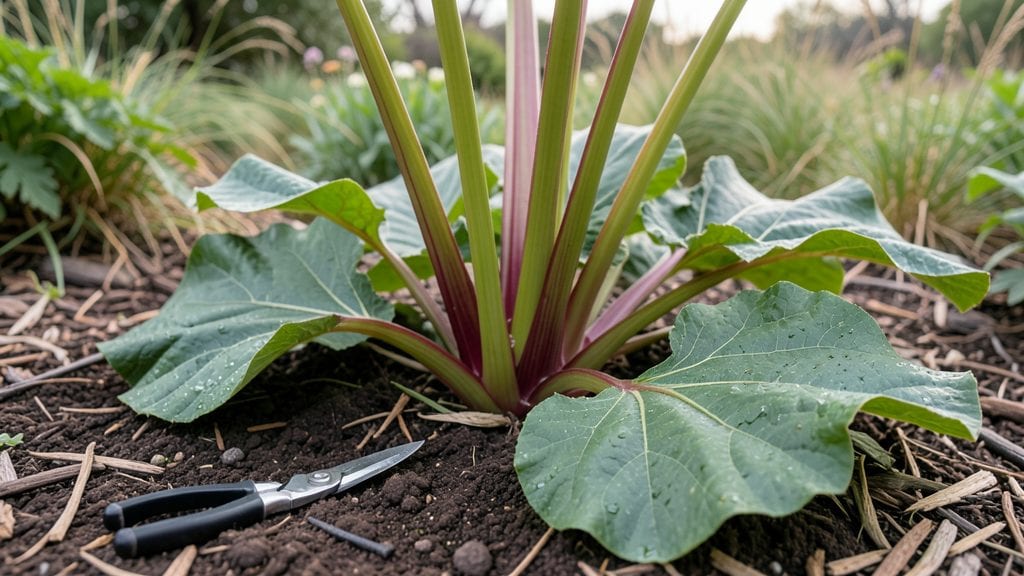
Trimming rhubarb plants in early spring unlocks the secret to juicier stalks and bigger harvests—something I learned after my first rhubarb patch produced thin, tough stalks year after year. The key isn’t just cutting; it’s timing and technique.
Most gardeners wait until after the first frost or when new shoots emerge, but the real magic happens when you trim 3-4 inches above the ground in late winter or early spring.
You’ll need sharp pruners or a clean knife—dull tools crush stems—and a clear day to avoid spreading disease. The goal is to remove old growth while leaving the crown intact. I’ve found that cutting just above the soil line (not too deep!) encourages fresh, vibrant regrowth.
This isn’t about aggressive pruning; it’s about giving your rhubarb a fresh start before the growing season kicks in.
Within 3-4 weeks, you’ll see thick, plump stalks pushing through the soil—bright pink and crisp, ready for harvest. The earlier you trim, the more time your plant has to recover and produce.
And here’s the best part: you can keep harvesting until late summer, as long as you never take more than one-third of the stalks at a time.
Fair warning: if you let flower stalks form, your plant will divert energy into seeds instead of stalks. Snip those off at the base as soon as they appear.
This method works for both young and established plants, and it’s the reason my rhubarb harvest now feeds the neighborhood every spring. Ready to try it?
📚 In This Guide
- What you need
- Instructions
- Tips and common mistakes
- Wrapping up and next steps
What you need
- ● Sharp pruning shears or secateurs – Choose bypass-style (not anvil) for clean cuts; sterilize with rubbing alcohol before use.
- ● Garden gloves – Heavy-duty, chemical-resistant (rhubarb leaves can irritate skin!).
- ● Disposable garden bags or bucket – For removing debris (aim for at least 5-gallon capacity per 10 plants).
- ● Garden hose or watering can – To rinse tools and hands after trimming.
- ● Compost bin or mulch – For repurposing healthy leaves (avoid composting if diseased).
- ● Hand pruners – For smaller stalks or tight spaces.
- ● Knee pads – If your rhubarb bed is sprawling (your back will thank you!).
- ● Label markers – To tag new growth if you’re experimenting with varieties.
- ○ Disease-resistant spray – Optional: Copper fungicide if your area has a history of rhubarb rust.
Step-by-step instructions for trimming rhubarb plants
Here's how to revive your rhubarb for a stronger, more productive growing season.
Identify and Remove Dead or Damaged Foliage
Start by examining your rhubarb plants in early spring, just as new growth begins to emerge. Look for leaves that are brown, mushy, or completely collapsed—they didn’t survive winter and should be removed immediately. Use clean, sharp pruners or your hands to pull away these dead leaves at the base. This clears space for fresh growth and prevents disease from spreading to healthy parts of the plant.
Focus on the center of the plant first, where old leaves often linger. You’ll notice the new, bright green leaves pushing up from the ground—these are your signal that the plant is waking up. Don’t worry if you accidentally remove a few healthy-looking leaves; rhubarb is resilient and will bounce back quickly.
Cut Back Old Stems to Encourage New Growth
Once you’ve cleared away the dead foliage, turn your attention to the stems. Use your pruners to cut back any remaining stems from last season to about 2 inches above the ground. This might seem drastic, but it redirects the plant’s energy toward producing new, vigorous stems rather than sustaining old ones. The goal is to leave just a small stub—think of it like giving your rhubarb a fresh start.
If you’re unsure which stems to cut, look for ones that are woody, dry, or hollow. These are definitely ready to go. Avoid cutting into the crown (the thick, fleshy base where the leaves grow), as this is the heart of your plant. You’ll see fresh, plump buds forming at the base within a few weeks—this is your reward for the pruning.
Thin Crowded Stems for Better Airflow and Harvests
Rhubarb plants naturally produce multiple stems each year, but too many can lead to weak, spindly growth and reduced harvests. After cutting back the old stems, assess the remaining ones. If you have more than 6-8 healthy stems per plant, thin them out by cutting the thinnest or most crowded ones at the base. This improves airflow, which helps prevent fungal diseases like crown rot.
You’ll know you’ve done it right when you see the remaining stems standing upright and spaced evenly. If your plant is young (under 3 years old), leave all the stems to encourage robust growth. For mature plants, thinning ensures each stem gets enough nutrients to grow thick and sweet. This step might feel counterintuitive, but trust the process—your future harvests will thank you.
Apply Mulch and Fertilizer to Revitalize the Soil
After pruning, spread a 2-3 inch layer of organic mulch (like straw or shredded leaves) around the base of the plant, keeping it 6 inches away from the crown. This helps retain moisture, suppresses weeds, and regulates soil temperature as the season warms up. Mulch also breaks down slowly, adding nutrients back to the soil over time.
Now’s also a great time to add a balanced, slow-release fertilizer (like a 10-10-10) around the drip line of the plant. Work it lightly into the top 1-2 inches of soil to avoid disturbing the roots. Water the area thoroughly to help the fertilizer dissolve and reach the roots. You’ll notice the new growth becoming even more vibrant within a few weeks—this is your plant’s way of saying, “Thanks for the boost!”
Monitor and Maintain Through the Growing Season
Once your rhubarb is trimmed and revitalized, keep an eye on it throughout the spring and summer. Water deeply once a week (or more during dry spells) to ensure the soil stays consistently moist but not soggy. You’ll know it’s getting enough water when the soil feels damp 1-2 inches below the surface. Avoid overhead watering, as wet leaves can encourage disease.
As new stems grow, you can start harvesting in late spring or early summer. Wait until the stems are at least 10-12 inches tall and ½ inch in diameter—this ensures they’re mature enough for the best flavor. Cut stems at the base with a clean knife or pruners, leaving the leaves behind to feed the plant. With proper care, your rhubarb will reward you with bountiful harvests for years to come.
Tips & tricks for trimming rhubarb plants
Reviving your rhubarb plants starts with the right approach—these practical tips will help you avoid common mistakes and set your garden up for success.
Timing is Everything: Begin pruning in early spring as soon as you notice new growth emerging from the ground. This is typically when daytime temperatures consistently reach above 40°F. Waiting too long can stress the plant, while starting too early in cold weather might damage tender new shoots. Look for those bright green leaves pushing through the soil—that’s your cue to begin!
Tool Selection Matters: Always use clean, sharp pruners or shears to avoid tearing plant tissue. Dull tools crush stems and create entry points for disease. After each cut, wipe your tools with rubbing alcohol to prevent spreading any potential pathogens between plants. You can also use your hands to gently pull away dead leaves, but be careful not to damage the emerging stems.
Visual Cues for Pruning: In Step 2, when cutting back old stems to 2 inches above ground, look for these signs: woody texture, dry appearance, or hollow centers. Healthy stems should feel firm and plump. The crown—the thick, fleshy base—should never be cut into, as this is where all new growth originates. If you're unsure, it's better to leave a stem than risk harming the plant's heart.
Post-Pruning Care: After completing all pruning steps, give your rhubarb a thorough watering to help it recover. Focus on keeping the soil consistently moist but not soggy, especially during the first few weeks of new growth. This is when your plant is most vulnerable and needs extra support to establish strong stems. A light application of mulch right after pruning will also help retain moisture and protect against temperature swings.
Pro Tips for Trimming Rhubarb Plants
- Reviving your rhubarb plants starts with the right approach—these practical tips will help you avoid common mistakes and set your garden up for success.
- Timing is Everything: Begin pruning in early spring as soon as you notice new growth emerging from the ground.
- Tool Selection Matters: Always use clean, sharp pruners or shears to avoid tearing plant tissue.
Frequently asked questions
Got questions about trimming rhubarb plants? You’re not alone!
Here are answers to the most common concerns—from timing to troubleshooting—to help you keep your rhubarb thriving.
When is the best time to trim rhubarb plants?
Trim rhubarb after harvesting in spring (March–May), once the stalks reach 10–12 inches tall. Avoid cutting in the first year or during frost. Focus on removing only the stalks—never the leaves (they feed the plant!). Late summer is also a good time to trim dead or damaged foliage to prep for dormancy.
How much should I cut off each stalk?
Leave the leaf crown intact—it’s the plant’s energy source! Cut stalks about 1 inch above the base at a 45-degree angle to prevent water pooling. Avoid over-trimming; aim to remove no more than 1/3 of the stalks at once to avoid stressing the plant. Think of it like a haircut: just enough to shape, not shave!
What if my rhubarb leaves turn yellow or wilt after trimming?
Yellowing leaves often signal over-harvesting or stress. Pause harvesting for 2–3 weeks and ensure the plant gets full sun (6+ hours/day) and well-draining soil. If leaves wilt, check for pests (like aphids) or fungal issues (like crown rot). Water at the base (not overhead) to prevent disease. Pro tip: Mulch with compost to retain moisture and nutrients!
Can I trim rhubarb in containers or small gardens?
Yes! Container-grown rhubarb needs even more careful trimming due to limited space. Use sharp, sterilized shears to avoid damaging roots. In pots, trim only the largest stalks and avoid cutting into the crown. If space is tight, consider varieties like ‘Canada Red’, which are more compact. Bonus: Containers let you move plants to optimize sunlight!
Is there a right way to store trimmed rhubarb stalks?
Store trimmed stalks in a plastic bag in the fridge for up to 1 week. For longer storage, blanch and freeze them: Trim, wash, and blanch for 2 minutes, then freeze in airtight bags. Avoid storing with ethylene-producing fruits (like apples)—they speed up spoilage! Fun fact: Frozen rhubarb works great in pies and compotes later!
How often should I fertilize after trimming?
Feed rhubarb every 4–6 weeks during the growing season (spring–fall) with a balanced fertilizer (10-10-10) or compost. After heavy trimming, add a low-nitrogen, high-potassium fertilizer (like 5-10-10) to encourage root and stalk growth. Skip fertilizer in winter—the plant rests!
Wrapping up and next steps
Trimming your rhubarb plants in spring isn’t just a chore—it’s the secret to a bountiful, healthier harvest all season long! By removing old stalks, thinning crowded crowns, and keeping an eye on pests, you’re giving your plants the care they deserve.
Now that you’re armed with the know-how, grab those shears and get growing!
Ready to take it further? Next up: Try dividing your rhubarb every 4-5 years to rejuvenate growth or experiment with companion planting (like strawberries or lettuce) to boost yields. Happy gardening! 🌱