Pruning
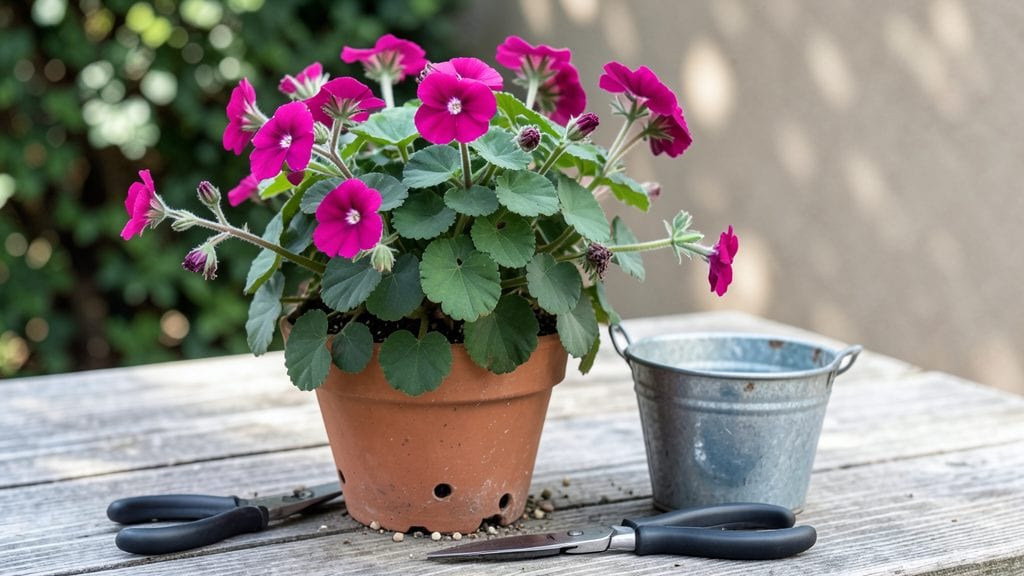
Trimming geranium plants isn't just about keeping them tidy—it's the secret to nonstop blooms that last from spring until frost. 🌸 I learned this the hard way after my first summer of geraniums turned into a single, leggy stem with three sad flowers.
The right cuts encourage those thick, bushy plants everyone envies, while the wrong ones leave you with bare stems and sparse blooms.
You only need sharp pruners and a sunny morning to get started. For zonal and regal geraniums, cut back about one-third of the plant in early spring, then do light trims every 4-6 weeks to shape and encourage new growth.
Ivy geraniums need a different approach—pinch back the tips regularly to keep them compact. The key is always cutting just above a leaf node where new growth can sprout.
What you'll end up with is a plant that looks like it was professionally groomed, with dense foliage and flowers covering every branch. My patio geraniums now produce so many blooms I have to deadhead daily just to keep up.
The best part? They stay vibrant all season long, even when other plants are fading.
This works for container geraniums, hanging baskets, or in-ground plantings—just adjust the timing based on your climate. Now let's get those shears ready and turn your geraniums into the showstopper of your garden.
📚 In This Guide
- What you need
- Instructions
- Tips and common mistakes
- Wrapping up and next steps
What you need
- ● Sharp bypass pruners – Must be clean and sterilized (1 pair, bypass-style recommended for clean cuts).
- ● Hand pruners or shears – For smaller stems (1 pair, bypass or anvil type, 4-6" blade length).
- ● Rubbing alcohol (70% or higher) – For sterilizing tools between cuts (small bottle, ~2 oz).
- ○ Gloves (optional but recommended) – Garden or nitrile gloves to protect hands from thorns and sap (1 pair).
- ○ Pruning saw (optional) – For thick, woody stems (>1/4" diameter) (1 small-handled saw).
- ● Disposable pruning bags or bucket – To collect trimmings (1-2 bags or a 5-gallon bucket).
- ● Sharpie or permanent marker – For labeling cuttings if propagating (1 marker).
- ● Hose with spray nozzle – To rinse tools and refresh plants post-pruning.
- ● Plant food or fertilizer – Balanced 10-10-10 or bloom booster to revive plants after trimming (small bottle, ~16 oz).
- ● Rooting hormone – If propagating cuttings (gel or powder, ~1 oz).
- ● Knee pad or stool – For comfort during longer sessions.
Step-by-Step guide to trimming geranium plants
Here's how to shape your geraniums for fuller growth and endless summer-long blooms.
✂️ Step 1: Choose the Right Time for Trimming
Wait until spring when new growth appears—typically after your last frost date. This timing ensures you're cutting back just as the plant wakes up, not while it's still dormant. I always check for fresh green shoots at the base before reaching for my shears. Avoid trimming in fall or winter unless you're preparing for dormancy.
Morning is ideal—cutting in the cool hours reduces stress on the plant. If you must trim later in the day, water thoroughly beforehand. This gives the plant time to recover before evening temperatures drop. You'll know you've timed it right when you see fresh, vibrant growth within a week.
✂️ Step 2: Sterilize Tools and Assess Plant Shape
Wipe your pruning shears with rubbing alcohol before cutting—this prevents spreading disease from plant to plant. I keep a small bottle of 70% isopropyl alcohol in my gardening toolbox for quick sterilization. Examine your geraniums for dead or diseased stems first; these go in the trash, not the compost.
Step back and look at the overall shape. Geraniums naturally grow bushy, but leggy stems or uneven growth means it's time for a more aggressive trim. Focus on removing stems that are bare or have fewer than three leaves. This encourages new growth from the base, giving you a fuller plant.
✂️ Step 3: Make Precision Cuts for Bushier Growth
Cut just above a leaf node—this is where new growth will emerge. Aim for a 45-degree angle to prevent water from pooling on the cut. I like to make my cuts about ¼ inch above the node, which gives the plant enough energy to regrow without weakening it. Never cut into woody stems; if a stem is thicker than a pencil, leave it alone.
For leggy stems, trim back by ⅓ of their length. This might seem drastic, but geraniums bounce back quickly. You'll see new shoots within 10-14 days, and those will be stronger than the old growth. If your plant is particularly overgrown, you can cut it back by half—it’ll look sad for a week, but it’ll reward you with a bushier, more vibrant plant.
✂️ Step 4: Encourage Blooms with Deadheading
Pinch or cut off spent blooms as soon as they fade. This redirects the plant’s energy from seed production to making new flowers. I use my fingers for small blooms and shears for larger clusters. Deadheading keeps geraniums flowering continuously from spring until frost—my plants stay in bloom for 5-6 months with regular care.
Watch for buds forming at the base of the plant. These are your future blooms, so avoid cutting there. If you accidentally trim a bud, don’t worry—geraniums are forgiving. Just keep up with deadheading, and you’ll have a nonstop floral display. The key is consistency; even 10 minutes weekly makes a difference.
☀️ Step 5: Post-Trimming Care for Recovery
Water deeply after trimming to help the plant recover. Geraniums are drought-tolerant, but fresh cuts need moisture to heal. I water at the base, avoiding the foliage to prevent fungal issues. Let the soil dry out between waterings—geraniums hate soggy roots, which can lead to root rot.
Move your geraniums to a spot with 6+ hours of sunlight daily after trimming. They’ll need extra light to fuel their regrowth. You’ll notice new leaves within 2-3 weeks, and those leaves will be darker and healthier than before. If your plant looks stressed, a light fertilizer application can give it a boost—but only after new growth appears.
Tips & tricks for perfect geranium trimming
Here's what I've learned after years of shaping my geraniums—these tricks make all the difference for healthy, blooming plants.
Timing Secret: The 10 minutes weekly you spend deadheading makes a huge difference in bloom longevity. I set a timer when I'm outside—it's amazing how quickly those spent blooms accumulate! Focus on the largest clusters first, as they're the biggest energy drainers. This consistent maintenance is what keeps my geraniums flowering for 5-6 months straight.
Precision Cutting Tip: When making those 45-degree angle cuts in Step 3, I use my thumb as a guide—it naturally creates that angle without needing special tools. For the ¼ inch above the node, I find it helps to count "one, two, three" as I make the cut to ensure consistency. This small detail prevents weak regrowth and gives you stronger stems.
Recovery Strategy: After trimming back leggy stems by ⅓ of their length, I always give my plants a 10-minute recovery break in the shade before moving them back to full sun. This prevents shock from the sudden exposure. The first 2-3 weeks are critical for new growth—watch for those dark green leaves as your reward for the trim.
Tool Maintenance: I keep a small container of rubbing alcohol right in my gardening shed for quick tool sterilization between plants. This 30-second wipe-down with 70% isopropyl alcohol prevents disease spread better than any other method I've tried. Clean tools also make cuts smoother, which means less stress on your geraniums.
Pro Tips for Trimming Geranium Plants
- Here's what I've learned after years of shaping my geraniums—these tricks make all the difference for healthy, blooming plants.
- Timing Secret: The 10 minutes weekly you spend deadheading makes a huge difference in bloom longevity.
- Precision Cutting Tip: When making those 45-degree angle cuts in Step 3, I use my thumb as a guide—it naturally creates that angle without needing special tools.
Frequently asked questions
Got questions about trimming geraniums?
You’re not alone! Here are answers to the most common concerns—so you can prune with confidence and keep those blooms coming.
When is the best time to trim geraniums?
Trim geraniums after the first wave of spring blooms (around late May or early June) to encourage bushier growth. For zone-hardy varieties, a light prune in early spring (before new growth) helps too. Avoid heavy cuts in fall if you’re in a cold climate—wait until spring to prevent frost damage.
How much should I cut back geraniums?
For most geraniums, aim to cut back one-third of the plant’s height to encourage branching. Pinch back leggy stems to just above a leaf node (where leaves meet the stem). Never cut into woody stems—focus on soft, green growth for best results.
Can I propagate geraniums from cuttings?
Take 4-6 inch cuttings from healthy stems (just below a leaf node) and remove lower leaves. Dip in rooting hormone (optional) and place in moist potting mix. Keep in bright, indirect light and mist occasionally. Roots should form in 2-4 weeks.
Why are my geraniums looking leggy after trimming?
Leggy growth often means too little light or over-pruning. Move your plant to a sunny spot (6+ hours/day) and reduce future cuts to 10-15% of the plant’s height. Fertilize lightly with a balanced formula to encourage compact growth.
Do I need to trim geraniums in winter?
For tender geraniums (pelargoniums), bring them indoors before frost and trim lightly to remove dead growth. Hardy geraniums (cranesbills) can stay outside—just cut back 1-2 inches in late winter to shape them. Avoid heavy pruning until spring.
Pro Tip:
Use sterilized shears (wipe with rubbing alcohol) to prevent disease spread. And never use hedge trimmers—they crush stems and damage foliage. Sharp pruners make all the difference!
Wrapping up and next steps
Trimming your geranium plants isn’t just about tidying up—it’s the secret to vibrant, long-lasting blooms and healthier growth! By mastering the right techniques, you’ll encourage bushier foliage, prevent leggy stems, and enjoy a year-round display of color.
Whether you’re a seasoned gardener or just starting out, a little precision goes a long way.
Ready to transform your geraniums? Grab your shears and get pruning! Start with a light trim now, then plan to repeat the process every few weeks for continuous beauty. Your garden—and your geraniums—will thank you! 🌸✂️