
Pruning
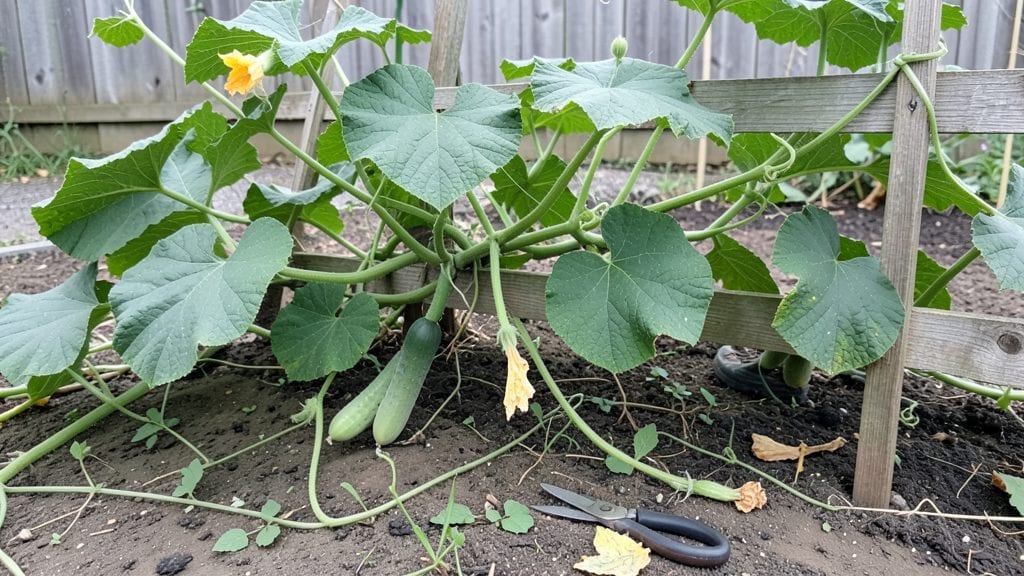
Trimming cucumber plants isn't just about keeping them neat—it’s the secret to doubling your harvest all season long. 🌱 I learned this the hard way after watching my vines sprawl into unruly tangles, producing just a handful of bitter cucumbers.
The right cuts redirect energy to fruit production, improve airflow, and even deter pests.
You only need three precision cuts to transform a wild vine into a productive powerhouse: removing suckers, trimming lateral shoots, and pruning yellowed leaves. Grab a clean pair of pruners and work in the morning when plants are hydrated.
This method works for both bush and vining types, whether you're growing in containers or a raised bed.
What you’ll end up with is a vine that produces larger, sweeter cucumbers at a steady pace instead of one big flush followed by decline. The plants stay healthier longer, and you’ll avoid the heartbreak of rotten fruit hiding under dense foliage.
Plus, the air circulation keeps powdery mildew at bay—my biggest enemy before I mastered this technique.
This approach scales from a single container to a full trellis system, and the same principles apply whether you’re growing outdoors or under grow lights indoors. The key is consistency—just 10 minutes of trimming every few days keeps your cucumbers thriving from first bloom to final harvest.
📚 In This Guide
- What you need
- Instructions
- Tips and common mistakes
- Wrapping up and next steps
What you need
- ○ Pruning shears or sharp bypass pruners: Choose sterilized, sharp shears (4-6 inch blades) to avoid damaging vines. Optional: A disinfectant solution (1 part bleach to 9 parts water) for cleaning between cuts.
- ● Gloves: Heavy-duty gardening gloves (nitrile-coated for grip) to protect against thorns and sap.
- ● Clean, sharp knife or scissors: A folding pocket knife (for small trims) or kitchen shears (for quick fixes).
- ● Garden twine or plant ties: 3–5 feet of jute or plastic-coated twine (¼-inch width) to support vines post-trimming.
- ● Organic mulch: 2–3 inches of straw, grass clippings, or shredded leaves to retain moisture and suppress weeds.
- ● Hand pruners with a bypass blade: For larger plants or thick stems (6–8 inch blades).
- ○ Plant growth regulator: Optional for bush varieties (e.g., daminozide) to control overgrowth.
- ● Compost bin or bucket: For collecting trimmings to repurpose as nutrient-rich compost.
- ● Spray bottle with water: To hydrate cut stems and prevent stress.
Step-by-step guide to trimming cucumber plants for maximum yield
Here's how I keep my vines producing all season—just three strategic cuts make the difference.
🌿 Step 1: Prune the Main Stem at 4 Feet Tall
When your cucumber plant reaches about 4 feet in height, stop and locate the 5th leaf node from the base. This is where you'll make your first cut—just above the leaf, using clean, sharp pruning shears. The goal is to encourage lateral branches that will produce more fruit.
I always make this cut on a dry, sunny morning when the plant is actively growing. Avoid trimming after rain or in extreme heat, as the plant needs energy to recover. You'll see new side shoots emerge within 7-10 days—these are your future fruit-bearing branches.
✂️ Step 2: Remove Sucker Growth Weekly
Between the main stem and lateral branches, you'll find small, leafy growths called suckers. These compete with your plant for energy and reduce fruit production. Pinch them off weekly using your fingers or shears—no need for tools, just a quick twist or cut just above the base.
Focus on suckers that appear in the v-shaped junction between a lateral branch and the main stem. If left unchecked, these can grow into full branches and overwhelm your plant. I check mine every 7 days during peak growing season—consistency is key here.
🌱 Step 3: Thin Overcrowded Vines for Airflow
Once lateral branches develop 3-4 leaves, they'll start producing fruit. However, if branches grow too close together, they'll compete for sunlight and spread disease. Use your shears to trim back any branches that are within 6 inches of another or growing in a tangled mess.
This isn't about removing fruit—it's about opening up the plant so air circulates freely. You'll notice healthier leaves and fewer yellowing spots after just one session. I always step back after trimming to check for gaps—if you can still see sunlight hitting the center of the plant, you're doing it right.
💧 Step 4: Harvest and Prune Old Fruit Stems
After harvesting cucumbers, don't just pull them off—trim the entire fruit stem back to the next leaf node. This prevents pests and diseases from entering the plant through the old stem wound. Use your shears to make a clean cut at a 45-degree angle just above a leaf.
I also remove any yellow or dying leaves at the same time—these are entry points for pests. Healthy green leaves mean the plant is photosynthesizing efficiently. This final step keeps your cucumbers producing for weeks longer than untrimmed plants.
Tips & tricks for pruning cucumber plants
A few simple tricks will help you keep your cucumber vines thriving and productive all season long.
Timing is Everything: The 4-foot height mark for your first cut is crucial—don't wait until the plant is taller. At this stage, the plant has enough energy to recover and produce those lateral branches. I've seen gardeners wait too long, and their plants become top-heavy and struggle to support fruit. Also, that dry, sunny morning timing gives the plant optimal conditions to heal quickly.
Sucker Identification: Those little leafy growths in the V-shaped junctions are sneaky—they look like leaves but steal energy from your fruit. I learned this the hard way by ignoring them for weeks, only to find my cucumbers were smaller and fewer. Focus on the suckers between the main stem and lateral branches, not the ones on the lateral branches themselves. These latter ones are actually fruit-bearing branches!
Airflow Strategy: When thinning branches within 6 inches of each other, think of it like opening windows in your kitchen—better circulation prevents mold and disease. I always do this step after a rain shower when the plant is hydrated, making the cuts cleaner and less stressful on the plant. You'll know you've done it right when sunlight reaches the center of the plant.
Clean Cuts Matter: That 45-degree angle cut on harvested stems isn't just for looks—it prevents water from pooling on the wound, which can lead to rot. I keep my pruning shears sharp by running them across a ceramic hone after each use. Dull blades crush stems instead of making clean cuts, inviting pests and disease.
Pro Tips for Trimming Cucumber Plants
- A few simple tricks will help you keep your cucumber vines thriving and productive all season long.
- Timing is Everything: The 4-foot height mark for your first cut is crucial—don't wait until the plant is taller.
- Sucker Identification: Those little leafy growths in the V-shaped junctions are sneaky—they look like leaves but steal energy from your fruit.
Frequently asked questions
When is the best time to trim cucumber plants?
Trim cucumber plants early and often—ideally every 1–2 weeks during peak growth (spring to early summer). Focus on removing suckers (side shoots) when they’re still small (about 2–3 inches long). Avoid heavy pruning when plants are flowering or fruiting, as this can stress them. Morning trims help wounds dry faster, reducing disease risk.
How do I know which parts to cut?
Look for suckers (small shoots growing between the main stem and a leaf) and yellowing or diseased leaves. Cut suckers back to their origin point with clean shears. For bush varieties, trim only dead/damaged growth; for vining types, prune aggressively to encourage upward growth. Never cut more than 1/3 of the plant at once—this can shock the cucumber!
Will trimming reduce my cucumber yield?
Not if done right! Pruning increases yield by directing energy to fruit production. Over-trimming (especially during flowering) can lower output, but strategic cuts—like removing suckers—boost airflow and reduce pests. Focus on balance: keep 3–5 main vines for vining types and prune bush varieties lightly. Patience pays off with bigger, healthier cucumbers!
Can I trim cucumber plants in extreme heat or cold?
Avoid trimming during heatwaves (above 90°F) or frost risk (below 50°F). Plants stressed by temperature swings heal slower, inviting disease. Opt for cooler mornings (60–75°F) or overcast days. If you must trim in heat, water the plant first to reduce shock. In cold climates, wait until soil warms to at least 60°F before pruning.
What’s an alternative if I forget to trim regularly?
Don’t panic! If you’ve neglected trimming, focus on emergency maintenance:
- Remove only dead, yellow, or pest-ridden leaves.
- Thin out crowded vines to improve airflow (prevents powdery mildew).
- Fertilize lightly with compost or balanced fertilizer to recover.
Wrapping up and next steps
Trimming your cucumber plants isn’t just about maintenance—it’s your secret to a bountiful, year-long harvest! 🌱 By mastering the three precision cuts (removing suckers, pruning vines, and shaping the plant), you’ll boost airflow, reduce pests, and encourage healthier, more productive growth.
With the right tools and timing, even beginners can transform their garden into a cucumber powerhouse.
Ready to take the next step? Grab your pruners, head outside, and give those vines the TLC they deserve. Your future salads—and bragging rights—will thank you! 🥒✨