
Planting
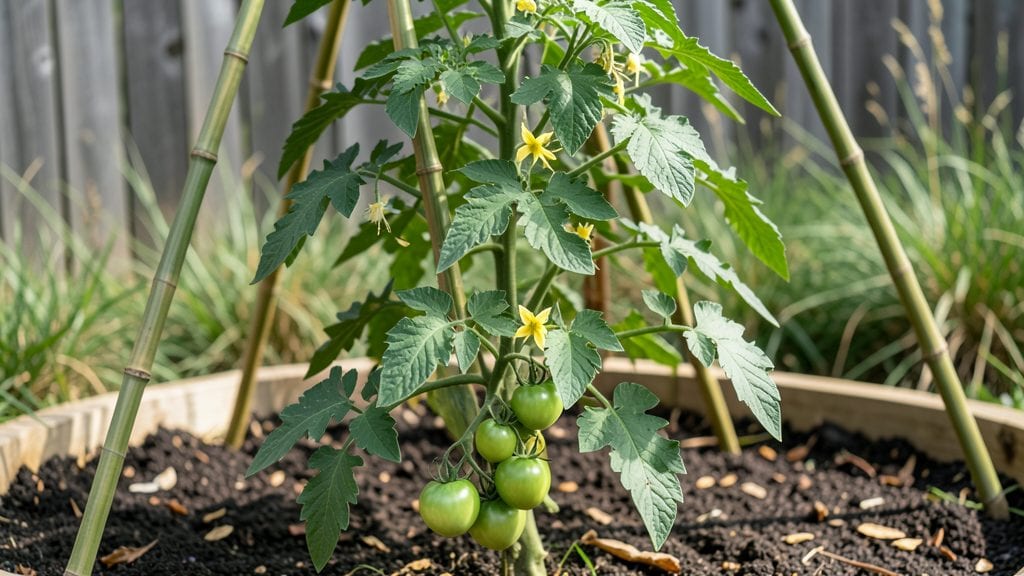
A tomato plant teepee transforms sprawling vines into a compact, productive vertical garden. I built my first one after watching my cherry tomatoes flop onto the soil—where they rotted before ripening. The right support keeps plants healthy, boosts airflow, and turns a 3-foot-square plot into a 6-foot-tall harvest tower.
You’ll need 3-5 sturdy bamboo stakes (or metal rods), twine or jute twine, and a few hours on a sunny afternoon. No power tools required—just tie the stakes in a cone shape and weave the twine between them.
The structure stays lightweight but strong enough to hold 10-pound tomatoes. For small spaces, scale down to two stakes; for heavy varieties, add a third stake for stability.
Your plants will reward you with bushier growth, fewer diseases, and easier picking—no more bending over or crowded foliage. The teepee also makes training indeterminate tomatoes a breeze, turning them into a living trellis.
By midsummer, you’ll have a vertical jungle of red, yellow, and purple fruit hanging within arm’s reach.
Works in containers, raised beds, or in-ground gardens—just adjust the height to your space. For a rustic look, stain the bamboo; for a modern touch, use black metal pipes.
The key is keeping the twine taut enough to guide vines upward without strangling them. Once you try it, you’ll wonder how you ever grew tomatoes any other way.
📚 In This Guide
- What you need
- Instructions
- Tips and common mistakes
- Wrapping up and next steps
What you need
- ● 5-7 sturdy bamboo stakes or wooden dowels (5-6 feet tall, ½-inch diameter). Pro tip: Avoid treated wood—opt for untreated cedar or bamboo to keep plants safe! 💡
- ○ Jute twine, soft garden twine, or plant ties (10-15 feet, ¼-inch width). Optional: Use biodegradable twine for eco-friendliness. 🌿
- ● Scissors or pruning shears (for trimming twine).
- ● Gloves (to protect your hands from splinters or rough twine).
- ● Tomato plants (2-4 plants per teepee, depending on variety). Tip: Choose indeterminate varieties like ‘Sungold’ or ‘Brandywine’ for maximum bushiness! 🍅
- ● Staple gun (for securing twine to stakes—no knots needed!).
- ● Plastic plant ties (if you prefer reusable supports).
- ● Decorative fabric or burlap (to wrap stakes for a rustic look).
- ● Soil amendments (compost or fertilizer) to boost tomato growth.
Instructions for building a tomato plant teepee
Here's how to create sturdy support that encourages strong growth and maximizes your harvest.
Gather and Prepare Your Materials
You'll need 4 sturdy bamboo stakes (about 6 feet long) and 10-12 feet of twine or jute twine. The bamboo should be roughly ½ inch in diameter—thick enough to stay upright but flexible enough to bend. If your stakes are too thin, they'll flop over when the plants get heavy.
Cut the twine to length using scissors or a knife. For a 4-plant teepee, you'll need about 3 feet of twine per stake, so 12 feet total (4 stakes × 3 feet each). Leave extra length for tying—you don't want the twine to snap when you pull it tight. Store everything in a dry place until you're ready to assemble.
Assemble the Teepee Frame
Drive one bamboo stake 6 inches into the ground at each corner of your planting area, spacing them about 3 feet apart. The stakes should lean slightly inward to form a natural cone shape. If your soil is hard, use a mallet to tap the stakes in without damaging the roots of nearby plants.
Once all four stakes are firmly planted, tie the twine around the top of the first stake, about 6 inches from the ground. Then, loop the twine around the adjacent stake at the same height, pulling it snug but not too tight. Repeat this process, working your way up the stakes in a spiral pattern until you reach the top. Each loop should be about 6 inches apart—this creates enough space for the tomato vines to weave through without getting tangled.
Train Tomato Plants to the Teepee
When your tomato seedlings are 4-6 inches tall and have 3-4 true leaves, gently tie the main stem to the twine at the base of the teepee using soft plant ties or strips of old fabric. Avoid using wire or anything that can cut into the stem. As the plant grows, guide the main stem upward, securing it to the twine every 12 inches to encourage vertical growth.
Once the plant reaches the top of the teepee, let the side shoots grow outward and downward. These will form the bushy canopy you're aiming for. If any branches get too heavy, tie them to the twine to prevent breakage. You'll know you're doing it right when the teepee fills out with lush, vine-covered growth by mid-summer.
Maintain and Adjust as the Plants Grow
Check the teepee weekly to ensure the twine hasn't loosened or the stakes haven't shifted. If you notice any gaps where vines could slip through, retie the twine or add extra loops. During heavy rain or wind, give the structure a gentle shake to make sure it's still stable—weak spots will become obvious if they wobble.
Prune suckers (the small shoots that grow in the leaf axils) regularly to redirect the plant's energy into fruit production rather than extra foliage. You'll see the difference in bigger, riper tomatoes by late summer. If your teepee starts to sag under the weight of the harvest, reinforce it with an extra loop of twine around the middle of the stakes.
Tips & tricks for perfect tomato plant teepees
A few simple techniques will help you build a teepee that lasts all season and gives your tomato plants the support they need to thrive.
Stake Selection Matters: Don't skimp on the bamboo stakes—thinner ones will bow under the weight of your tomato harvest. Look for stakes that are at least ½ inch in diameter and 6 feet long. If you can't find bamboo, sturdy wooden dowels or metal rebar work too, but bamboo is the most flexible and natural choice. I've seen tomato plants double in size when properly supported this way.
Tie It Right: When wrapping the twine around the stakes in Step 2, pull it snug but not too tight—you want to leave some give so the structure can sway slightly in the wind without breaking. The 6-inch spacing between loops is perfect for tomato vines to weave through without getting tangled. I like to use jute twine because it's biodegradable and won't harm the plants if it eventually breaks down.
Plant Training Technique: In Step 3, when you're tying the main stem to the twine, use soft plant ties or old fabric strips rather than wire. Wire can cut into the stem and damage the plant over time. The 12-inch spacing between ties is ideal—it gives the plant enough room to grow between supports while keeping it upright. If you notice any branches getting too heavy, tie them to the twine immediately to prevent breakage.
Weekly Maintenance Wins: The weekly check mentioned in Step 4 is crucial for long-term success. I can't tell you how many times I've seen teepees collapse because the twine loosened or the stakes shifted. During your weekly inspection, also look for any signs of pests or disease on the twine—if you find any, replace that section of twine immediately to protect your plants.
Pro Tips for Tomato Plant Teepee
- A few simple techniques will help you build a teepee that lasts all season and gives your tomato plants the support they need to thrive.
- Stake Selection Matters: Don't skimp on the bamboo stakes—thinner ones will bow under the weight of your tomato harvest.
- Tie It Right: When wrapping the twine around the stakes in Step 2, pull it snug but not too tight—you want to leave some give so the structure can sway slightly in the wind without breaking.
Frequently asked questions
How tall should a tomato teepee be for indeterminate vs. determinate varieties?
For indeterminate tomatoes (vining, like 'Sungold'), aim for 6–8 feet tall—they’ll keep growing! For determinate types (bushy, like 'Roma'), a 4–5 foot teepee works perfectly. Always leave extra height for pruning or trellising later.
When is the best time to assemble the teepee before planting?
Assemble your teepee 1–2 weeks before transplanting seedlings (spring, after the last frost). This gives roots time to establish in the enriched soil while the structure settles. If building later, gently stake young plants to the teepee as they grow to avoid disturbing roots.
Can I reuse a tomato teepee for multiple growing seasons?
Clean the structure thoroughly after harvest to remove disease spores. Soak wooden stakes in a 1:10 bleach-water solution (or vinegar) for 10 minutes, then let dry in the sun. Replace any damaged poles or twine, and you’re ready for next year’s harvest!
What should I do if my tomato plants start leaning or falling over?
Leaning often means lack of support or wind stress. Secure vines gently with soft plant ties or old T-shirts (avoid wire, which can damage stems). For windy areas, stake the teepee itself to the ground with additional stakes or bury the base slightly. Prune suckers (side shoots) to reduce weight.
Are there alternatives to a teepee for small spaces?
Yes! Try these space-saving supports:
- Cages: Sturdy wire or plastic cages (5–6 feet tall) work well for determinate varieties.
- Trellis: A vertical lattice or netting panel saves space and directs growth upward.
- Fence or wall: Train vines along a sturdy structure with soft ties.
- Hanging baskets: Perfect for cherry tomatoes—use self-watering pots with a trellis.
Wrapping up and next steps
Building a tomato plant teepee is a game-changer for small gardens—it maximizes space, encourages lush growth, and simplifies maintenance! With just a few materials and a little creativity, you’ll enjoy bushier, healthier plants and a bountiful harvest. 🌱
Ready to get started? Grab your supplies, follow the steps, and watch your tomatoes thrive! Need more ideas? Try experimenting with different plant companions or even a vertical garden combo for extra productivity. Happy gardening! 🌿