
Companion Plants
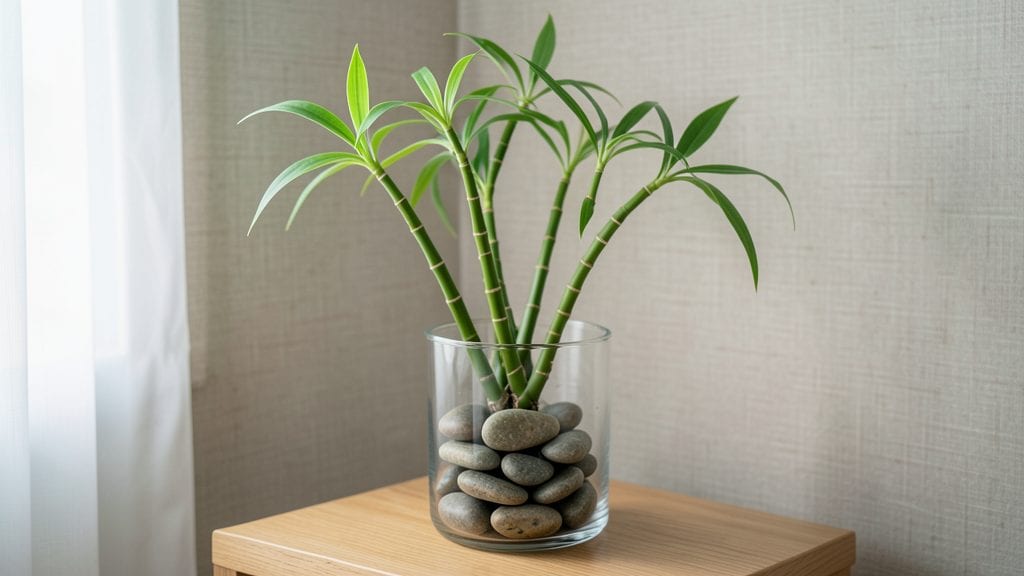
Running bamboo plants can transform your yard into a lush, fast-growing privacy screen within just a few seasons—though I’ve learned the hard way that controlling its spread is just as important as planting it right.
The first time I saw Phyllostachys shoots shoot up 3 feet in a single summer, I knew I’d found my solution for blocking nosy neighbors and wind. But without planning, those same shoots will soon invade your entire property.
The key is balancing its aggressive growth with smart placement and barriers.
You’ll need a sunny spot with at least 6 hours of direct light and soil that drains well but stays moist—think of it as the Goldilocks zone for bamboo. A 30-inch-deep trench filled with gravel or hardware cloth acts as a root barrier, stopping rhizomes from marching into your lawn.
Most gardeners overlook this step, and I’ve seen bamboo overtake flower beds within a year. Start with 3-5 canes spaced 12 inches apart for a dense screen, and water deeply once a week until established.
By year two, you’ll have a wall of vibrant green that grows taller than most people, with natural density that no fence can match. The canes develop striking stripes and hollow centers, adding texture to your landscape.
Pruning in late winter keeps the screen tidy, and dividing clumps every 3-5 years prevents overcrowding. The best part? It thrives in zones 5-9, so whether you’re in the South or Midwest, this plant delivers fast results with minimal fuss.
Fair warning: running bamboo isn’t for small yards or gardeners who hate maintenance. But if you’re willing to contain it, you’ll get a low-maintenance, high-impact privacy solution that outperforms plastic fences. Here’s how to plant, prune, and keep it in check without turning your garden into a bamboo jungle.
📚 In This Guide
- What you need
- Instructions
- Tips and common mistakes
- Wrapping up and next steps
What you need
- ● Bamboo rhizomes: 5–10 healthy, dormant rhizomes (check for firm stems and visible buds).
- ● Shovel or trenching tool: A sharp spade or bamboo-specific trenching tool (6–12 inches deep).
- ● Garden gloves: Heavy-duty to protect against sharp rhizomes and soil debris.
- ● Compost or well-aged manure: 2–3 gallons per rhizome for nutrient-rich soil.
- ● Mulch (straw, wood chips, or pine needles): 2–3 inches thick to retain moisture and suppress weeds.
- ● Watering can or hose with a gentle spray nozzle: Bamboo loves moisture but hates soggy roots!
- ○ Root barrier fabric (optional but highly recommended): 2–3 feet deep and 1–2 feet wide per rhizome to contain spread.
- ● Soil test kit: To check pH (ideal range: 5.5–7.0) and adjust if needed.
- ● Slow-release fertilizer (balanced 10-10-10): For a nutrient boost after planting.
- ● Stakes or bamboo trellis: If you want to guide vertical growth early on.
- ● Pruners: For trimming canes in late winter/early spring.
- ● Wheelbarrow: For hauling soil, mulch, or rhizomes.
Step-by-Step instructions for planting running bamboo as a privacy screen
This method delivers a lush, dense screen in record time—here's how to harness bamboo's rapid growth.
Choose the Right Location and Prepare the Soil
Running bamboo thrives in full sun to partial shade but needs at least 6 hours of sunlight daily for maximum growth. Avoid low-lying areas where water pools—bamboo roots need oxygen, not soggy soil. Test your spot by digging a 12-inch deep hole; if water sits above 6 inches, amend the soil with 2 inches of coarse sand or 1 inch of perlite to improve drainage.
Loosen the soil to a depth of 18 inches with a shovel or tiller, breaking up any compacted layers. Running bamboo spreads aggressively, so dig a 3-foot wide trench along your desired screen line. This gives roots room to establish without crowding. Mix in 2-3 inches of compost into the top 12 inches of soil—this feeds the roots as they spread.
Plant Rhizomes at the Correct Depth and Spacing
Running bamboo grows from rhizomes (underground stems), not just individual plants. For a 4-plant screen, space rhizomes 6 feet apart in the trench. Plant each rhizome with the buds facing upward—these will sprout into new shoots. Bury them 2 inches deep, no deeper, or they’ll rot before emerging.
Cover the rhizomes with soil and press gently to remove air pockets. Water deeply until the soil is evenly moist to 12 inches down. Here’s the thing—if you plant too shallow, shoots will struggle; too deep, and they’ll suffocate. Check by pressing your finger into the soil: it should feel damp like a wrung-out sponge, not dry or muddy.
Install a Root Barrier for Controlled Spread
Running bamboo’s defining trait is its aggressive spread, so a 3-foot deep, 2-foot high HDPE root barrier is non-negotiable. Bury the barrier 6 inches deeper than the rhizomes (so 8 inches total) and 12 inches taller than the mature plant height you want. For a 10-foot screen, use a 10-foot long barrier—measure twice, cut once.
Place the barrier 12 inches away from the trench on the side you don’t want bamboo to spread. Secure it vertically with stakes every 2 feet and backfill the trench with soil. The barrier blocks rhizomes from crossing but doesn’t choke the plants. Water the area again to settle the soil around the barrier edges.
Mulch and Water for Rapid Establishment
Spread 3 inches of wood chips or straw mulch over the planted area, keeping it 6 inches away from plant stems to prevent rot. Mulch conserves moisture and suppresses weeds while the bamboo establishes. Water deeply 2-3 times per week during the first 6 weeks, aiming for 1 inch of water per session. You’ll know it’s enough when water drains to 12 inches deep—stick a screwdriver in the soil to check.
After 8 weeks, reduce watering to once a week unless your area experiences drought conditions. Running bamboo’s roots will spread 3-5 feet per year, so monitor the barrier’s edges. If you see shoots popping up beyond it, dig them out immediately—they’ll regrow if left alone.
Prune for Density and Shape the Screen
Once shoots reach 3 feet tall, prune the top third of each stem to encourage bushier growth. Use clean, sharp pruners and cut just above a leaf node (the bump where leaves grow). This redirects energy into lateral shoots, thickening your screen faster. Repeat this pruning every 6 weeks during the growing season.
By year 2, your bamboo will form a near-solid wall. Thin out the thinnest canes to focus energy on the strongest stems. Here’s the secret: running bamboo grows fastest in warmth (60-80°F). In cooler climates, protect young plants with burlap wraps in winter to prevent frost damage to emerging shoots.
Tips & tricks for perfect running bamboo privacy screens
A few key strategies will help you create a dense, fast-growing bamboo screen without the headaches. Here's what I've learned from planting and maintaining bamboo for years.
Soil Preparation is Everything: The 18-inch deep soil loosening in Step 1 can't be skipped—bamboo roots need that space to spread aggressively. I've seen bamboo fail to thrive when planted in compacted soil, no matter how good the rhizomes were. If your soil is particularly heavy clay, consider adding an extra inch of compost to the top 12 inches for even better results. The 6-hour sunlight requirement is non-negotiable either—this is what fuels that rapid growth we're after.
Rhizome Planting Precision: Those 6-foot spacings between rhizomes in a 4-plant screen might seem generous, but trust me on this—crowding them leads to weak, sparse growth. When planting, make sure the buds are facing upward; I've seen entire batches fail when this was overlooked. The 2-inch depth is critical too—any deeper and they'll suffocate, any shallower and they won't establish properly. After planting, press the soil firmly to eliminate air pockets that could dry out the rhizomes.
Root Barrier Installation Secrets: The 3-foot deep, 2-foot high barrier in Step 3 needs to be installed perfectly to contain that aggressive spread. I recommend using a heavy-duty plastic barrier rather than metal, as metal can corrode over time. When burying it 8 inches deep, make sure the top edge is level with the soil surface—any gaps will allow rhizomes to escape. The 12-inch distance from the trench gives roots room to establish without hitting the barrier immediately.
Watering Strategy for Rapid Growth: Those first 6 weeks with deep watering 2-3 times per week are crucial for establishing your bamboo's root system. I've found that using a soaker hose buried 2 inches deep delivers water exactly where the roots need it most. After 8 weeks, you can reduce to weekly watering, but don't skip this—consistent moisture is what fuels that 3-5 feet per year growth rate. The screwdriver test is a great way to check moisture levels without overwatering.
Pro Tips for Running Bamboo Plants
- A few key strategies will help you create a dense, fast-growing bamboo screen without the headaches.
- Soil Preparation is Everything: The 18-inch deep soil loosening in Step 1 can't be skipped—bamboo roots need that space to spread aggressively.
- Rhizome Planting Precision: Those 6-foot spacings between rhizomes in a 4-plant screen might seem generous, but trust me on this—crowding them leads to weak, sparse growth.
Frequently asked questions
about running bamboo plants—because even the fastest-growing privacy screens need a little clarity!How fast does running bamboo actually grow?
Running bamboo can spread 3–5 feet per year, depending on the species and growing conditions. Some varieties, like Phyllostachys aureosulcata, are aggressive and may reach 10+ feet annually if unchecked. Containment is key—plant in barrier-rooted trenches to manage its speed!
Is running bamboo invasive? How do I stop it from spreading?
Yes, running bamboo is invasive if left uncontrolled. To contain it:
- Install a 30-inch deep underground barrier (HDPE plastic or metal) to block rhizomes.
- Regularly trim rhizomes outside the barrier’s edge.
- Avoid planting near property lines unless you’re prepared for maintenance.
Can I grow running bamboo in containers?
Containers slow but don’t stop rhizome growth. For best results:
- Use a large pot (20+ gallons) with drainage holes.
- Plant in well-draining soil mixed with sand.
- Trim roots every 6–12 months to prevent overcrowding.
When is the best time to plant running bamboo?
The ideal time is early spring or fall, when temperatures are mild (50–70°F). This gives roots time to establish before extreme heat or frost. Avoid planting in summer’s peak—young plants may struggle with drought stress or heat shock.
What’s a good alternative if I want fast privacy without the spread?
If running bamboo’s invasiveness is a concern, try these fast-growing, non-invasive alternatives:
Plant
Growth Rate
Height
Arundinaria gigantea (Clumping Bamboo)
2–3 ft/year
15–25 ft
Bambusa multiplex (Dwarf Bamboo)
1–2 ft/year
6–10 ft
Itea virginica (Virginia Sweetspire)
1–2 ft/year
3–5 ft
Wrapping up and next steps
Running bamboo plants offer a fast, lush, and low-maintenance way to create a stunning privacy screen—naturally! Whether you’re drawn to their rapid growth, eco-friendly appeal, or striking density, these plants are a game-changer for gardens and landscapes. 🌿✨
Ready to transform your space? Start by selecting the right variety, preparing the soil, and planting with care. Next up: Monitor growth, prune strategically, and enjoy your vibrant, ever-expanding green oasis in no time!