
Pests
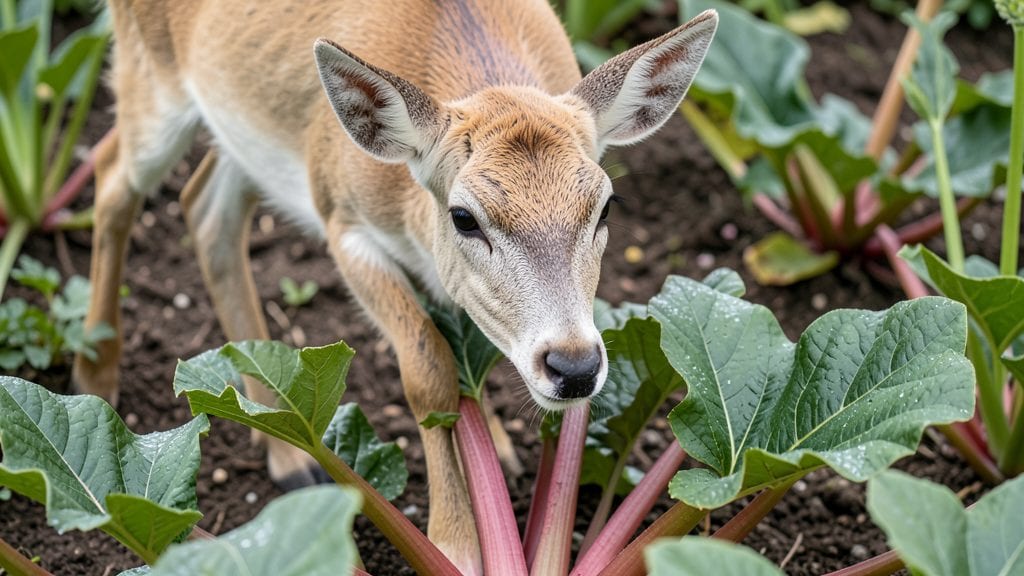
Rhubarb plants attract deer because their tender shoots and sweet stalks make them an irresistible springtime treat. These plants peak in vulnerability during early growing seasons when deer actively seek fresh greens. You can deter them using strong-smelling companion plants or simple physical barriers like fencing.
Deer are particularly drawn to rhubarb because its young leaves contain natural sugars and mild acids that appeal to their palate. 🌱 Unlike many garden plants, rhubarb's stalks remain tender and flavorful well into early summer—a prime window when deer expand their foraging habits.
The plant's upright growth also makes it easy for deer to reach without much effort, unlike low-lying vegetables that require bending. For best results, combine deterrents like rosemary (which deer dislike) with motion-activated sprinklers to create a multi-layered defense system.
This approach works because deer rely heavily on scent and visual cues when selecting food sources. 🌿 The combination of strong aromas from deterrent plants and unexpected water bursts from sprinklers creates discomfort, while physical barriers prevent access entirely.
I've found that even partial protection—like netting just the emerging shoots—can significantly reduce damage while allowing the plant to thrive.
💡 In This Article
- Why Deer Love Rhubarb Gardens
- Natural Deer-Repelling Strategies for Rhubarb
Why deer love rhubarb gardens
Deer are naturally drawn to rhubarb because its young shoots contain a perfect balance of natural sugars (10-15% in fresh stalks) and mild oxalic acid, which creates a sweet-tart flavor profile they find irresistible. 🌿 The plant's high moisture content (about 90% water) also makes it an easy, hydrating snack—especially important for deer during dry spring months when other food sources may be scarce.
Unlike leafy greens like lettuce, which deer often nibble but find less satisfying, rhubarb's fibrous yet tender stalks provide both nutrition and a satisfying crunch.
The timing of rhubarb's growth is another key factor. In early spring, when deer are emerging from winter with reduced fat reserves, they actively seek out high-energy plants like rhubarb.
The plant's rapid shoot emergence (3-6 inches per week in ideal conditions) gives deer a moving target that's both visible and accessible. Compare this to hostas, which deer may avoid because their broad leaves contain toxic saponins—rhubarb offers no such deterrent.
The stalks' upright growth (typically 12-30 inches tall) also makes them easy to browse without the deer needing to bend down.
What makes rhubarb particularly vulnerable is its growth cycle.
The plant's peak tenderness occurs in late spring to early summer, when the stalks are still developing but already contain concentrated sugars. 🌱 During this 4-6 week window, deer will return repeatedly to the same garden, creating visible trampled paths.
This contrasts with many vegetables that harden as they mature—rhubarb remains palatable longer. The plant's lack of natural defenses (like thorns or strong odors) further explains why deer target it over other garden plants.
Deer also show preference based on garden layout. Rhubarb's clumping growth habit creates dense patches that deer can easily locate by scent. Studies show deer have a 300-yard scent detection range, and rhubarb's unique aroma (a mix of tart and floral notes) stands out compared to more neutral-smelling plants.
Unlike row crops, rhubarb's circular shape makes it a natural focal point in garden beds, increasing its visibility to foraging deer. This explains why even small garden plots with just a few rhubarb plants often see significant browsing.
The nutritional payoff for deer is substantial. A single 12-inch rhubarb stalk contains roughly 20-30 calories and 1-2 grams of protein, which may seem modest but adds up during a deer's daily intake of 2-4 pounds of vegetation.
The plant's high water content also helps deer maintain hydration during spring's variable weather. When comparing to other garden favorites, rhubarb outcompetes lettuce (which deer find less nutritious) and even beats out clover (a deer staple) in terms of accessible energy content during early growth stages.
Here's what most gardeners don't realize: deer actually show seasonal preference shifts with rhubarb. In late summer, when the stalks become more fibrous and less sweet, deer may lose interest—only to return the following spring.
This cyclical pattern explains why some gardeners see damage only in certain years, depending on the rhubarb's growth stage when deer are most active. Understanding this timing is crucial for implementing effective deterrents during the critical 6-week window after shoot emergence. 🌱