
Planting
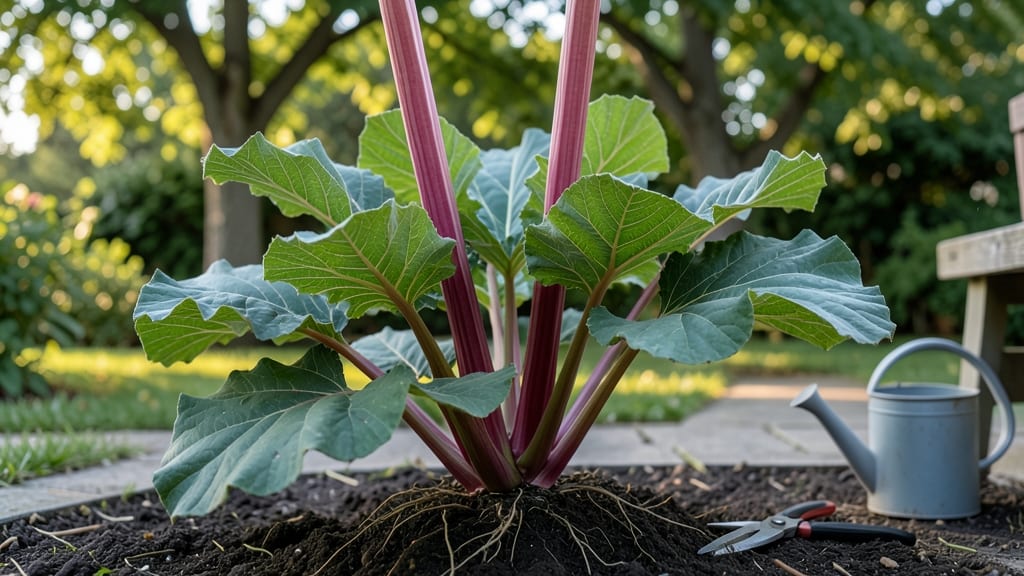
The rhubarb plant size might shock you—mature crowns sprawl 3-4 feet wide while towering stalks hit 3-4 feet tall, proving they’re no small-time garden guest. ✨ I learned this the hard way when my first plant took over. half my backyard, crowding out everything else.
The good news? With the right spacing and pruning, you can keep them manageable while still getting a bumper crop of tart, vibrant stalks.
For healthy growth, give each plant 3-4 feet of space in all directions, especially if you want to harvest for years. In smaller gardens, you can squeeze them into 2-3 feet of space, but expect slightly smaller yields.
The crown itself is what really matters—it’s the underground part that stores energy for next year’s growth, so don’t disturb it when harvesting. If you’re growing in containers, choose a 20-gallon pot or larger and be prepared for slightly slower growth.
What makes rhubarb so rewarding is how it pays you back for patience. A well-established plant can produce 5-10 pounds of stalks per season, and with the right care, it’ll keep doing that for decades.
The key is balancing harvests—never take more than one-third of the stalks at a time, or you’ll weaken the plant. In small spaces, dwarf varieties like ‘Little Gem’ or ‘Canada Red’ stay more compact, making them perfect for containers or tight corners.
Here’s the secret: rhubarb thrives when it’s happy but not overcrowded. Whether you’re working with a full garden bed or a balcony pot, the right spacing and a little pruning will keep your plants productive—and your neighbors from eyeing your plot with envy. Let’s get those stalks growing!
📚 In This Guide
- What you need
- Instructions
- Tips and common mistakes
- Wrapping up and next steps
What you need
- ● Rhubarb crowns: 1–3 mature crowns (choose compact varieties like ‘Victoria’ or ‘Canada Red’ for smaller spaces).
- ● Well-draining soil: 10–15 gallons of rich, loamy soil (pH 6.0–6.8). Mix in 2–3 cups of compost per planting hole.
- ● Fertilizer: Balanced 10-10-10 or organic compost (1 cup per plant at planting time).
- ● Mulch: Straw or wood chips (2–3 inches thick) to retain moisture and suppress weeds.
- ● Watering can or hose: With a gentle spray nozzle for deep watering.
- ● Garden gloves: To protect hands while handling crowns or soil.
- ● Raised bed or containers: 12–18" deep (for urban gardens or poor soil).
- ● Plant supports: Small stakes or cages (if training vines in compact spaces).
- ● Soil tester kit: To check pH and nutrient levels before planting.
- ● Pruning shears: For trimming dead leaves or overgrowth.
- ● Drip irrigation system: For consistent moisture in dry climates.
How to manage rhubarb plant size for maximum yield
Here's how to keep your rhubarb plants compact while boosting harvests—no sprawling messes here.
🌱 Step 1: Choose the Right Variety for Your Space
Start with compact rhubarb varieties like 'Victoria' or 'Champagne,' which stay under 2 feet wide and 3 feet tall when properly managed. Avoid older varieties like 'Valentine,' which can spread aggressively. I always check the plant tag for mature size—this saves you from buying a monster that outgrows your garden.
If you're starting from crowns, select smaller, younger crowns (about 1-2 inches in diameter). Larger crowns produce faster but grow bigger over time. Plant them in early spring when soil temperatures reach 40°F—this gives roots time to establish before summer heat.
☀️ Step 2: Position for Optimal Sun and Airflow
Rhubarb thrives in full sun (6-8 hours daily) but tolerates partial shade in hot climates. I place mine where they get morning sun and afternoon shade if temperatures exceed 85°F. Too much heat causes bolting (flower stalks), which weakens harvests.
Space plants 3 feet apart in rows 4 feet apart to prevent crowding. Good airflow reduces leaf diseases like rust and powdery mildew. If your garden is tight, use raised beds—they warm up faster in spring and drain better, keeping roots healthy.
💧 Step 3: Water Deeply and Mulch Religiously
Rhubarb roots run deep (1-2 feet), so water 1 inch per week during growing season. Let soil dry slightly between waterings—soggy roots rot, while dry soil causes leaves to wilt. You’ll know it’s time when the top 2 inches feel dry to touch.
Spread 3 inches of organic mulch (like straw or shredded leaves) around the base to keep roots cool and retain moisture. Mulch also suppresses weeds, which compete for nutrients. Refresh mulch yearly—it breaks down fast and loses effectiveness.
✂️ Step 4: Prune Strategically for Compact Growth
Remove flower stalks immediately—they drain energy from the plant. Cut them at the base with clean shears. If left unchecked, rhubarb puts all its effort into seeds instead of thick, juicy stalks. I also trim yellow or diseased leaves to keep the plant focused on new growth.
In late winter, cut back dead or damaged leaves to 6 inches above the ground. This encourages fresh, vigorous growth in spring. Avoid heavy pruning in fall—rhubarb stores energy in its roots for next year’s harvest.
🌿 Step 5: Divide Crowded Plants Every 4-5 Years
Rhubarb forms large clumps over time, which reduces stalk size and quality. Dig up the crown in early spring and separate into 3-4 inch sections, ensuring each has at least one bud. Replant divisions 12 inches apart to give them room to regrow.
This rejuvenates the plant and prevents overcrowding, which leads to smaller, tougher stalks. I label new divisions with the year—it’s shocking how quickly they fill space again if left unchecked.
Tips & tricks for perfectly compact rhubarb plants
Keeping your rhubarb plants tidy while maximizing harvests takes a few strategic moves—here's what I've learned after years of trial and error.
Variety Matters: When selecting crowns in Step 1, look for labels that specify "compact" or "dwarf" varieties. 'Victoria' and 'Champagne' are my go-to choices because they naturally stay under 3 feet tall when properly maintained. I've noticed that even with perfect care, older varieties like 'Valentine' will eventually outgrow your space—it's worth paying a little extra for those labeled "space-saving."
Sunlight Strategy: In Step 2, pay special attention to heat management when temperatures exceed 85°F. I've found that positioning plants to receive morning sun and afternoon shade creates the perfect balance. On particularly hot days, I even use shade cloth to protect them—this prevents bolting and keeps the plants focused on producing those thick, juicy stalks we all love.
Pruning Precision: The late winter pruning in Step 4 deserves extra attention. When cutting back to 6 inches, make clean cuts just above a healthy bud. I've ruined multiple harvests by pruning too aggressively—always leave those buds! Also, keep your shears sharp and clean to prevent spreading disease between cuts.
Division Timing: For Step 5, timing is everything when dividing crowded plants. I wait until early spring when soil temperatures reach 40°F, but only after the ground is workable—not frozen. This gives the new divisions time to establish roots before summer heat arrives. I've learned the hard way that dividing in fall can leave plants vulnerable to winter damage.
Pro Tips for Rhubarb Plant Size
- Keeping your rhubarb plants tidy while maximizing harvests takes a few strategic moves—here's what I've learned after years of trial and error.
- Variety Matters: When selecting crowns in Step 1, look for labels that specify "compact" or "dwarf" varieties.
- Sunlight Strategy: In Step 2, pay special attention to heat management when temperatures exceed 85°F.
Frequently asked questions
How big does a rhubarb plant typically grow?
A mature rhubarb plant can spread 3 to 4 feet wide and reach 1 to 2 feet tall, but its crown (the edible part) stays low to the ground. Varieties like ‘Victoria’ or ‘Champagne’ are more compact, making them ideal for small gardens or containers. Prune aggressively in early spring to keep growth tidy!
When is the best time to harvest rhubarb to control plant size?
Harvest rhubarb after the first frost (late fall) or in early spring before new growth appears. Cut stalks 1 inch above the crown to encourage bushier growth. Avoid harvesting in the first year—let the plant establish roots first! Over-harvesting weakens the plant, so limit cuts to ⅓ of the stalks at a time.
Can rhubarb grow in containers? What size pot is best?
Yes! Rhubarb thrives in 5-gallon containers or larger (at least 18 inches deep). Use well-draining soil mixed with compost, and place pots in full sun. Expect slightly smaller harvests than in-ground plants, but container growing works well for patios or urban gardens. Divide every 3–4 years to prevent overcrowding.
Why is my rhubarb plant getting too leggy or floppy?
Leggy rhubarb usually means too much shade, overcrowding, or poor soil. Move it to full sun (6+ hours daily), thin out older stalks, and fertilize with balanced 10-10-10 in early spring. If the crown is buried too deep, dig it up and replant with the top 1 inch below soil level for better stability.
What can I plant near rhubarb to save space?
Rhubarb is low-maintenance and doesn’t compete aggressively with shallow-rooted plants. Try pairing it with:
- Lettuce or spinach (harvested before rhubarb matures)
- Strawberries (they thrive in similar acidic soil)
- Chives or garlic (deter pests naturally)
Wrapping up and next steps
Growing a thriving rhubarb plant doesn’t require a sprawling garden—just the right compact size secrets and a little patience! 🌱 By choosing the right variety, spacing plants properly, and providing consistent care, you’ll enjoy bountiful harvests in even the smallest of spaces.
Whether you’re a seasoned gardener or a beginner, these tips make it easy to maximize your yield without sacrificing space.
Ready to transform your garden? Start by selecting a sunny spot, prepping the soil, and planting your rhubarb crowns this fall or early spring. Your future harvests—and delicious pies—will thank you!