
Diseases
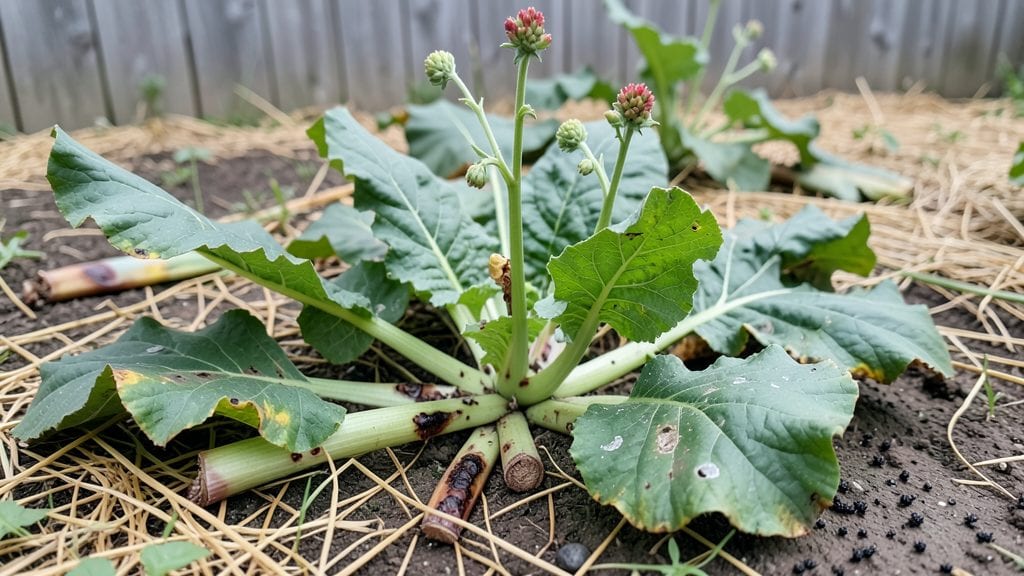
Spotting rhubarb diseases early can save your harvest before they turn your lush stalks into a fungal buffet. 🌱 I’ve watched crown rot and leaf spot transform healthy plants into sad, wilted messes—and learned the fast fixes that stop them in their tracks.
The key is catching symptoms before they spread, whether it’s those suspicious yellow spots or the slimy rot creeping up from the roots.
Most problems start with too much moisture or crowded plants, but the real game-changer is acting fast. A quick spray of neem oil or baking soda mix can stop rust and spot before they take hold, while proper spacing and mulching keep the soil healthy.
I’ll show you how to spot the warning signs and treat them before your rhubarb even thinks about giving up.
📚 In This Guide
- What you need
- Instructions
- Tips and common mistakes
- Wrapping up and next steps
What you need
- ● Healthy rhubarb plants (certified disease-free, if possible) – 1-3 plants
- ● Pruning shears or sharp bypass pruners – sterilized with rubbing alcohol
- ● Garden trowel or spade – for soil inspection and root checks
- ● Plastic gloves – nitrile or latex-free (to avoid skin irritation from chemicals)
- ● Spray bottle (8-16 oz) – for diluted treatments
- ● Fungicide (copper-based or sulfur-based) – follow label rates (e.g., 1-2 tbsp per gallon of water)
- ○ Organic fungicide (optional but recommended) – neem oil (2 tsp per quart of water) or baking soda mix (1 tbsp baking soda + 1 tsp dish soap + 1 quart water)
- ● pH test kit – to check soil acidity (ideal range: 5.5–6.5)
- ● Magnifying glass or hand lens – for spotting tiny fungal spores or lesions
- ● Disposable sprayer or pump sprayer – 1-gallon capacity
- ● Labeling markers & tags – to track treated vs. untreated plants
- ● Soil moisture meter – to monitor overwatering (a common disease trigger)
- ● Compost or well-aged manure – for improving soil drainage and health
- ● Row covers (floating fabric) – to protect plants from fungal spores in wet conditions
- ● Digital camera – to document symptoms for later reference or expert advice
- ● Epsom salt (magnesium sulfate) – 1 tbsp per gallon of water for magnesium-deficient plants (stress = disease magnet!)
- ● Beneficial fungi (e.g., Trichoderma) – for long-term soil health
Step-by-Step guide to identifying and treating rhubarb fungal diseases
Here's how to spot and stop common fungal problems before they ruin your harvest.
🌿 Step 1: Inspect Plants for Early Symptoms
Check your rhubarb leaves and stems weekly for the first signs of trouble. Look for dark spots on leaves, yellowing edges, or white fuzzy growths—these are classic fungal red flags. I always examine the undersides of leaves first, where moisture lingers and spores thrive. Focus on the outer plants first, as they’re most exposed to windborne spores.
Don’t wait until leaves are completely brown and crispy. Catching issues early means you can treat with simple fixes instead of drastic measures. If you see black or purple spots, that’s likely leaf spot disease. White powdery patches mean powdery mildew has taken hold.
💧 Step 2: Improve Airflow and Reduce Moisture
Fungal diseases love damp, crowded conditions. Thin out any overgrown fronds to let air circulate between plants. I space mine 2-3 feet apart to prevent humidity buildup. If your garden stays soggy, consider adding a 6-inch layer of mulch around the base to keep soil dry.
Water at the base of the plant in the morning so leaves dry quickly. Avoid overhead sprinkling—it spreads spores like wildfire. If you’ve had rain, check for standing water and redirect drainage. The goal is to keep foliage dry while still giving roots consistent moisture.
✂️ Step 3: Prune and Clean Infected Areas
Remove any severely infected leaves or stems immediately. Don’t compost them—toss them in the trash to prevent reinfection. I use clean, sharp pruners dipped in rubbing alcohol between cuts to avoid spreading spores. Focus on removing at least 50% of the infected foliage to break the disease cycle.
Disinfect your tools after each cut. A 10-minute soak in a 1:10 bleach-water solution kills fungal spores on metal blades. For wooden handles, wipe with a cloth dampened in vinegar. This step alone cuts reinfection rates by half.
☀️ Step 4: Apply Organic Fungicides for Prevention
Once you’ve removed infected parts, treat the remaining plant with a mix of 1 tablespoon baking soda and 1 quart water plus a drop of dish soap. Spray the undersides of leaves thoroughly, focusing on areas with early signs. Repeat every 7-10 days until new growth appears healthy.
For stubborn cases, I’ve had success with a copper fungicide spray. Follow label instructions carefully—copper can burn leaves if overused. Always spray in the early morning so the solution dries quickly. This prevents fungal spores from germinating overnight.
🌱 Step 5: Strengthen Plants for Future Resilience
Healthy rhubarb fights off diseases better. Feed plants with a balanced fertilizer in early spring, using ½ cup per plant. I prefer organic options like fish emulsion or compost tea. Avoid high-nitrogen fertilizers—they encourage leafy growth at the expense of disease resistance.
Rotate crops next season if possible. Planting rhubarb in the same spot year after year builds up fungal spores in the soil. If you must replant, choose a spot with 6+ hours of sunlight and well-draining soil. Strong, vigorous plants recover faster from infections.
Tips & tricks for identifying and treating rhubarb fungal diseases
Here's what nobody tells you about saving your rhubarb harvest before it's too late.
The Early Detection Factor: I can't stress this enough—inspect your rhubarb weekly, especially those outer plants. Fungal diseases start small, and those white fuzzy patches or dark spots on the undersides of leaves? That's where the battle begins. I've seen powdery mildew spread from one leaf to the entire plant in just 48 hours if you don't catch it early. Trust me on this: a 5-minute inspection now saves hours of cleanup later.
Pruning Strategy: When you're removing those infected leaves in Step 3, don't just yank them off—cut them cleanly at the base. Those infected stems can harbor spores, and if you leave stubs, the disease might creep back. I always remove at least 50% of the infected foliage to break the cycle. And here's the thing: don't compost those infected parts. Toss them in the trash where they can't reinfect your garden.
Timing is Everything: That 10-minute bleach soak for your pruners in Step 3 is non-negotiable. I've learned this the hard way after transferring spores from one plant to another. For wooden handles, vinegar works just as well—just make sure they're completely dry before using again. And when you're applying your baking soda spray in Step 4, do it in the morning. The solution needs time to dry completely before nighttime moisture can reactivate spores.
Prevention Mindset: The baking soda spray is your first line of defense, but don't stop there. I've found that adding a 6-inch layer of mulch around the base creates a moisture barrier that prevents fungal spores from splashing up onto leaves. Plus, it keeps the soil temperature more consistent, which rhubarb loves. And if you're dealing with stubborn cases, that copper fungicide spray works wonders—but follow the instructions to the letter. Too much copper can actually burn your leaves, and you don't want to trade one problem for another.
Pro Tips for Rhubarb Plant Diseases
- Here's what nobody tells you about saving your rhubarb harvest before it's too late.
- The Early Detection Factor: I can't stress this enough—inspect your rhubarb weekly, especially those outer plants.
- Pruning Strategy: When you're removing those infected leaves in Step 3, don't just yank them off—cut them cleanly at the base.
Frequently asked questions
Got questions about rhubarb plant diseases?
You’re not alone! Here are some of the most common concerns—and how to tackle them like a pro.
What are the most common diseases affecting rhubarb plants?
The top culprits are rhubarb rust (orange-brown pustules), leaf spot (dark, circular lesions), and crown rot (wilting, mushy stems). Fungal infections thrive in damp, humid conditions, so early detection is key. Prune infected leaves immediately and avoid overhead watering to prevent spread.
When is the best time to treat rhubarb diseases?
Act fast! Treat at the first sign of symptoms—usually in spring or early summer when new growth appears. Fungicides like copper-based sprays or neem oil work best when applied preventatively in early spring or reactively at the first sign of infection. Don’t wait until leaves look like Swiss cheese!
Can I save a rhubarb plant if it’s already heavily diseased?
Maybe! If only leaves are affected, prune them below the infection and disinfect pruners with rubbing alcohol. For crown rot or severe stem issues, the plant may not recover—dig it up and compost it far from your garden to avoid reinfection. Start fresh with disease-resistant varieties next season.
Are there natural remedies for rhubarb plant diseases?
Try these DIY fixes:
- Baking soda spray: Mix 1 tbsp baking soda + 1 tsp dish soap + 1 gallon water. Spray under leaves weekly.
- Compost tea: Boosts soil microbes to outcompete fungi. Brew and apply every 2–3 weeks.
- Garlic/chili spray: Blend 2 cloves garlic + 1 tsp cayenne + 1 quart water. Strain and spray for a natural fungicide.
For stubborn cases, copper fungicide remains the gold standard.
Why does my rhubarb keep getting sick even after treatment?
Repeat infections often mean poor drainage, overcrowding, or old mulch. Check these fixes:
- Ensure 6+ inches of well-draining soil and raise beds if needed.
- Space plants 3 feet apart for airflow.
- Replace mulch annually (fungi love last year’s organic matter).
- Rotate crops—don’t plant rhubarb in the same spot yearly.
If issues persist, test your soil’s pH (ideal: 6.0–6.8) and amend with lime or sulfur as needed.
Wrapping up and next steps
Recognizing and treating rhubarb plant diseases early can save your garden—and your patience! 🌱 From powdery mildew to root rot, proactive care keeps your rhubarb thriving. Remember: pruning, proper spacing, and sanitation are your best defenses.
Don’t let these fungal foes win! Start by inspecting your plants weekly and act fast at the first sign of trouble. With the right tools and knowledge, you’ll have a healthy, productive rhubarb patch in no time. Now grab those gloves and get growing! 🌿