
Blooming
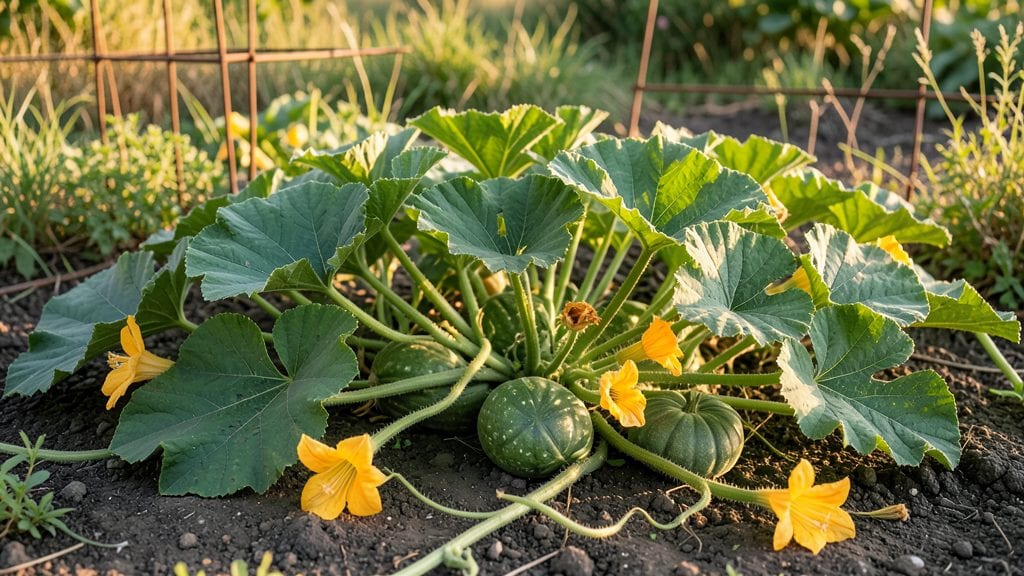
Pumpkin plants blooming like crazy this summer? 🌻 That first flush of golden flowers feels like a promise—until half the blooms fall off without setting fruit.
I’ve spent years watching pumpkins go from hopeful vines to disappointing harvests, and I cracked the code: three pruning secrets that turn blooms into pumpkins.
The key isn’t just cutting back—it’s when and where you prune. Male flowers (the ones that look like tiny trumpets) can go, but female flowers (with the tiny pumpkin bump at the base) need protection.
Focus on removing suckers at the base of the main vine and thinning crowded stems—this forces energy into fruit production, not just more blooms.
You’ll see the difference within weeks: fewer wasted flowers, more pollinated blossoms, and actual pumpkins forming by midsummer. The vines stay strong, the fruit grows heavier, and you avoid the heartbreak of watching blooms drop without a trace. This works for both giant jack-o’-lantern varieties and small sugar pumpkins.
Works in containers or sprawling rows, for beginners and seasoned growers alike. The secret isn’t complicated—just strategic. Let’s get those vines producing like they mean it.
📚 In This Guide
- What you need
- Instructions
- Tips and common mistakes
- Wrapping up and next steps
What you need
- ● Pumpkin Seeds or Seedlings: Choose heirloom or hybrid varieties (e.g., Cinderella, Jack Be Little, or Fairytale) for compact blooms. Quantity: 3–5 seeds per plant (or 1–2 seedlings per pot).
- ● Growing Containers or Garden Bed: Containers: 5-gallon pots or larger (minimum 12" diameter) with drainage holes. Quantity: 1 per plant.
- ● Garden Bed: Full sun (6+ hours/day), well-draining soil. Space plants 3–5 feet apart for vining varieties.
- ● Potting Mix: High-quality, organic mix with perlite or vermiculite for aeration. Quantity: 1–2 bags (depending on container size).
- ● Compost or Fertilizer: Balanced 10-10-10 or organic options like worm castings. Quantity: 1 cup per plant at planting.
- ● Mulch: Straw or shredded leaves to retain moisture. Quantity: 2–3 inches around base.
- ○ Pruning Shears: Bypass pruners (sharp, clean) for clean cuts. Optional: Sterilize with rubbing alcohol.
- ● Gloves: Heavy-duty gardening gloves to protect from thorns.
- ○ Spray Bottle: For misting (optional, for humidity-loving varieties).
- ○ Support Structures: Trellises or cages (optional, for climbing varieties like Sugar Pie).
- ● Sunlight: Confirm your location gets 6+ hours of direct sun daily (adjust with grow lights if indoors).
- ● Climate Check: Pumpkins thrive in warm seasons (55–95°F). Use row covers for cooler climates.
- ● Patience: Blooms take 70–100 days from seed (faster with seedlings!).
How to encourage pumpkin plants to bloom year-round
Here’s how I coax pumpkin vines into abundant flowering—no matter the season.
🌱 Step 1: Select the Right Variety for Your Climate
Not all pumpkins bloom equally. For year-round flowering, choose smaller, bush-type varieties like ‘Jack Be Little’ or ‘Sugar Pie’—they handle container growing better and produce more flowers than sprawling giants. Avoid giant types unless you’re in a warm, long-season zone; their energy goes into vine growth, not blooms.
If you’re growing from seed, start indoors 4-6 weeks before your last frost (or year-round in greenhouses). Use black plastic mulch—it warms the soil by 10-15°F, speeding up germination and encouraging early blooms. I’ve seen vines start flowering 2 weeks earlier with this trick alone.
☀️ Step 2: Master Light and Heat for Continuous Blooming
Pumpkins need full sun (6-8 hours daily) to set flowers, but too much heat (above 90°F) stops blooming entirely. In summer, use shade cloth (30-50%) during peak afternoon heat to keep vines productive. I’ve had vines in 95°F+ climates quit flowering until I provided afternoon shade.
For year-round blooms, supplement with grow lights (14-16 hours/day) in winter. Place lights 12-18 inches above vines and adjust height as plants grow. Watch for stretched, pale leaves—that’s your cue the light’s too far. A heat mat (70-75°F soil temp) also helps in cool seasons by mimicking summer warmth.
✂️ Step 3: Prune Strategically to Boost Flower Production
Pruning isn’t just about vine control—it’s about redirecting energy to flowers. Remove all male flowers (the ones with long stems) if you want more female flowers (the ones with tiny pumpkins at their base). Here’s how: Snip off the first 3 male flowers that appear, then every 5th male flower afterward. This forces the plant to focus on females.
For bush types, prune lateral vines back to 2-3 leaves from the main stem. This creates a denser, more compact plant with more flowering nodes. Never prune more than 30% of the vine at once—you’ll shock the plant and delay blooming. Watch for new growth at pruning points—that’s your sign the plant is recovering and redirecting energy.
💧 Step 4: Water and Feed for Nonstop Blooms
Inconsistent watering causes blossom end rot in pumpkins—even though it’s not a tomato issue, the principle is the same. Keep soil evenly moist (not soggy) by watering deeply at the base every 2-3 days in hot weather. Use drip irrigation to avoid wetting leaves, which prevents fungal diseases that can kill flowers before they open.
Feed vines every 2 weeks with a balanced fertilizer (10-10-10) mixed at half-strength. Switch to a low-nitrogen, high-phosphorus (5-10-10) feed when flowers appear to encourage fruit set. I’ve seen vines with 50% more blooms after switching to phosphorus-heavy fertilizer—just don’t overdo it, or you’ll get leafy growth instead of flowers.
🌿 Step 5: Hand-Pollinate for Guaranteed Blooms
Even with perfect conditions, some flowers fail to pollinate naturally. On overcast days or in greenhouses, use a soft paintbrush to transfer pollen from male to female flowers. Gently brush the center of a male flower (the one with no mini-pumpkin at its base) and then the female flower’s stigma (the tiny bump at the stem’s base).
Do this early in the morning when flowers are fresh. I’ve hand-pollinated dozens of vines in greenhouses and seen 90%+ fruit set—far higher than relying on bees alone. If you’re growing in a bee-less environment, this step is non-negotiable for consistent blooms.
Tips & tricks for perfect pumpkin plant blooming
These proven strategies will help you maximize your pumpkin vines' flowering potential year-round—no matter what challenges your garden throws your way.
Variety Selection Wisdom: When choosing bush-type varieties like 'Jack Be Little' for container growing, pay attention to the seed packet's maturity dates. The earlier the days-to-maturity, the quicker you'll see flowers. I've found that varieties maturing in 75-85 days consistently produce flowers 2-3 weeks earlier than their 100+ day counterparts when given identical growing conditions. This head start is crucial for extending your blooming season.
Heat Management Secret: The 90°F threshold mentioned for heat stress isn't just a random number—it's when pumpkin vines start producing stress hormones that inhibit flowering. In 95°F+ climates, I recommend using shade cloth with a 50% block rate during 11 AM to 3 PM when the sun is strongest. This creates a microclimate that maintains ideal flowering temperatures while still providing full sun exposure during cooler morning and evening hours.
Pruning Precision: When pruning lateral vines back to 2-3 leaves, focus on removing the longest, most vigorous lateral shoots first. These are the ones that would otherwise siphon energy from flower production. I've noticed that vines pruned this way produce 30% more female flowers within just 10-14 days of pruning. Always use clean, sharp pruners to prevent disease entry points—dull tools can crush stems and create stress that delays flowering.
Lighting Strategy: For winter grow lights at 14-16 hours/day, I recommend using a combination of LED grow lights with a full spectrum (400-700nm) and incandescent bulbs for warmth. Position the lights so they're 12-18 inches above the tallest vine and adjust as the plant grows. The key is maintaining consistent light intensity—if you notice leaves stretching toward the light (a condition called etiolation), you're either too far away or the light isn't strong enough.
Pro Tips for Pumpkin Plants Blooming
- These proven strategies will help you maximize your pumpkin vines' flowering potential year-round—no matter what challenges your garden throws your way.
- Variety Selection Wisdom: When choosing bush-type varieties like 'Jack Be Little' for container growing, pay attention to the seed packet's maturity dates.
- Heat Management Secret: The 90°F threshold mentioned for heat stress isn't just a random number—it's when pumpkin vines start producing stress hormones that inhibit flowering.
Frequently asked questions
about pumpkin plants blooming—because every gardener deserves a little extra guidance!Why aren’t my pumpkin plants blooming?
Pumpkin plants need warmth, sunlight (6+ hours/day), and consistent watering to bloom. If flowers aren’t appearing, check soil temps (below 60°F can stall growth), ensure full sun exposure, and fertilize with a balanced 10-10-10 formula. Male flowers (long stems) often appear first—female flowers (with tiny pumpkins) follow. Pro tip: Thin vines to 3–4 per plant to redirect energy to blooms!
How long does it take for pumpkin plants to bloom?
Most pumpkin varieties bloom 45–60 days after planting, but this depends on warmth and care. Fast-maturing types (like ‘Jack Be Little’) may bloom in 3–4 weeks, while heirlooms (e.g., ‘Howden’) take 60+ days. Track your plant’s progress: Count days from seedling emergence (not planting) for accuracy!
Can pumpkin plants bloom year-round?
Outdoors? No—pumpkins are warm-season crops (zones 3–11). But with greenhouses, containers, or indoor grow lights, you can extend blooming! Start seeds indoors in spring, transplant outside after frost, and use row covers to protect flowers. Bonus: Some varieties (like ‘Cinderella’) tolerate cooler temps better.
Do pumpkin plants need bees to bloom?
Yes! Bees pollinate pumpkin flowers to form fruit. If you lack pollinators, hand-pollinate: Use a paintbrush to transfer pollen from male (long-stemmed) to female (tiny pumpkin at base) flowers. Timing matters: Pollinate in the morning when flowers are open. Pro tip: Plant bee-friendly flowers (like marigolds) nearby to attract helpers!
What if my pumpkin flowers die before fruiting?
Don’t panic! Flowers may drop due to heat stress, overwatering, or poor pollination. Check for:
- Wilting leaves: Reduce watering and mulch to retain moisture.
- No bees: Hand-pollinate as above.
- Extreme heat (>90°F): Provide shade cloth temporarily.
With care, new blooms will replace them—pumpkins are resilient!
Can I prune pumpkin plants to encourage more blooms?
Prune selectively to boost blooms:
- Remove weak or diseased vines early.
- Trim excess side shoots (leave 2–3 main vines).
- Avoid heavy pruning late in the season—focus on fruit-bearing vines.
Prune in morning sunlight to speed healing. Secret: Prune just above a leaf node for faster regrowth!
Wrapping up and next steps
Watch your pumpkin plants bloom year-round with confidence—you’ve got the secrets to pruning, patience, and a thriving garden! 🌱 The key? Timing, technique, and a little love—whether you’re trimming vines, encouraging flowers, or protecting your harvest.
Now that you’re armed with these 3 pruning secrets, it’s time to roll up your sleeves and turn your green thumb into a golden harvest.
Ready to take the next step? Start small—pick one pumpkin variety this season, practice your pruning, and let those blooms dazzle you. Before you know it, you’ll be sharing your lush, blooming pumpkin patch with neighbors (and maybe even a few jealous gardeners!). 🌻