
Planting
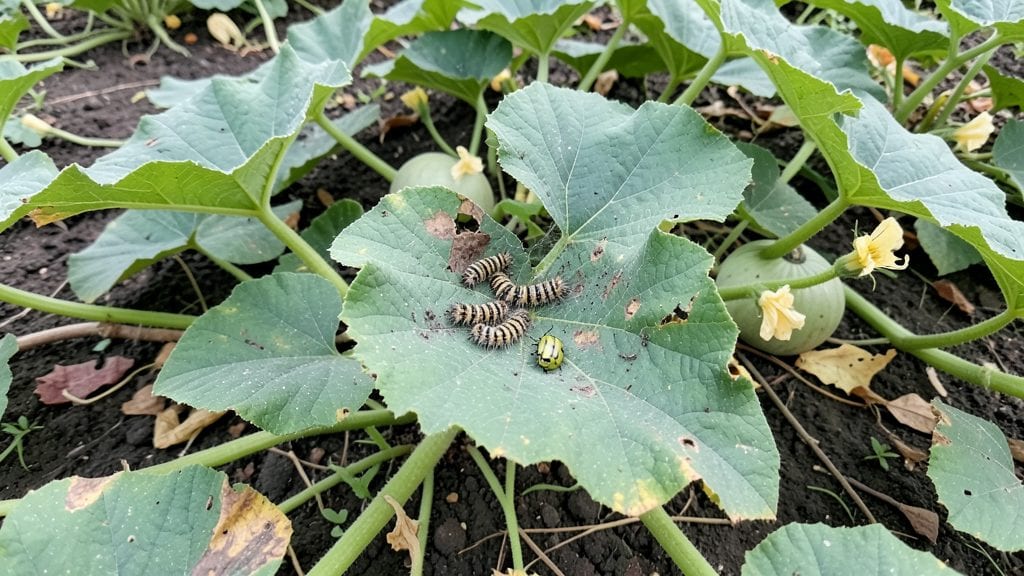
Pumpkin plant pests can turn your dream harvest into a chewed-up disappointment if you don’t act fast. 🌱 I’ve lost entire vines to squash bugs and cucumber beetles, and I’ll never forget the first time I found aphids turning my leaves sticky and yellow.
The good news? Most of these pests follow predictable patterns, so once you recognize their damage, you can outsmart them before they ruin your crop.
Squash bugs hide under leaves, cucumber beetles skeletonize foliage, and aphids cluster on new growth—each leaves telltale signs. The key is early intervention: handpick pests, use row covers, or spray neem oil before populations explode.
I’ve seen gardens go from infested to thriving in just two weeks with the right approach, and the secret lies in catching problems when they’re small, not after they’ve taken over.
You’ll end up with strong, healthy vines that produce pumpkins without the constant battle. The leaves stay lush and green, the vines grow vigorous, and you’ll actually enjoy checking on your plants instead of dreading what pests have done overnight.
Prevention is easier than cleanup, and a few simple habits can make all the difference.
Works for both backyard patches and container-grown pumpkins, and the same principles apply to squash and zucchini too. Let’s get those plants protected before the pests get the upper hand.
Why it happens
Pumpkin plants may seem like hardy, low-maintenance crops, but they’re actually a magnet for pests—especially when certain conditions align. Understanding why these critters target your vines is the first step to stopping them before they wreak havoc.
Below, we break down the science-backed reasons behind the most common pumpkin plant pest outbreaks.
🌱 Overcrowded Roots Invite Soil Dwellers
Pumpkins thrive in space, but when plants grow too close, their roots compete for nutrients—and pests take advantage. Cutworms, squash bugs, and even fungal pathogens thrive in dense, shaded soil where airflow is poor. Overcrowding creates:
- Moisture buildup – Damp soil is a breeding ground for Phytophthora (a water mold) and root-knot nematodes.
- Weakened defenses – Stressed plants produce fewer natural repellents, making them easier prey.
- Harboring spots – Debris and fallen leaves trap pests like squash vine borers, protecting them from sunlight and predators.
Actionable fix: Space pumpkins 3–5 feet apart (or more for large varieties) and thin seedlings early. Mulch with straw to improve drainage while deterring soil pests.
🍃 Nutrient Imbalances Attract Hungry Invaders
Pumpkins need a balanced diet, but too much (or too little) of certain nutrients can turn your garden into an all-you-can-eat buffet for pests. Here’s how imbalances play a role:
| Nutrient Issue | Pest Magnet | Why It Happens |
|---|---|---|
| Excess nitrogen | Squash bugs, aphids | Soft, lush foliage is irresistible to sap-sucking insects. Nitrogen-heavy soil (from over-fertilizing) makes plants tastier to them. |
| Phosphorus deficiency | Root-knot nematodes | Weak roots struggle to repel soil-dwelling pests. Phosphorus helps roots develop strong cell walls—without it, they’re vulnerable. |
| Potassium deficiency | Powdery mildew (fungal), cucumber beetles | Stressed plants can’t produce antifungal compounds, and beetles target plants with low sugar resistance. |
Actionable fix: Test your soil and amend with compost or a low-nitrogen fertilizer (like 5-10-10). Avoid fresh manure—it spikes nitrogen and attracts pests.
☀️ Warm, Humid Conditions Speed Up Outbreaks
Pumpkin pests aren’t just opportunistic—they’re temperature-sensitive. Many thrive in the same conditions that make pumpkins grow fast:
- 70–90°F (21–32°C) range – Ideal for squash vine borers and cucumber beetles, which lay eggs in warm soil.
- High humidity (>60%) – Fungal diseases like downy mildew and bacterial wilt spread rapidly in moist air.
- Long daylight hours – Aphids and whiteflies reproduce faster with 14+ hours of sunlight.
Actionable fix:
- Plant in morning sun with afternoon shade to reduce heat stress.
- Use drip irrigation at soil level to avoid wetting leaves (which fuels fungal growth).
- Install row covers early in the season to block flying pests until flowers appear.
🌿 Weak Plant Immunity From Poor Genetics
Not all pumpkin varieties are created equal when it comes to pest resistance. Some hybrids and heirlooms are genetically more susceptible due to:
- Lack of natural toxins – Wild pumpkins produce compounds like cucurbitacins, which deter pests. Many commercial varieties have been bred to remove these for palatability.
- Thin vines – Delicate stems (common in small-fruited types) are easier for vine borers to penetrate.
- Slow maturation – Pests have more time to attack if the plant takes too long to develop a tough skin.
Actionable fix: Choose resistant varieties like ‘Howden’ (powdery mildew-resistant) or ‘Waltham Butternut’ (cucumber beetle-tolerant). If growing heirlooms, rotate crops yearly to avoid building up pest populations.
🚫 Human Mistakes That Backfire
Sometimes, well-meaning gardening habits create the perfect pest party. Common blunders include:
- Ignoring crop rotation – Planting pumpkins (or other squash) in the same spot yearly lets pests overwinter in the soil.
- Skipping sanitation – Leaving last year’s vines or fallen fruit provides shelter for squash bugs and borers.
- Overhead watering – Wet leaves create conditions for fungal spores to latch on and spread.
- Using broad-spectrum pesticides – These kill beneficial insects (like ladybugs) that would otherwise eat aphids and mites.
Actionable fix: Follow a 3-year rotation (avoid planting cucurbits in the same family for consecutive years). Clean up debris in fall and use neem oil or kaolin clay as preventive barriers.
Fixing Pumpkin Plant Pests: Step-by-Step Solutions
Pumpkin plants can fall prey to a variety of pests, but the good news is that most issues can be resolved with targeted, practical steps. Below, we’ve mapped out cause-specific fixes, from immediate remedies to long-term prevention.
Whether you’re dealing with chewers, suckers, or soil-borne invaders, these strategies will help you reclaim your pumpkin patch—without harsh chemicals (unless absolutely necessary).
🔥 Cause: Larvae tunnel through stems, causing wilting and collapse. 🍳 Fix It Now: - Handpick eggs (tiny, oval, yellow) from undersides of leaves in early morning (they’re less active then). Drop them into soapy water. - Cut open stems at the first sign of sawdust-like frass (borer poop).
Squish larvae or drown them in hot, soapy water. - Wrap stems with aluminum foil (borers hate it) or cardboard collars to block egg-laying.
🌡️ Prevent Future Attacks:
- Rotate crops—don’t plant cucurbits (pumpkins, squash, melons) in the same spot for 3+ years.
- Use row covers (floating fabric) before flowers appear to block adult moths.
- Plant trap crops like zucchini near pumpkins to lure borers away.
🔥 Cause: Tiny insects cluster on undersides of leaves, draining sap and spreading viruses. 👨🍳 Blast Them Away:
- Spray with water (strong stream from a hose) to knock them off—do this 2–3x/week for severe infestations.
- Neem oil spray (1 tbsp neem oil + 1 tsp mild soap per quart of water). Spray early morning/late evening to avoid harming bees.
- Introduce predators: Ladybugs, lacewings, or parasitic wasps (buy from garden centers).
🎯 Stop the Cycle:
- Remove heavily infested leaves and burn or trash them (don’t compost).
- Interplant with herbs like basil, dill, or marigolds—their scents repel aphids.
- Yellow sticky traps can catch adult whiteflies before they lay eggs.
🔥 Cause: Adults chew leaves and transmit bacterial wilt (a deadly disease). 🔪 Eliminate On the Spot:
- Handpick beetles into a bucket of soapy water (especially in morning/evening when they’re sluggish).
- Diatomaceous earth (DE) around the base of plants—reapply after rain (it’s non-toxic but dehydrates insects).
- Row covers (fine netting) before flowers open to block adults.
✨ Break Their Life Cycle:
- Clean up debris in fall—beetles overwinter in leaf litter.
- Plant trap crops like radishes or turnips to distract them from pumpkins.
- Encourage beneficial nematodes (like Steinernema carpocapsae) in soil to target larvae.
🔥 Cause: Microscopic worms burrow into roots, causing galls (lumpy growths) and stunted plants. 🥘 Soil Remedies:
- Solarize soil (cover with clear plastic for 4–6 weeks in hot sun) to kill nematodes naturally.
- Plant resistant varieties like ‘Howden’ or ‘Waltham Butternut’ pumpkins.
- Add organic matter: Compost or cover crops like mustard or clover before planting to improve soil health.
💡 Prevent Spread:
- Rotate crops with non-host plants (tomatoes, peppers, brassicas).
- Avoid overwatering—nematodes thrive in soggy soil.
- Use marigolds as a trap crop—their roots attract nematodes away from pumpkins.
🔥 Cause: Fungal spores thrive in humid, shaded conditions, coating leaves and blocking sunlight. 🍳 Fungal Fighters:
- Baking soda spray: Mix 1 tsp baking soda + 1 tbsp oil + 1 tsp soap per gallon of water. Spray every 7–10 days.
- Improve airflow by pruning vines and spacing plants 3–4 feet apart.
- Copper fungicide (last resort)—follow label instructions for organic options.
🌡️ Prevent Outbreaks:
- Water at soil level (avoid wetting leaves).
- Harvest promptly—overripe pumpkins attract fungal spores.
- Plant resistant varieties like ‘Jack Be Little’ or ‘Cinderella’.
Want to minimize pests before they start?
Try these proactive strategies: - 💡 Healthy Soil = Strong Plants – Test soil pH (aim for 6.0–6.8) and amend with compost. - 🌿 Companion Planting – Grow nasturtiums, borage, or thyme near pumpkins to repel pests. - 🕰️ Timing Is Everything – Plant after the last frost but before squash vine borers emerge (check local pest calendars). - 🧹 Clean Up Religiously – Remove dead vines, fallen fruit, and weeds in fall/winter to starve pests.
🔥 Remember: The key to pest control is consistency. Check plants daily during outbreaks, and act fast—most pests are easier to stop early than after they’ve taken hold. With these fixes, your pumpkin patch will be thriving, not struggling!
Frequently asked questions
What are the most destructive pumpkin plant pests I should watch for?
Squash vine borers, cucumber beetles, and aphids are the top threats. Vine borers tunnel through stems causing sudden wilting, while beetles chew leaves and spread bacterial wilt. Aphids cluster on new growth, turning leaves yellow and sticky. Check undersides of leaves daily during warm, humid weather when these pests are most active.
How can I tell if my pumpkin plants have squash vine borers?
Look for sawdust-like frass (borer poop) near stem bases and wilting vines that collapse when cut open. You might also spot tiny yellow eggs on leaf undersides. The key is to act fast—once larvae tunnel in, the plant usually dies within days. Check stems in early morning when borers are sluggish.
Are there organic ways to control cucumber beetles without chemicals?
Yes! Use row covers before flowers appear to block adults, or handpick beetles into soapy water (they're sluggish in the morning). Diatomaceous earth around plant bases works too—just reapply after rain. For prevention, plant trap crops like radishes nearby to distract them from your pumpkins.
Why do my pumpkin leaves keep getting yellow spots even after I treat pests?
Yellow spots could signal powdery mildew (white fungal coating) or nutrient deficiency (like nitrogen or magnesium). Check leaf undersides for fungal growth or soil pH—pumpkins prefer 6.0-6.8. If pests are ruled out, try a baking soda spray (1 tsp baking soda + 1 tbsp oil + 1 tsp soap per gallon) or improve airflow between plants.
Can I still save my pumpkins if squash bugs have already laid eggs?
You can try! Handpick eggs daily (they're tiny and gray) and drop them in soapy water. For existing nymphs, spray with neem oil or introduce beneficial predators like ladybugs. The key is consistent monitoring—squash bugs reproduce quickly, so check plants every 2-3 days. If infestation is severe, consider replanting with resistant varieties next season.