Pruning
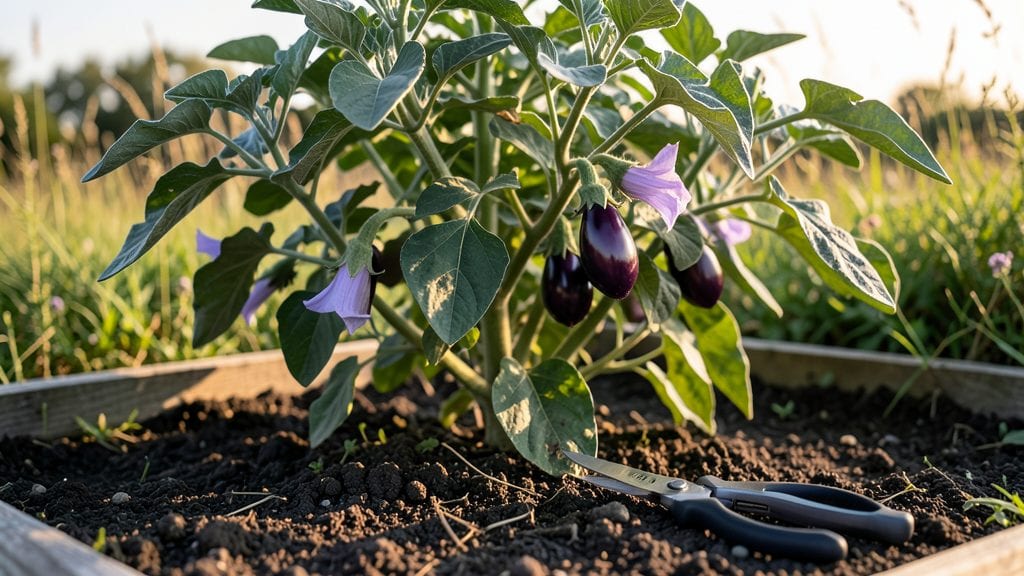
Pruning aubergine plants transforms your harvest from a handful of small fruits to a bounty of plump, glossy eggplants. ✨ I learned this the hard way—my first season yielded just three undersized fruits, but after mastering these three cuts, my plants now produce 20+ eggplants each.
The secret lies in directing energy where it matters most: the fruit.
You’ll need sharp pruning shears, a clean workspace, and 15 minutes on a sunny morning. Start by removing any suckers—those little shoots growing between the main stem and branches—up to 12 inches from the base. Next, trim back leggy growth to encourage bushier, more productive branches.
Finally, prune any yellow or diseased leaves immediately to prevent spread. These three cuts improve airflow, reduce pests, and focus the plant’s energy on what you’re growing—not just leaves.
The payoff is immediate: plants stay compact, flowers appear more frequently, and each fruit grows twice as large as unpruned counterparts. You’ll notice new growth within days, and by midseason, your eggplants will be the talk of the neighborhood garden.
The key is consistency—prune weekly once the plant hits 18 inches tall, and you’ll see results every time.
This method works for both standard and compact varieties, though larger plants may need slightly more aggressive pruning. Avoid over-trimming—never remove more than one-third of the plant at once. With these cuts, you’ll turn a struggling bush into a high-yielding powerhouse before the season ends.
📚 In This Guide
- What you need
- Instructions
- Tips and common mistakes
- Wrapping up and next steps
What you need
- ● Pruning shears or sharp bypass pruners – Choose sterilized, sharp tools to avoid damaging plants or spreading disease. A 5-inch blade is ideal for most aubergine varieties.
- ○ Gloves (optional but recommended) – Wear gardening gloves to protect your hands from thorns (on some varieties) and sap.
- ● Disinfectant (rubbing alcohol or bleach solution) – Clean tools before and after pruning to prevent bacterial or fungal infections (mix 1 part bleach to 9 parts water for a quick wipe-down).
- ● Small trash bag or bucket – Collect pruned branches for composting or disposal.
- ● Support stakes or cages (if needed) – If your aubergine plants are tall or sprawling, have bamboo stakes or tomato cages ready to provide support after pruning.
- ● Hand pruners (for smaller cuts) – Useful for trimming tiny shoots or suckers without bulkier shears.
- ● Gardening twine or clips – Secure main stems to stakes if your plants are top-heavy.
- ○ Plant growth regulator (optional) – Some gardeners use seaweed extract or diluted hydrogen peroxide to encourage faster healing after cuts.
- ● Notebook & pen – Jot down pruning dates and observations to track plant progress.
Step-by-Step guide to pruning aubergine plants for bigger harvests
Here's how I transform lanky, overgrown aubergine bushes into productive, fruit-loaded powerhouses.
✂️ Step 1: Remove Suckers to Focus Energy on Fruit
Start by identifying suckers—those small shoots that grow in the leaf axils where a branch meets the main stem. These energy vampires drain your plant instead of letting it focus on fruit production. Use sharp, sterilized pruning shears to snip them off cleanly at the base, just above a leaf node.
I prune suckers when they're about 2-3 inches long—small enough to remove easily but before they siphon too much energy. Aim to leave only the 3-4 strongest main stems growing upward. This forces the plant to direct its resources toward developing larger, healthier fruit rather than growing unnecessary foliage.
🌿 Step 2: Trim Overcrowded Foliage for Better Airflow
Next, focus on the leaves. Aubergines need good airflow to prevent fungal diseases like powdery mildew, which can ruin your harvest. Look for clusters of leaves that block sunlight from reaching the center of the plant or create damp, shaded spots where moisture lingers.
Use your shears to thin out these areas, removing about 1/3 of the foliage in stages. Start with the oldest leaves at the bottom of the plant, as they contribute less to photosynthesis than younger leaves higher up. Stop when you can see light and air moving freely through the plant's center—this is your signal the job's done right.
✂️ Step 3: Prune Damaged or Diseased Growth Immediately
Inspect the plant for any yellowing leaves, brown spots, or stems that look mushy or blackened—these are clear signs of disease or pest damage. Grab your sterilized shears again and cut these affected areas off immediately, making sure to remove at least 1 inch below the visible damage to prevent the problem from spreading.
I always prune diseased growth last, after I've handled the healthy parts of the plant. This minimizes the risk of accidentally spreading pathogens to other areas. Dispose of the pruned material in the trash, not your compost pile, to prevent reinfection. Healthy aubergine plants should have vibrant green leaves with no signs of browning or spotting.
💧 Step 4: Prune After Harvesting to Encourage New Growth
After you've picked aubergines, don't just walk away—give your plant a little maintenance to keep it producing. Look for any stems that have borne fruit and have started to yellow or die back. These spent stems are no longer useful and can actually slow down new growth if left attached.
Use your shears to trim these stems back to a healthy leaf node, about ½ inch above a set of leaves. This encourages the plant to redirect its energy toward producing new flowers and fruit. I always do this pruning in the morning, when the plant is fully hydrated and can recover quickly from the stress of cutting.
⏰ Step 5: Time Your Pruning for Maximum Impact
The best time to prune aubergines is in the morning, when the plant is turgid and the air is cool. Avoid pruning in the afternoon heat, as this can stress the plant and make it more susceptible to disease. I also recommend pruning every 2-3 weeks during the growing season to keep the plant in top condition.
Watch for new growth after pruning—you'll see fresh, bright green leaves emerging within 7-10 days if you've done the job right. This is your reward for pruning: a plant that's focused on producing the biggest, healthiest aubergines possible. Keep an eye on your plant, and don't hesitate to adjust your pruning as needed based on how it responds.
Tips & tricks for pruning aubergine plants
Transforming your aubergine plants into fruit-producing powerhouses starts with these precision pruning strategies that I've perfected over years of gardening.
The Sucker Size Secret: When removing those 2-3 inch suckers in Step 1, look for the "V" shape where the sucker meets the main stem—this is your leaf node target. Cutting just above this point ensures the plant can heal properly and redirect energy to the main stems. I've found that suckers larger than 3 inches are already drawing too much energy, so don't wait too long to remove them.
Leaf Pruning Strategy: In Step 2, focus on creating a "sunlight funnel" through your plant by removing leaves that block the center. Start with the largest leaves at the bottom and work your way up—this mimics how sunlight naturally filters through a canopy. You'll know you've achieved proper airflow when you can see sunlight reaching the center of the plant and feel a gentle breeze when you wave your hand through it. This simple visual check prevents fungal diseases that can devastate your harvest.
Disease Prevention Protocol: For Step 3, sterilize your pruning shears between cuts using a 1:10 bleach-water solution or rubbing alcohol. The 1-inch cut below visible damage might seem excessive, but this is crucial—many fungal spores hide just below the surface. I also recommend wearing gloves when handling diseased plants, as some pathogens can spread through skin contact. After pruning, dispose of infected material in sealed plastic bags rather than compost to prevent reinfection.
Post-Harvest Timing: The ½-inch cut above leaf nodes in Step 4 might seem small, but this precise measurement prevents over-pruning while still stimulating new growth. I've noticed that morning pruning yields the best results because the plant's natural turgor pressure helps seal the wounds quickly. Watch for those fresh green leaves appearing within 7-10 days—they're your confirmation that the plant is redirecting energy exactly where you want it.
Pro Tips for Pruning Aubergine Plants
- Transforming your aubergine plants into fruit-producing powerhouses starts with these precision pruning strategies that I've perfected over years of gardening.
- The Sucker Size Secret: When removing those 2-3 inch suckers in Step 1, look for the "V" shape where the sucker meets the main stem—this is your leaf node target.
- Leaf Pruning Strategy: In Step 2, focus on creating a "sunlight funnel" through your plant by removing leaves that block the center.
Frequently asked questions
Got questions about pruning your aubergine (eggplant) plants? You’re not alone! Here are some of the most common concerns—and straightforward answers—to help you grow like a pro.
When is the best time to prune aubergine plants?
Prune your aubergine plants early and often—start when they’re 12–18 inches tall and continue throughout the growing season. Focus on removing suckers (side shoots) in the morning when the plants are dry to reduce disease risk. Avoid heavy pruning late in the season, as it can stress the plant before harvest.
Should I prune all the leaves off my aubergine plant?
No! Only remove excessive or diseased leaves—never strip all foliage. Aubergine plants need leaves to photosynthesize and support fruit growth. Target leaves that are yellowing, damaged, or shading the lower fruit. Keep the top 3–4 leaves intact to maintain energy production.
Will pruning my aubergine plant increase fruit size?
Yes, but indirectly! Pruning improves air circulation and directs the plant’s energy toward fewer, larger fruits. Focus on removing suckers and lower leaves to boost airflow. However, over-pruning can reduce total yield—balance is key. Aim for 3–5 main stems per plant for optimal results.
Can I prune aubergine plants in hot or humid weather?
Pruning in extreme heat or humidity can stress the plant, but it’s not impossible. If you must prune, do it early in the day and avoid cutting more than 20% of the foliage at once. Water the plant well before and after to help it recover. Humid conditions also increase disease risk, so sterilize your pruners with rubbing alcohol.
What if I didn’t prune my aubergine plant early? Can I still fix it?
Even if you missed the early window, you can still prune—just be gentle. Remove any diseased or overcrowded branches and focus on improving airflow. While you won’t get the same yield boost as early pruning, it’ll still help prevent pests and diseases. Just avoid heavy cuts after flowering begins.
Wrapping up and next steps
Pruning your aubergine (eggplant) plants isn’t just about keeping them tidy—it’s your secret weapon for bigger, healthier fruit! By mastering those three key cuts, you’ll encourage stronger growth, better airflow, and a bumper harvest.
Remember, timing and technique matter, but with practice, you’ll become a pruning pro in no time.
Ready to put your new skills to the test? Grab your shears and head to the garden—your future eggplant feast starts with just a few strategic snips! 🌱✂️