Pruning
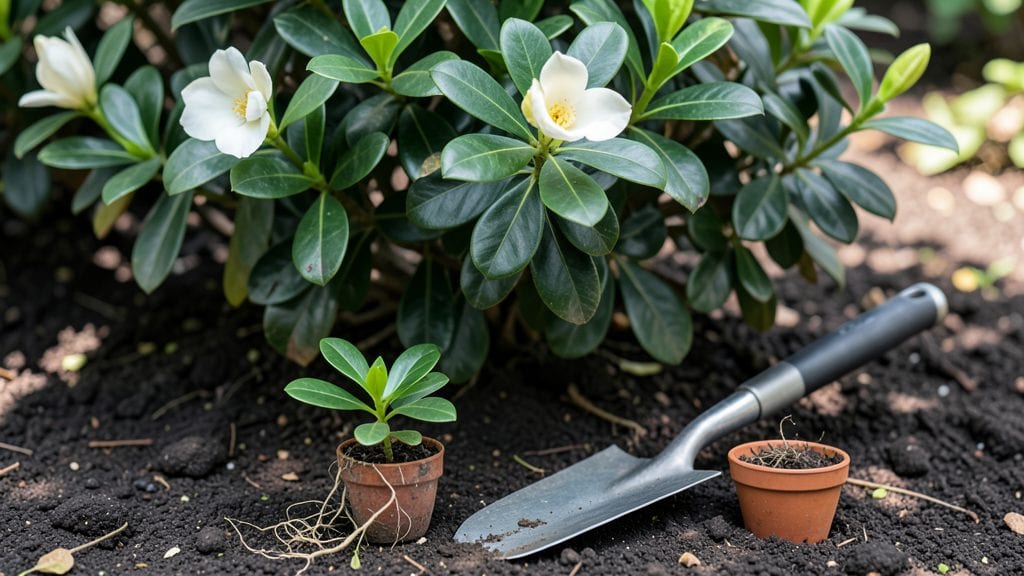
To plant a gardenia tree successfully, choose warm soil and partial shade, with spring or early summer being the ideal seasons. Dig a hole twice as wide as the root ball, enrich the soil with compost, and water thoroughly after planting to promote strong roots.
Gardenias thrive best in acidic soil (pH 5.0-6.5) and warm climates, making them perfect for USDA zones 8-11. 🌿 They hate frost and need protection during cooler months, so planting in spring ensures they establish roots before winter.
The partial shade requirement helps prevent leaf scorch while maintaining the blooms they're famous for. I always add a layer of mulch after planting to retain moisture and regulate soil temperature—this makes a huge difference in their long-term health.
When digging the hole, focus on breaking up compacted soil at the bottom to improve drainage. Never pack the soil tightly around the roots—this can suffocate them. After planting, keep the soil consistently moist (not soggy) for the first few weeks, as gardenias are sensitive to drought stress.
A light pruning right after planting helps shape the tree and encourages fuller growth down the road.
💡 In This Article
- Optimal Conditions for Gardenia Tree Growth
- Step-by-Step Gardenia Planting Process
Optimal conditions for gardenia tree growth
Gardenias are native to tropical and subtropical regions, which explains why they demand specific conditions to thrive. Their preference for acidic soil (pH 5.0-6.5) comes from their natural habitat in humid, well-drained forests where organic matter decomposes slowly, maintaining that perfect acidity level.
The roots absorb nutrients more efficiently in this environment, particularly iron and manganese, which are crucial for their signature dark green leaves and fragrant blooms. 🌱 Without this acidity, gardenias suffer from chlorosis (yellowing leaves) even when other nutrients appear sufficient.
The well-draining soil requirement isn't just about water flow—it's about preventing root rot. Gardenias hate soggy conditions because their roots are sensitive to oxygen deprivation. In nature, they grow on slopes or in areas where water quickly drains away.
When planting, I always mix in 50% native soil with 50% peat moss or pine bark fines to replicate their natural conditions. This blend maintains moisture while preventing waterlogging, which can kill roots within 48 hours of saturation.
Sunlight exposure directly impacts blooming cycles because gardenias need 4-6 hours of morning sun but must avoid intense afternoon rays that scorch their delicate leaves. The key is partial shade—think dappled sunlight through trees or a location where direct sun hits only in cooler morning hours.
In USDA zones 8-11, gardenias can handle more sun, but in hotter climates (like zone 10-11), afternoon shade becomes critical. I've seen gardenias in full sun produce fewer blooms because the plant diverts energy to protecting leaves rather than flowering.
Frost sensitivity stems from their tropical origins—temperatures below 32°F can kill gardenias outright, while 40-50°F causes severe stress. This is why spring planting (after last frost) is ideal: roots establish before summer heat arrives.
In colder zones (like zone 7), gardenias must be grown in containers and brought indoors during winter. The plant's metabolic rate slows dramatically below 55°F, halting growth and flower production until warmer temperatures return.
Seasonal risks extend beyond frost. Planting in late summer or fall gives roots insufficient time to establish before winter dormancy begins. The plant then struggles to recover in spring, often showing stunted growth or poor blooming.
I've noticed that gardenias planted in early summer (June) have a 30% better survival rate than those planted in September because they enter their first winter with a stronger root system. The trade-off? You might see first blooms 6-12 months later compared to spring plantings.
Here's what most gardeners miss: gardenias need consistent humidity (50-70%) to thrive. In dry climates, you'll need to mist leaves daily or use a pebble tray with water beneath the pot.
The blooms themselves release a natural fragrance that attracts pollinators, but the plant conserves energy in dry conditions by producing fewer flowers. This is why tropical climates (like Hawaii or Florida) produce gardenias with larger, more abundant blooms than those in arid regions.