
Trees
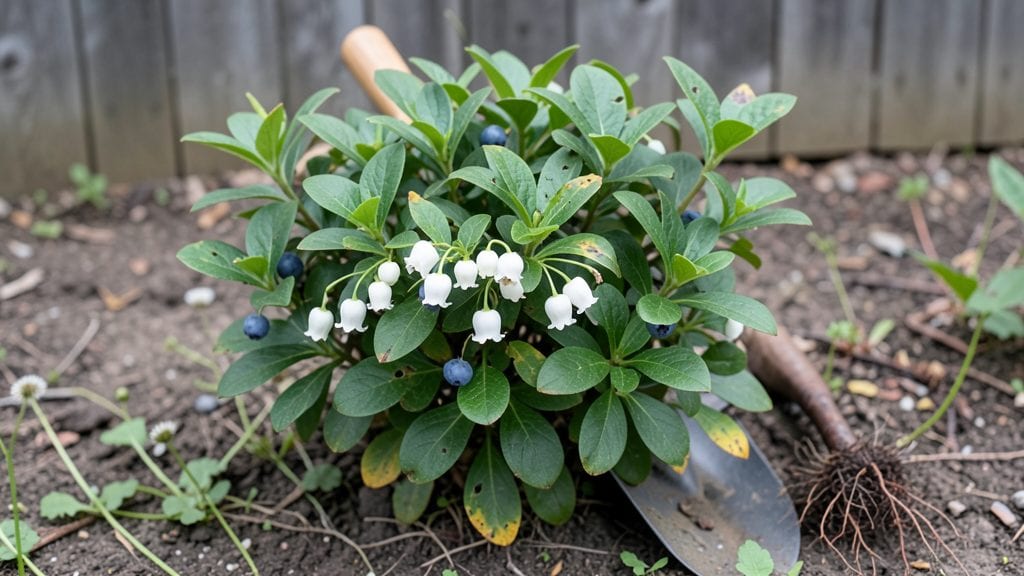
Planting blueberry trees in acidic soil transforms your yard into a berry-producing goldmine. 🌿 I’ve watched my highbush variety go from a bare root sapling to a bush bursting with fruit in just three seasons—once I got the soil right.
The key isn’t just digging a hole; it’s creating the perfect acidic environment they crave.
Start with soil that tests between pH 4.5 and 5.5—blueberries are picky about acidity, and most garden soil won’t cut it. Mix in peat moss or sulfur to adjust pH before planting, and choose a spot with full sun and well-draining soil.
Highbush varieties need 6 to 8 feet of space, while lowbush types can huddle closer together. The planting depth matters too—set the root flare just above ground level to avoid rot.
After planting, water deeply to settle the soil, then keep it consistently moist but not soggy for the first month. Mulch with pine needles or wood chips to maintain acidity and retain moisture.
By next spring, you’ll see new growth—and if you’ve nailed the soil prep, those first berries won’t be far behind. The payoff? A bush that keeps producing for decades with minimal fuss.
This works for both highbush (southern climates) and lowbush (northern zones) varieties, though planting times shift with your region. Spring or early fall are ideal—just avoid extreme heat or frost. Let’s get those roots settled for a harvest you’ll actually eat.
📚 In This Guide
- What you need
- Instructions
- Tips and common mistakes
- Wrapping up and next steps
What you need
- ● Blueberry tree plants: 1–3 (depending on space; choose northern or southern highbush varieties based on your climate zone).
- ● Well-draining, acidic soil: Aim for a pH of 4.5–5.5. Amend garden soil with peat moss or pine bark fines (5–10 gallons per tree) if needed.
- ● Organic mulch: 2–3 inches of pine straw, wood chips, or composted leaves (avoid cedar mulch—it’s too acidic!).
- ● Slow-release fertilizer: Acid-loving plant fertilizer (e.g., Osmocote or Miracle-Gro Azalea/Camellia) for planting and seasonal feeding.
- ● Shovel & garden fork: For digging holes and loosening soil.
- ● Pruning shears: Sterilized (rubbing alcohol wipe) for trimming dead branches.
- ● Watering can or hose with a gentle nozzle: Blueberries hate soggy roots!
- ● Garden gloves: To protect your hands from thorns and soil.
- ● Soil pH test kit: To monitor acidity levels (aim for 4.5–5.5).
- ● Epsom salt (magnesium sulfate): 1 tbsp per gallon of water for foliar spray (boosts growth!).
- ● Bird netting: To protect ripening berries from hungry critters.
- ● Drip irrigation system: For consistent moisture (blueberries hate drought!).
- ● Compost tea: Homemade or store-bought to feed soil microbes.
Step-by-step instructions for planting blueberry trees
Here’s how I plant blueberry trees for maximum growth and fruit production—no guesswork involved.
🌱 Step 1: Choose the Right Location and Prepare the Soil
Blueberries thrive in acidic soil with a pH between 4.5 and 5.5. Test your soil first—if it’s alkaline, amend it with sulfur or peat moss before planting. Pick a spot with full sun (at least 6-8 hours daily) and well-draining soil. Avoid low areas where water pools, as soggy roots invite disease.
Dig a hole twice as wide as the root ball but only as deep as the container’s bottom. Loosen the sides of the hole to encourage root spread. If your soil is heavy clay, mix in 1-2 inches of compost into the bottom of the hole to improve drainage. Blueberries hate competition, so clear the area of weeds and grass within 3 feet of the planting site.
🪴 Step 2: Plant the Tree at the Correct Depth and Stake for Support
Remove the tree from its container and gently tease the roots outward if they’re circling. Place the tree in the hole so the top of the root ball sits level with the ground—burying too deep suffocates the trunk, while planting too high stresses the roots. Fill the hole with soil, tamping lightly as you go to eliminate air pockets.
Water deeply to settle the soil, then add 2-3 inches of mulch (like pine straw or wood chips) around the base, keeping it 3 inches away from the trunk. Stake the tree only if needed—young blueberries can be top-heavy. If staking, use two stakes on opposite sides and tie loosely with soft fabric strips to avoid girdling the trunk.
☀️ Step 3: Water and Fertilize for Strong Establishment
Water the tree every 2-3 days for the first 2 weeks, keeping the soil evenly moist but not soggy. Blueberries are drought-tolerant once established, but young trees need consistent moisture. After planting, apply a slow-release, acid-loving plant fertilizer (like one formulated for azaleas or rhododendrons) to encourage root growth.
Monitor the soil moisture with your finger—it should feel damp 1-2 inches down, not dry or waterlogged. Avoid overhead watering after planting to prevent fungal diseases. In hot climates, provide afternoon shade for the first few weeks to reduce stress on the transplant.
✂️ Step 4: Prune and Maintain for Long-Term Health
Prune in late winter or early spring before new growth begins. Remove dead, diseased, or crossing branches, and thin out crowded stems to improve airflow. Aim to keep the tree open and airy—this prevents fungal issues and encourages fruit production. Never prune more than 25% of the tree in one season.
After the first year, apply 2-3 inches of mulch annually in early spring to retain moisture and acidify the soil. Test the soil pH every 2 years and amend as needed. Blueberries are heavy feeders, so in early spring, add a balanced, acid-loving fertilizer (like 10-10-10 with sulfur) to support new growth.
⏰ Step 5: Harvest and Plan for Next Year
Blueberries ripen in late summer (varies by variety). Pick when they’re deep blue and plump, gently twisting them from the stem. Avoid squeezing the berries—they bruise easily. Harvest in morning sunlight when temperatures are cool to preserve flavor and texture.
After harvest, prune again to remove any weak or unproductive wood, and plan to renew the mulch in early spring. Blueberries can live for decades with proper care, so invest in soil health now for bountiful harvests for years to come.
Tips & tricks for planting blueberry trees
A few key strategies that'll help your blueberry trees thrive and produce fruit for years to come.
Soil Prep Secret: Don't skip the soil test! Many gardeners assume their soil is acidic, but it often isn't. I've seen blueberries fail spectacularly in soil that tested pH 6.5. If your soil is alkaline, work in 2-3 pounds of sulfur per 100 square feet 2-3 months before planting to lower the pH. For heavy clay soil, mix in 1-2 inches of compost as mentioned in Step 1—this improves drainage while maintaining acidity.
Planting Depth Check: The top of the root ball should sit level with the ground—this is non-negotiable. I learned this the hard way after burying a tree too deep and watching it struggle for years. Use a ruler or measuring tape to verify depth before filling the hole. If you're unsure, place the tree in the hole, then step back and visually confirm the root ball's top aligns with the surrounding soil level.
Watering Wisdom: Those first 2 weeks of watering are critical. I recommend using a moisture meter to check soil dampness at 1-2 inches down—this is more accurate than guessing. Water deeply in the morning to allow foliage to dry before evening, which prevents fungal diseases. In hot climates, provide afternoon shade with a simple shade cloth for the first few weeks to reduce transplant shock.
Pruning Pro Tip: When pruning in late winter or early spring, focus on removing branches that cross or rub against each other. These create wounds that invite disease. I also recommend thinning out crowded stems to improve airflow—this is especially important in humid climates. Remember the 25% rule: never remove more than a quarter of the tree's foliage in one season, as this stresses the plant.
Pro Tips for Planting Blueberry Trees
- A few key strategies that'll help your blueberry trees thrive and produce fruit for years to come.
- Soil Prep Secret: Don't skip the soil test!
- Planting Depth Check: The top of the root ball should sit level with the ground—this is non-negotiable.
Frequently asked questions
Got questions about planting blueberry trees?
You’re not alone! Here are some of the most common concerns—and their answers—to help you grow a thriving blueberry harvest with confidence.
When is the best time to plant blueberry trees?
Plant your blueberry trees in early spring (just as buds swell) or fall (6–8 weeks before your first frost). Avoid planting in extreme heat or cold—roots need time to establish without stress. Southern climates? Spring is ideal; cooler regions? Fall works best. Just give them 3–4 months to settle before winter hits!
Do blueberry trees need acidic soil?
Absolutely!
Blueberries thrive in soil with a pH between 4.5 and 5.5—think pine forests or peat bogs. Test your soil first (kits are cheap!). If it’s too alkaline, amend with sulfur, pine needles, or peat moss. Pro tip: Mulch with pine bark to maintain acidity naturally over time.
How far apart should I space blueberry trees?
Spacing depends on the variety:
- Dwarf varieties: 3–4 feet apart (great for containers or small yards).
- Semi-dwarf: 5–6 feet apart (ideal for home gardens).
- Standard trees: 8–10 feet apart (for large orchards or windbreaks).
Give them room to grow—crowding leads to poor air circulation and fungus risks. Pair with pollinator-friendly plants (like lavender) to boost yields!
Why aren’t my blueberry trees fruiting?
Common culprits:
- Improper pollination: Most blueberries are self-pollinating, but bees help! Plant near flowers or hand-pollinate if needed.
- Wrong soil pH: Test and adjust—alkaline soil = no berries.
- Young trees: It takes 2–3 years for dwarf varieties to bear fruit; standard trees may wait 5+ years.
- Over-fertilizing: Too much nitrogen = leafy growth, zero fruit. Use a low-nitrogen, high-potassium fertilizer instead.
Patience and consistent care pay off—stick with it!
Can I grow blueberry trees in containers?
Yes! Dwarf varieties (like ‘Top Hat’ or ‘Peach Sorbet’) thrive in 15–25 gallon pots with:
- Well-draining acidic soil mix (peat moss + perlite).
- Large drainage holes to prevent root rot.
- Regular watering (containers dry out fast!).
Move pots to partial sun in winter if temps drop below 10°F. Container-grown blueberries need more frequent fertilizing—use a balanced acid-loving plant fertilizer every 4–6 weeks in growing season.
Wrapping up and next steps
Planting blueberry trees is a rewarding journey that blends patience with delicious results! 🌱 With the right soil, sunlight, and care, you’ll soon enjoy homegrown berries packed with flavor. Start small—whether it’s one bush or a full garden—and watch your efforts bloom into a thriving harvest.
Ready to take the next step? Mark your calendar for planting season (spring or fall) and gather your supplies. You’ve got this! Happy gardening, and may your blueberries be plentiful! 🍇