Trees
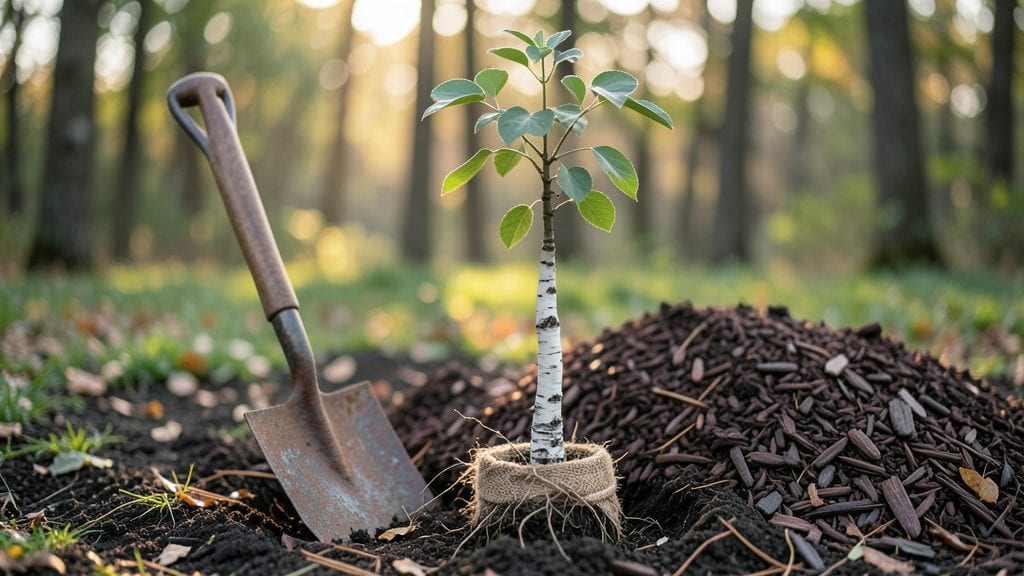
Planting birch trees creates a stunning, fast-growing privacy screen that outpaces most other trees—my backyard went from drafty to secluded in just three seasons.
The key lies in timing and technique: plant in early spring or fall when roots establish before extreme weather, and you’ll see those signature white trunks and delicate leaves filling your space within a few years.
You’ll need bare-root saplings (cheaper and easier to handle), a shovel, compost, and a watering can—plus a sunny spot with well-draining soil. Birches tolerate poor soil better than most trees, but amending with compost gives them a head start.
Space them 10–15 feet apart for a tight screen, or 20 feet if you want mature trees with room to breathe.
After planting, water deeply for the first two weeks, then taper off as roots spread. Mulch around the base to lock in moisture and keep weeds at bay.
By summer, you’ll spot new growth—proof your birches are thriving. Prune only to remove dead branches, and watch as they grow 3–4 feet per year under ideal conditions.
Here’s the secret: birches hate soggy roots, so avoid low spots. If pests like bronze birch borers appear, treat early with neem oil. With minimal effort, you’ll have a low-maintenance, breathtaking screen that pays dividends for decades.
📚 In This Guide
- What you need
- Instructions
- Tips and common mistakes
- Wrapping up and next steps
What you need
- ● Birch tree saplings: 3–5 bare-root or container-grown trees (depending on desired screen width; spacing 8–12 feet apart). Choose paper birch (Betula papyrifera) or yellow birch (Betula alleghaniensis) for best results.
- ● Shovel or tree spade: 1–2 (for digging holes 2–3 times wider than the root ball and as deep as the container or roots).
- ● Garden gloves: 1 pair (to protect hands from thorns or rough bark).
- ● Watering can or hose with nozzle: 1 (for deep watering after planting).
- ○ Mulch (optional but recommended): 2–3 bags of wood chips or straw (2–4 inches thick; keep 3–4 inches away from trunk to prevent rot).
- ● Sunlight: Full sun to partial shade (birch trees thrive in 6+ hours of direct sunlight daily).
- ● Soil: Well-draining, slightly acidic soil (pH 4.5–7.0). Amend heavy clay with compost or sand if needed.
- ● Space: Minimum 8-foot width per tree (adjust spacing for faster growth or denser screens).
- ● Water source: Easy access for weekly deep watering (especially in the first year).
- ○ Staking (optional): 3–4 5-foot bamboo stakes + tree ties (if planting in windy areas or soft soil).
Planting birch trees: fast-growing privacy screen in 3 simple steps
Here’s how to plant four birch trees for a lush, fast-growing privacy screen that delivers results in just a few seasons.
Choose the Right Location and Prepare the Soil
Birch trees thrive in full sun to partial shade and well-drained soil. Select a spot where the trees will receive at least 6 hours of sunlight daily—this ensures strong, upright growth and prevents weak, leggy trunks. Avoid low-lying areas where water pools, as birch roots rot easily in soggy conditions.
Before planting, loosen the soil to a depth of 12 inches using a shovel or tiller. Birch trees prefer slightly acidic soil with a pH between 5.0 and 7.0. If your soil is heavy clay, mix in 2-3 inches of compost to improve drainage and fertility. Work the compost into the top 6 inches of soil—this gives roots room to spread without struggling.
Dig Holes and Plant the Trees
Dig four planting holes, each twice as wide and just as deep as the root ball of your birch trees. Space the holes 15-20 feet apart—this gives the trees room to grow without competing for nutrients or shading each other prematurely. If you’re planting a row, stagger the holes slightly for a more natural look.
Gently remove each tree from its container and place it in the hole, ensuring the top of the root ball sits level with the surrounding soil. Fill the hole with soil, pressing lightly around the edges to eliminate air pockets. Water deeply to settle the soil and encourage root contact. You’ll know it’s right when the soil surface looks slightly firm but not compacted.
Mulch and Water for Establishment
Spread 2-3 inches of mulch over the soil surface, keeping it 3-4 inches away from the trunk to prevent rot. Use wood chips or straw—these retain moisture and suppress weeds while breaking down slowly to enrich the soil. Avoid thick layers of mulch, as they can suffocate roots and trap too much moisture.
Water each tree deeply once a week during the first growing season, providing 1-2 gallons per tree each time. Check the soil 2 inches below the surface—if it’s dry, it’s time to water. Birch trees are drought-tolerant once established, but young trees need consistent moisture to develop strong roots. Reduce watering in late fall to prepare the trees for winter dormancy.
Prune and Protect for Long-Term Growth
In early spring, prune any dead, damaged, or crossing branches to encourage a strong, open canopy. Birch trees naturally grow in a vase-like shape, so minimal pruning is needed—focus on removing branches that rub together or grow inward. This prevents disease and improves airflow, keeping the foliage healthy.
Young birch trees are susceptible to deer and rabbit browsing, so consider wrapping the trunks with tree guards or installing a light fence around the planting area. If you notice chewed bark or missing leaves, act quickly—birch trees recover poorly from heavy damage. With proper care, your privacy screen will fill in beautifully within 3-5 years, offering year-round greenery and shade.
Tips & tricks for planting birch trees
Creating a fast-growing privacy screen with birch trees is simpler than you might think—these little tricks will help you avoid common mistakes and ensure your trees thrive from day one.
Location is Everything: That 6 hours of sunlight requirement is non-negotiable for strong growth. I've seen birch trees planted in shady spots become leggy and weak—trust me, the extra 10 minutes spent checking sunlight exposure will pay off in years of healthy growth. If your yard has partial shade, position the trees where they'll get the most sun during peak daylight hours (10 AM to 4 PM).
Soil Preparation Matters: The 12-inch soil loosening might seem like overkill, but birch roots need that space to spread. I learned this the hard way after planting in compacted soil—my trees struggled for years. If your soil is heavy clay, that 2-3 inches of compost isn't optional; it's the difference between trees that thrive and trees that barely survive. Work the compost into the top 6 inches only, not deeper, to prevent root suffocation.
Planting Depth Secret: Getting the planting depth right is critical—when you place the root ball so its top sits level with the surrounding soil, you're creating the perfect foundation. I've seen people plant too deep, which can lead to root rot, or too shallow, which causes instability. After filling the hole, press the soil gently but firmly around the edges—this eliminates air pockets that can strangle young roots. A good test is to give the tree a gentle tug after watering; if it doesn't wobble, you've got it right.
Mulching Strategy: That 2-3 inches of mulch isn't just for looks—it's a protective shield. I always keep it 3-4 inches away from the trunk to prevent rot, and I never use thick layers because birch trees hate being smothered. Wood chips break down slowly, which is perfect for birch trees that need consistent moisture but not soggy conditions. Replenish the mulch every spring to maintain that protective layer.
Pro Tips for Planting Birch Trees
- Creating a fast-growing privacy screen with birch trees is simpler than you might think—these little tricks will help you avoid common mistakes and ensure your trees thrive from day one.
- Location is Everything: That 6 hours of sunlight requirement is non-negotiable for strong growth.
- Soil Preparation Matters: The 12-inch soil loosening might seem like overkill, but birch roots need that space to spread.
Frequently asked questions
Got questions about planting birch trees? You’re not alone! Here are answers to the most common concerns—from timing to troubleshooting—to help you grow a stunning, low-maintenance privacy screen with confidence.
When is the best time to plant birch trees?
Spring and early fall are ideal for planting birch trees. In spring, the soil is thawed, and trees can establish roots before summer heat. Early fall (before the first frost) gives roots time to settle before winter. Avoid planting in extreme heat or cold—birches are sensitive to stress during these times!
How far apart should I space birch trees for a privacy screen?
Space birch trees 8–12 feet apart for a dense, fast-growing screen. Closer spacing (6–8 feet) speeds up coverage but may require more pruning. For a taller screen, plant them in staggered rows. Remember, birches grow 2–3 feet per year, so plan ahead for your desired height!
Do birch trees need a lot of water after planting?
Yes! Water deeply immediately after planting, then once a week for the first month. After that, water every 10–14 days unless there’s heavy drought. Mulch around the base (but keep it 3–4 inches away from the trunk) to retain moisture. Overwatering can harm roots, so aim for consistent, not soggy, soil.
Are birch trees prone to pests or diseases?
Birches can attract borers, aphids, or fungal issues like bronze birch borer or powdery mildew. To prevent problems, plant in well-draining soil, avoid overwatering, and inspect leaves regularly. Prune dead branches promptly, and consider a fungicide if mildew appears. Healthy soil = fewer pests!
Can I plant birch trees in containers or small spaces?
While birches thrive in open ground, dwarf varieties (like Betula pendula ‘Fastigiata’) can work in large containers (15+ gallons). For small spaces, choose paper birch or yellow birch—they grow upright and adapt better to root restrictions. Just ensure containers have drainage holes and use lightweight, well-draining soil.
How do I protect young birch trees in winter?
Young birches are vulnerable to winter burn or frost cracks. Wrap the trunk with tree guard or burlap to shield from rodents and wind. Avoid heavy mulching around the base—keep it 3–4 inches away. Water deeply before the first freeze to help roots withstand cold. Most birches tolerate cold well, but extra care ensures they thrive!
Wrapping up and next steps
Planting birch trees is a rewarding way to create a stunning, fast-growing privacy screen that adds beauty and value to your property. 🌿 With their elegant bark, minimal maintenance needs, and rapid growth, birch trees are a fantastic choice for both aesthetics and functionality.
Whether you're a seasoned gardener or just starting out, these steps make it simple to get started.
Now that you’re equipped with the knowledge, roll up your sleeves and take action! Start by choosing the perfect spot, gather your supplies, and plant your birch trees with confidence.
In just a few years, you’ll enjoy the lush, natural privacy—and maybe even a few adorable squirrels as neighbors. Happy planting! 🌱