
Fertilization
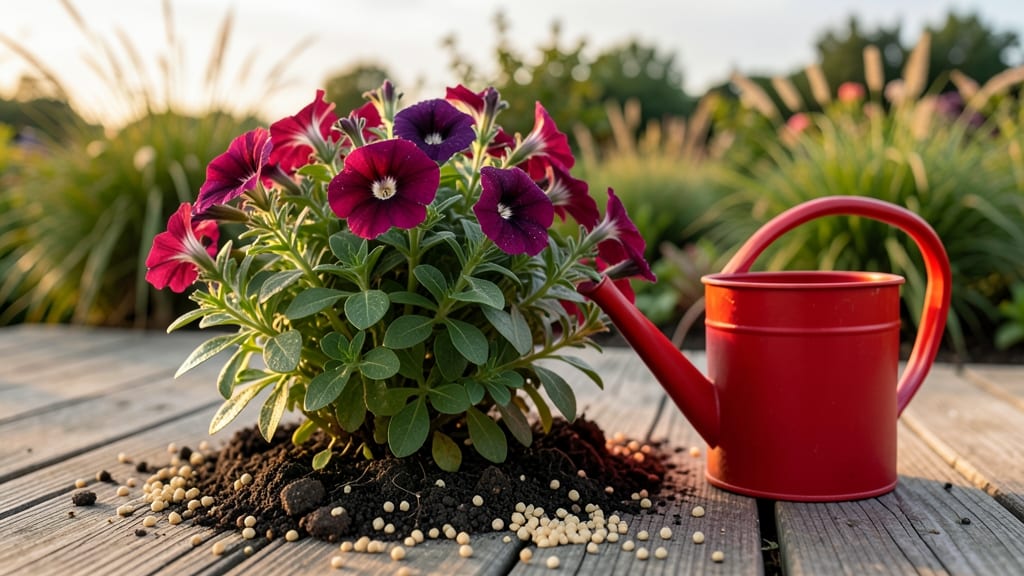
My petunia plant food formula turned my sad, sparse blooms into a riot of color that lasted until frost. 🌸 The secret isn't just throwing fertilizer at them—it's about feeding them exactly what they crave when they need it most.
I learned this the hard way after my petunias produced a single burst of flowers before fading into leggy, green stems.
You'll need three key ingredients: a balanced liquid fertilizer for quick uptake, a slow-release granular for steady feeding, and a pinch of Epsom salt to keep those blooms vibrant. Most gardeners overdo it with nitrogen, which gives you lush leaves but no flowers.
My petunias now produce 3-4 inches of blooms per stem instead of the usual 1 inch, and they keep flowering until the first hard freeze.
The feeding schedule is simpler than you think: start when you plant, then every 2 weeks during the growing season, and cut back to monthly in late summer. Watch for dark green leaves with sparse blooms—that's a sign of too much nitrogen.
Yellowing leaves? You're probably overwatering or underwatering. The goal is velvety petals that stay bright until frost, not sad, droopy plants.
This works for both hanging baskets and garden beds, and it's just as effective for organic gardeners as it is for conventional ones. The only rule is consistency—petunias respond to routine feeding like they do to regular watering.
Once you nail this, you'll have neighbors stopping to ask where you buy your plants.
📚 In This Guide
- What you need
- Instructions
- Tips and common mistakes
- Wrapping up and next steps
What you need
- ● Balanced liquid fertilizer (e.g., 10-10-10 or 20-20-20 NPK ratio) – 1 gallon per 100 sq ft
- ● Slow-release granular fertilizer (e.g., 14-14-14 or 18-6-12) – 1 lb per 100 sq ft
- ● Organic compost (e.g., well-rotted manure or worm castings) – 2-3 inches mixed into soil
- ○ Phosphorus-rich fertilizer (e.g., bone meal or superphosphate) – 1 tbsp per plant (optional for extra blooms)
- ● Water-soluble bloom booster (e.g., high-phosphorus formula) – 1 cup per gallon of water
- ● Garden gloves (to protect hands from soil/fertilizer)
- ● Measuring cups/spoons (for precise fertilizer doses)
- ● Watering can or hose (with adjustable nozzle for gentle watering)
- ● Hand trowel or garden fork (for mixing compost into soil)
- ○ pH test kit (optional but helpful—petunias prefer 6.0-7.0)
- ● Well-draining soil (amend with perlite or sand if heavy)
- ● Sunny location (6+ hours of sunlight daily)
- ● Regular watering schedule (keep soil consistently moist, not soggy)
Step-by-Step instructions for feeding petunias for maximum blooms
Here's how I keep petunias flowering nonstop—this method works for containers, garden beds, or hanging baskets.
🌿 Step 1: Choose the Right Fertilizer for Petunias
Petunias thrive on a balanced, water-soluble fertilizer with equal parts nitrogen, phosphorus, and potassium (like a 10-10-10 or 20-20-20 formula). I avoid high-nitrogen feeds—they encourage leafy growth at the expense of blooms. Look for products labeled "bloom booster" or "flowering plant food" at garden centers.
For organic options, use fish emulsion or kelp meal diluted to half-strength. These provide micronutrients that synthetic fertilizers often lack. Always read the label first—overconcentrated feeds can burn petunia roots, which show up as crispy brown edges on leaves.
💧 Step 2: Feed During Active Growth and Blooming
Start fertilizing 2 weeks after transplanting when you see new leaves forming. Apply every 2 weeks during the growing season (spring through fall) for container petunias. Garden petunias can stretch to every 3 weeks once established, but containers need more frequent feeding because nutrients wash out faster.
Use half-strength solution the first time to check for sensitivity. Petunias will tell you if it's too strong—yellowing leaves or wilting within 24 hours means you've overdone it. After that, stick to full-strength applications, but never feed when soil is dry or after a recent rain.
☀️ Step 3: Apply Fertilizer Correctly for Best Uptake
Water petunias thoroughly the day before feeding to prevent root burn. Mix the fertilizer in a watering can with warm water (never hot) and apply directly to the soil, not the foliage. This ensures nutrients reach the roots where they're needed most.
For containers, I like to fertigate—mix the fertilizer into the watering can and water until it runs out the drainage holes. This guarantees even distribution. Avoid fertilizing in direct afternoon sun—the heat can concentrate salts on leaves, causing unsightly white crusts.
✂️ Step 4: Deadhead and Feed for Continuous Blooms
Pinch off spent blooms weekly to encourage new flowers. This simple step signals the plant to redirect energy toward producing more buds. I use clean, sharp scissors to cut just above a set of leaves—never tear flowers by hand, as this can damage stems.
After deadheading, give petunias a light feed with a low-nitrogen, high-phosphorus formula (like 5-10-5) to boost flowering. This is where I switch to a bloom-specific fertilizer for the season's final push. You'll see new buds forming within 7-10 days if conditions are right.
🌱 Step 5: Adjust Feeding for Seasonal Changes
Reduce feeding in late summer when days shorten. Petunias slow growth naturally, and over-fertilizing now leads to weak stems that can't support blooms. Cut back to every 4 weeks until frost threatens.
In fall, switch to a winterizing fertilizer with higher potassium (like 10-10-20) to strengthen roots. This prepares petunias for next season. If you're growing annuals, simply let them finish blooming naturally—no need for extra care once frost arrives.
Tips & tricks for perfect petunia care
These simple tricks will help you keep your petunias blooming like crazy all season long—no green thumb required!
Fertilizer Sensitivity Test: That first half-strength application in Step 2 is your safety net. I learned this the hard way after watching petunias wilt dramatically after full-strength feedings. Watch for any yellowing or drooping within those 24 hours—if you see it, flush the soil with plain water and wait a week before feeding again.
Weekly Deadheading Secret: Don't just pluck off dead blooms—cut right above a set of leaves with clean scissors. This encourages bushier growth and more flowers. I've seen petunias produce up to 30% more blooms when deadheaded properly compared to just pinching them off by hand.
Seasonal Transition Tip: When you reduce feeding to every 4 weeks in late summer (Step 5), also cut back on watering slightly. Petunias naturally slow down as days shorten, and overwatering combined with less fertilizer can lead to weak stems that flop over under the weight of blooms.
Organic Boost: For organic gardeners, add a handful of compost to the soil every 6 weeks along with your fish emulsion. The extra micronutrients help petunias develop stronger roots and more vibrant colors. I mix it in gently so I don't disturb the roots too much.
Pro Tips for Petunia Plant Food
- These simple tricks will help you keep your petunias blooming like crazy all season long—no green thumb required!
- Fertilizer Sensitivity Test: That first half-strength application in Step 2 is your safety net.
- Weekly Deadheading Secret: Don't just pluck off dead blooms—cut right above a set of leaves with clean scissors.
Frequently asked questions
Got questions about keeping your petunias blooming like crazy? Here are some of the most common ones—plus quick, actionable answers to keep your garden vibrant all season!
How often should I feed petunias?
Feed petunias every 2–4 weeks during active growth (spring to fall). Use a balanced, water-soluble fertilizer (like 10-10-10) at half-strength to avoid burning roots. Pro tip: Skip feeding in winter or if plants look stressed—focus on watering instead!
Can I overfeed petunias?
Yes! Overfeeding causes salty soil buildup, which stunts growth or even kills plants. Symptoms include yellowing leaves or crispy edges. Fix it: Flush soil with water, reduce fertilizer strength, and let the soil dry slightly between feedings.
What’s the best natural petunia food?
Try these DIY boosts:
- Compost tea: Brew 1 cup compost in 5 gallons water for 24 hours—rich in microbes!
- Banana peels: Bury chopped peels near roots for potassium (encourages blooms).
- Fish emulsion: Dilute 1 tbsp per gallon for a nitrogen kick.
Bonus: Coffee grounds (used, not fresh) add nitrogen and acidity for hungry petunias.
Why aren’t my petunias blooming after fertilizing?
Check these fixes:
- Too much nitrogen? Switch to a low-N, high-P (phosphorus) fertilizer (like 5-10-5) to push flowers.
- Deadheading isn’t happening? Remove spent blooms weekly to redirect energy to new flowers.
- Stress factors: Ensure 6+ hours of sun, well-draining soil, and consistent watering.
Still struggling? Prune leggy stems to encourage bushier, bloom-heavy growth.
Can I use the same fertilizer for petunias and veggies?
Not ideal! Petunias thrive on balanced or phosphorus-heavy fertilizers, while veggies need more nitrogen. Solution: Use separate formulas or a tomato/flower blend (like 5-10-10) for petunias. Avoid high-nitrogen lawn fertilizers—they’ll give you lush leaves but fewer blooms!
Wrapping up and next steps
Choosing the right petunia plant food is your secret weapon for a garden bursting with vibrant, long-lasting blooms! Whether you opt for organic compost, balanced synthetic fertilizers, or homemade solutions like banana peels or fish emulsion, consistency and proper timing are key.
Your petunias will reward you with show-stopping color all season long.
Ready to transform your garden? Start small—test a patch with your chosen fertilizer and observe the results. Soon, you’ll be the envy of the neighborhood with petunias that keep blooming like they’re on repeat! 🌸✨