How To
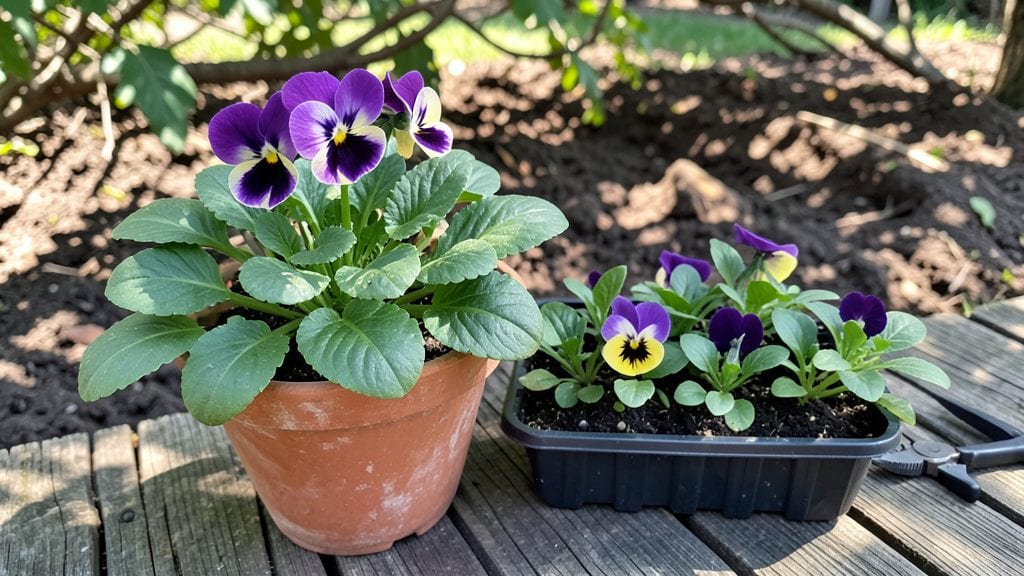
Planting pansies at the right distance turns your garden from a patchy mess into a burst of color that lasts all season 🌸.
Struggling to get your pansy garden to burst with vibrant color instead of sparse blooms? Proper spacing isn't just about aesthetics—it's the secret to healthier plants and longer-lasting flowers that will make your garden the envy of the neighborhood.
Too close, and you'll end up with leggy stems and powdery mildew; too far apart, and your spring borders will look like Swiss cheese. The ideal spacing varies by variety—dwarf pansies need 6-8 inches between plants, while standard types thrive with 10-12 inches of room.
Below, I break down the exact spacing you need for different garden setups, how to adjust for airflow, and why 6a zone gardeners should plant in March or August for peak performance.
Optimal pansy planting distance by variety and garden type
Getting the pansy planting distance right transforms your garden from patchy to lush and vibrant. These cheerful flowers thrive when spaced properly, balancing airflow, sunlight exposure, and root development.
Too close, and you’ll invite disease; too far, and your garden will look sparse. Let’s dive into the perfect spacing for every pansy variety and garden setup.
Pansies come in three main sizes: dwarf, standard, and giant. Each needs different spacing to prevent competition for nutrients and water. For container gardens, spacing is even more critical since roots share limited space.
In-ground beds offer more flexibility, but crowding risks still apply. Let’s break it down by type so you can plan your dream display.
Comparison Table: Pansy Planting Distance by Variety and Garden Type
Dwarf pansies (6-8 inches apart) are perfect for window boxes or border edges where space is tight. Their compact size lets you pack them closely without sacrificing bloom density.
In containers, you can fit 3-4 dwarf pansies in a 6-inch pot, creating a colorful cascade. Just ensure the pot has drainage holes to prevent root rot from overwatering.
Standard pansies (9-12 inches apart) strike the best balance for most gardens. This spacing gives roots room to spread while keeping foliage dense enough to suppress weeds naturally. In 8-inch containers, plant 2-3 standard pansies to avoid overcrowding.
If you’re using them in mixed borders, pair them with low-growing companions like alyssum or sweet alyssum to fill gaps.
Giant pansies (12-18 inches apart) need the most space because their larger foliage and bigger blooms require room to thrive. Plant them 1 per 10-inch pot if container-growing, or use them as focal points in garden beds.
Their dramatic flowers make them stand out, but overcrowding will lead to leggy stems and fewer blooms. For a showstopping display, mix them with tall snapdragons or delphiniums in the back.
For rock gardens or crevice planting, you can space pansies as close as 4-6 inches apart. This works because the limited soil volume restricts root spread naturally. Choose dwarf varieties for this setup, as their smaller size prevents competition.
Add a light mulch of gravel or bark to retain moisture and keep roots cool during hot days.
Proper spacing isn’t just about looks—it’s about plant health. Poor airflow from crowding creates a moisture trap, inviting powdery mildew or botrytis blight. Always space pansies according to their mature size, not their seedling size.
If you’re planting in full sun, slightly increase spacing by 1-2 inches to reduce stress from intense heat and drying winds.
One final tip: thin seedlings as they grow to maintain ideal spacing. If you planted too closely, gently remove excess plants when they’re 2-3 inches tall. This prevents root competition later and ensures every plant gets enough nutrients and sunlight.
With the right spacing, your pansies will bloom nonstop from early spring to frost—turning your garden into a colorful masterpiece.
🌸
How to adjust pansy spacing for maximum blooms and disease prevention
Finding the perfect pansy planting distance feels like walking a tightrope—too close, and you’ll choke your blooms; too far, and your garden looks sparse. The key lies in balancing airflow, sunlight access, and disease prevention.
I’ve learned that even a few extra inches can mean the difference between a lush display and a sad, mildew-ridden mess. Let’s break down how to get it right for your garden setup.
Most gardeners default to the 8-12 inch spacing rule for standard pansies, but this isn’t one-size-fits-all. Dwarf varieties (like 'Tom Thumb') thrive with just 6 inches between plants, while giant pansies (such as 'Monarch') need 12-18 inches to avoid competition.
The trade-off? Tighter spacing packs more color into borders, but looser spacing prevents powdery mildew by improving airflow. Let’s explore how to adjust for your specific goals.
Pansy Planting Distance Guide
- Standard pansies (6-12" tall): 8-12 inches apart for full blooms; reduce to 6-8 inches for borders or mass planting.
- Dwarf pansies (4-6" tall): 6 inches apart in containers or 4-6 inches in borders to create a dense carpet of color.
- Giant pansies (12"+ tall): 12-18 inches apart to prevent overcrowding and support their larger foliage.
- Container planting: 3-4 plants per 12" pot (use dwarf varieties); ensure pots have drainage holes to avoid root rot.
- Companion plants: Pair with marigolds (12" apart) or snapdragons (8" apart) to improve airflow and deter pests naturally.
- Disease prevention: Space 12-18 inches apart in humid climates to reduce powdery mildew risk; prune lower leaves to improve airflow.
Adjusting spacing isn’t just about inches—it’s about seasonal trade-offs. In spring, when pansies are establishing roots, I loosen spacing slightly (10-12 inches) to give them room to spread.
By summer, when blooms are abundant, I might tighten it to 8 inches for a fuller look, but only if humidity is low. The key is monitoring your plants: if leaves touch, it’s time to thin out.
Companion planting can also boost your spacing strategy. I’ve found that interplanting pansies with low-growing thyme or alyssum creates natural airflow while suppressing weeds. This combo works beautifully in rock gardens or along pathways, where tight spacing is desirable but disease risk is higher.
Just avoid pairing with hostas or ferns, which can harbor slugs that love pansy leaves.
Don’t overlook the container advantage. In pots, pansies can handle slightly tighter spacing (4-6 inches) because their roots are confined, but you’ll need to fertilize more frequently to compensate. I use a 5-10-10 fertilizer every 4 weeks in spring and fall to keep blooms prolific.
For in-ground beds, mulch with 2-3 inches of straw to retain moisture and reduce soil-borne diseases that thrive in crowded conditions.
Remember, airflow is your best defense against powdery mildew, the nemesis of crowded pansy beds. If you notice white powder on leaves, it’s a sign your spacing is too tight. Prune affected leaves immediately and adjust future plantings to 12 inches apart in problem areas.
With the right spacing, your pansies will reward you with nonstop blooms from spring to frost—and that’s a sight no neighbor will forget. 🌸