Watering
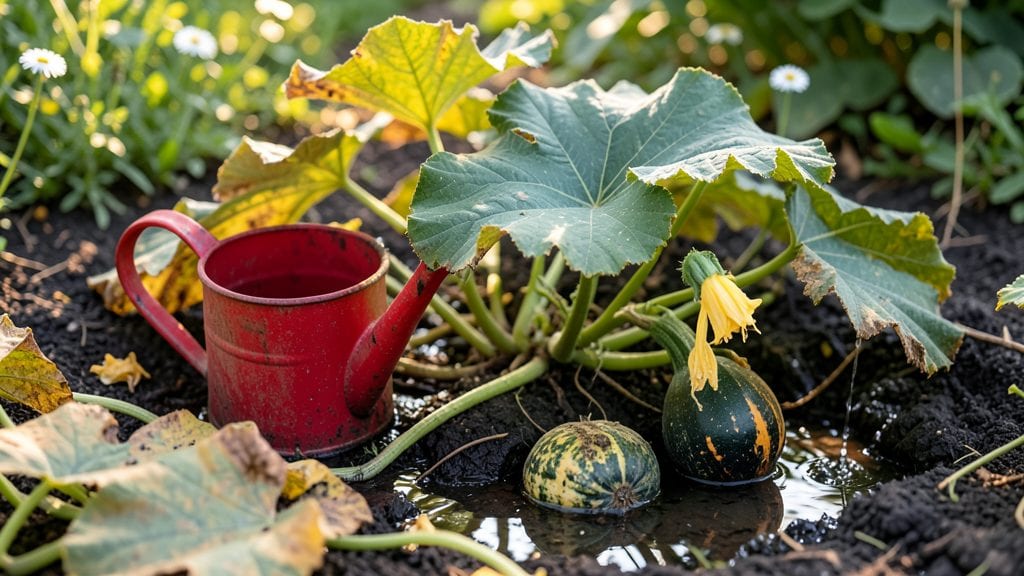
Overwatered squash plants turn your garden into a sad, droopy mess—yellow leaves, mushy stems, and vines that look like they’ve given up. I’ve pulled my fair share of squash plants back from the brink, and the fix isn’t as scary as it seems.
The key is acting fast before the roots rot completely.
First, you’ll need to stop the water torture. Squash plants need about 1-2 inches of water per week, but soggy soil is their worst enemy. Dig your finger into the soil—if it’s still damp after a few days, you’re overdoing it.
Improve drainage by mixing in compost or perlite to help roots breathe again. A little mulch on top keeps moisture steady without drowning the plants.
Within a week, you’ll see the difference: leaves perk up, new growth appears, and those sad vines start climbing again. The best part? Once you adjust your watering habits, your squash plants will stay strong and productive. No more wilting vines or wasted effort—just healthy, happy plants ready to produce.
This works for all squash varieties, from zucchini to pumpkins, and even saves plants that looked hopeless just days ago. Let’s get those vines back on track!
Root Causes Of Excess Moisture
When your squash plants start wilting despite a soggy soil bed, the issue likely stems from a few key factors tied to water management and plant physiology.
Understanding these causes helps you adjust your approach before the problem escalates. Let’s break down the science behind why too much water can strangle your squash vines.
Squash plants thrive in well-draining soil, but heavy clay, compacted dirt, or improperly amended garden beds can turn your watering sessions into a swampy nightmare. When excess moisture can’t escape, roots suffocate due to oxygen deprivation. This triggers:
- Root rot: Fungal pathogens like Phytophthora and Pythium flourish in waterlogged conditions, attacking root tissues and cutting off nutrient uptake.
- Nutrient lockout: Overwatered soil binds essential minerals (e.g., nitrogen, phosphorus) to soil particles, making them inaccessible to roots.
- Weak root structure: Roots grow toward oxygen, not water. Constant sogginess forces them to stretch upward in search of air, leaving them vulnerable and stunted.
Pro tip: 💡 Test your soil’s drainage by digging a 6-inch hole, filling it with water, and timing how long it takes to drain. If it’s slower than 4 hours, amend with compost or sand.
Squash plants prefer deep, infrequent watering over shallow, frequent soaks. When you water lightly but often, you create a moisture gradient in the soil:
- The top layer stays damp, encouraging surface evaporation and fungal growth (e.g., powdery mildew).
- Roots near the surface dry out while deeper roots remain waterlogged, causing hydraulic stress (a physiological shock from uneven moisture).
- Pests like slugs and snails thrive in damp, shaded conditions, further stressing weakened plants.
Pro tip: ✨ Use a soaker hose or drip irrigation to deliver water slowly at the base, mimicking natural rain. Aim for 1–1.5 inches per week, adjusting for rainfall.
Splashing water onto leaves—especially in the morning—turns your garden into a petri dish for disease. Here’s how it backfires:
- Fungal spores (e.g., downy mildew) germinate faster in damp foliage, clogging stomata and blocking photosynthesis.
- Bacterial infections spread through water droplets, causing leaf spots that reduce the plant’s ability to transpire (release excess moisture).
- Sunburn risk: Water droplets act like magnifying glasses, concentrating sunlight and scalding leaves.
Pro tip: 🌡️ Water at soil level in the early morning (before 10 AM) to allow leaves to dry quickly. If overhead watering is unavoidable, use a rain shield or water in the late afternoon.
Potted squash plants are especially vulnerable because containers lack the depth and volume of in-ground soil. Common pitfalls include:
- Small pots: Roots outgrow the space, circling the container and suffocating in stagnant water.
- No drainage holes: Excess water pools at the bottom, drowning roots within hours.
- Cheap soil mixes: Some potting soils compact over time, reducing aeration and trapping moisture.
Pro tip: 🔥 Upgrade to a 5-gallon minimum container with drainage holes. Use a lightweight mix (50% potting soil, 30% perlite, 20% coco coir) to improve airflow.
By addressing these root causes—literally and figuratively—you’ll give your squash plants the breathing room they need to bounce back. Next, we’ll tackle how to revive wilting vines with targeted fixes.
Fix Overwatered Squash Plants Fast
Overwatered squash plants can feel like a soggy mess, but with the right steps, you can revive them and get them back to thriving in no time. The key is acting quickly to address the root causes—literally—and giving your plants the care they need to bounce back.
Below, we’ll break down the most common issues and the practical fixes to turn things around.
If your squash plants are drowning, the first order of business is to halt the watering. Keep them dry for a few days to let the soil drain and prevent further root damage.
- Check the soil: Stick your finger about an inch deep—if it’s still damp, wait another day before watering.
- Avoid wetting the leaves: Water at the base of the plant to prevent fungal diseases like powdery mildew.
- Use a moisture meter: If you’re unsure, invest in a simple soil moisture sensor to avoid guesswork.
> 💡 Pro Tip: If your plants are in containers, ensure pots have drainage holes. If they don’t, transfer them to temporary pots with holes while they recover.
Poor drainage is often the culprit behind overwatered squash. Fixing this will help roots breathe again and prevent future issues.
- Loosen compacted soil: Gently fluff the top 2–3 inches of soil around the base of the plant with a fork or trowel.
This helps water drain faster. - Add organic matter: Mix in compost or aged manure to improve soil structure and aeration. - Raise beds or containers: If your garden soil is consistently soggy, consider planting squash in raised beds or containers with well-draining soil.
> ✨ Quick Fix: If your soil is heavy clay, amend it with perlite or coarse sand to speed up drainage.
Squash plants need consistent moisture but not soggy conditions. Here’s how to water like a pro:
- Water deeply but less often: Aim for 1–1.5 inches of water per week, delivered in deep soakings rather than frequent light waterings.
- Water in the morning: This gives leaves time to dry, reducing the risk of fungal infections.
- Mulch to retain moisture: Apply a 2–3 inch layer of straw or wood chips around the base (but keep it away from the stem) to slow evaporation and regulate soil temperature.
> 🌡️ Temperature Check: If your area gets very hot, water more frequently but still avoid puddles. Squash plants wilt in heat but recover quickly with proper hydration.
If leaves are yellow, mushy, or wilted beyond recovery, prune them off to redirect the plant’s energy to healthier growth.
- Use clean, sharp scissors: Cut off yellow or blackened leaves at the base to prevent disease spread.
- Focus on lower leaves: These are most susceptible to rot and can harbor pests.
- Don’t over-prune: Remove only the most damaged foliage—healthy leaves are essential for photosynthesis.
> 🎯 Prevention Tip: After pruning, spray the plant with a copper fungicide (like Bordeaux mixture) to protect against fungal infections.
Once your squash plants are on the mend, keep an eye on them to ensure they stay healthy.
- Watch for wilting: If leaves droop again, check the soil moisture before watering.
- Adjust for weather: Heavy rain? Skip watering that day. Drought? Water more deeply.
- Rotate crops next season: Avoid planting squash in the same spot year after year to prevent soil-borne diseases.
> 💡 Long-Term Fix: If your garden soil is consistently waterlogged, consider installing French drains or planting squash on slightly elevated mounds.
By following these steps, your overwatered squash plants should perk up within 3–7 days. With the right care, they’ll be back to producing those delicious fruits in no time! 🎉
Frequently asked questions about overwatered squash plants
How do I know if my squash plants are overwatered instead of underwatered?
Check the soil first—stick your finger 1-2 inches deep. If it's still damp after a few days, you're overwatering. Look for yellowing leaves (especially lower ones), mushy stems, or wilting despite wet soil. Underwatered plants usually have crispy, brown edges and dry soil. Overwatered plants often develop fungal spots or a foul smell from rotting roots.
Can I save squash plants with blackened stems?
It depends on how deep the rot has spread. If only the surface is black but the plant still has green leaves, prune the damaged stems immediately and improve drainage. For severe rot (soft, hollow stems), the plant may not recover. Focus on preventing future issues by amending soil with compost or perlite and watering only when the top inch is dry.
Why do my squash plants wilt in the morning after I watered them at night?
Night watering creates ideal conditions for fungal diseases that block water uptake. Water in the morning so leaves dry quickly. Also check for root rot—if roots are mushy, they can't absorb water properly. Reduce watering frequency and ensure soil drains within 4 hours after watering to prevent this cycle.
What's the best way to fix soggy soil in my raised garden beds?
Mix in coarse sand or perlite (about 20% of the soil volume) to improve drainage. For heavy clay, consider replacing the top 6 inches with a well-draining mix (50% compost, 30% coconut coir, 20% perlite). Avoid compacting the soil when working with it—gentle fluffing with a fork helps maintain aeration.
Will overwatered squash plants still produce fruit?
Possibly, but quality may suffer. Healthy plants can redirect energy to fruit production, but stressed plants may drop flowers or produce small, misshapen fruits. Focus on reviving the plant first (proper drainage, less frequent watering) before expecting a full harvest. If the plant is severely damaged, prioritize saving it for next season's growth.