Watering
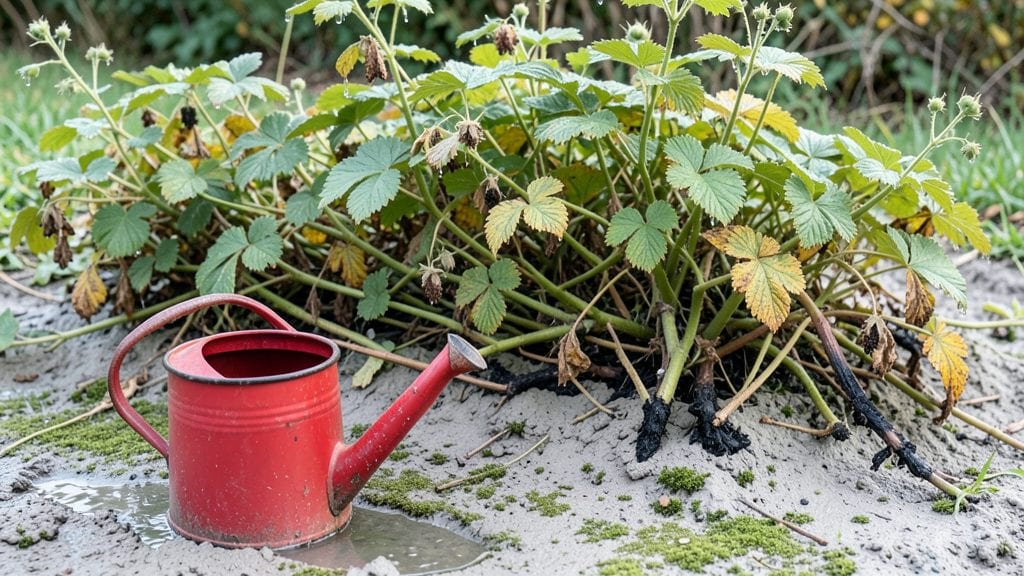
Overwatered raspberry plants flop like soggy socks—yellowing leaves, drooping canes, and that dreaded mushy smell. I’ve nursed more than my share back from the brink, and the key starts with recognizing the signs before it’s too late. That first wilted leaf isn’t just thirst—it’s often a drowning cry for help.
The real damage hides below ground: roots suffocating in soggy soil, starved for air. Raspberries need consistent moisture, not a swamp. I check soil moisture with my finger—if it’s damp more than an inch down, hold off on watering.
The fix begins with cutting back to once a week in most climates, then adjusting based on rainfall and drainage.
Within 10-14 days, you’ll see new growth pushing through if you’ve improved drainage and stopped the water torture. The canes will firm up, leaves regain their deep green, and those telltale yellow patches shrink.
Prevention? Amend heavy soil with compost, mulch to keep moisture even, and never water on a schedule—always check first.
This works for backyard patches, raised beds, or container-grown raspberries. The same rules apply whether you’re dealing with summer sogginess or winter’s relentless rain. Let’s turn those floppy canes into productive, thriving plants again.
Common Mistakes That Drown Roots
Raspberry plants may seem tough, but they’re not built for soggy soil—especially not for long. Overwatering is often the result of well-intentioned (but misguided) gardening habits. Let’s break down the real culprits behind a soggy raspberry patch and why they’re silently suffocating your plants.
Raspberries thrive in well-draining soil, but many gardeners assume "more water = better growth." Unfortunately, raspberry roots need oxygen—just like you do. When soil stays waterlogged, it displaces air, leading to:
- Root suffocation: Without oxygen, roots can’t absorb nutrients or water efficiently. They start to rot, turning brown and mushy.
- Fungal infections: Excess moisture creates the perfect breeding ground for Phytophthora and other pathogens, which attack weakened roots.
- Nutrient lockout: Waterlogged soil binds essential nutrients (like nitrogen and phosphorus) too tightly, starving the plant even if it’s drowning.
💡 Pro Tip: Stick your finger 2 inches deep into the soil before watering. If it’s still damp, wait. Raspberries prefer consistently moist but never soggy soil.
Raspberries have distinct watering needs based on their growth stage. Overwatering often happens because gardeners:
- Water on a schedule (not by need): A fixed watering routine (e.g., every Tuesday) ignores weather changes. Heavy rain + your watering = double the disaster.
- Drown new plants: Freshly planted raspberries need even moisture to establish roots, but many gardeners overcompensate by soaking the soil daily.
- Neglect mature plants in winter: While raspberries are dormant, their roots still need minimal moisture. Too much water can rot them before spring.
📊 Key Rule: Water deeply 1–2 times per week (not daily light sprinkles) during active growth (spring–fall). Reduce to once every 2–3 weeks in winter unless your soil is sandy.
Not all soil is created equal—and raspberries hate dense, clay-heavy, or compacted dirt. Here’s how bad soil leads to overwatering:
| Problem Soil Type | Why It’s Dangerous | Fix It Fast |
|---|---|---|
| Clay soil | Holds water like a sponge, preventing drainage. Roots drown even with "light" watering. | Amend with compost or sand (50/50 mix) to improve aeration. |
| Compacted soil | Tight particles block water flow, causing puddles around roots. | Loosen soil with a garden fork or add organic mulch (wood chips) to break up density. |
| No slope/flat ground | Water pools instead of draining away, turning roots into a soup. | Create a slight mound (6–12 inches high) when planting to encourage runoff. |
✨ Expert Hack: Plant raspberries in raised beds or containers if your yard is naturally swampy. Elevation = instant drainage.
Mother Nature often does the watering for you—but many gardeners ignore rain and keep the hose running. Here’s how to avoid overwatering in wet conditions:
- Rain + your watering = double the damage. A 1-inch rainstorm can already saturate soil 6–8 inches deep—enough for raspberries.
- Mulch traps moisture. Thick mulch (like straw or bark) helps retain water, but if it’s too thick (4+ inches), it can smother roots and block evaporation.
- Container plants are trickier. Pots dry out faster, but if you’re watering them every day without checking, you’re likely causing root rot.
🌡️ Quick Check: After rain, press your finger into the soil. If the top 2 inches are dry, water lightly. If it’s still wet, skip it.
Reviving Your Raspberry Plant in 3 Steps
Overwatering can turn your thriving raspberry plant into a sad, drooping mess—but don’t worry! With the right steps, you can nurse it back to health and prevent future water woes.
Here’s how to diagnose the issue and take action, whether your plant is suffering from root rot, nutrient loss, or weakened structure.
Before you do anything else, halt all watering immediately. Overwatering creates a suffocating environment for roots, and giving them more water will only worsen the problem.
What to look for:
- Yellowing leaves (sign of root stress or rot)
- Mushy, black stems (a red flag for fungal infections)
- Wilting despite wet soil (roots can’t absorb water properly)
- Foul-smelling soil (bacterial or fungal decay)
💡 Pro Tip: Gently tug on a few leaves. If they pull away easily, the roots may be dead or severely compromised.
Raspberry plants hate soggy feet. To fix this, you’ll need to revamp their growing conditions to prevent future waterlogging.
🔧 Fixing Drainage Issues 1. Check the pot or bed:
- If in a container, ensure it has drainage holes at the bottom. If not, drill them or repot.
- If in ground soil, consider raising the bed with gravel, sand, or compost to improve airflow.
- Amend the soil: - Mix in perlite, vermiculite, or coarse sand (20-30%) to loosen compacted soil. - Add compost or well-rotted manure (10%) to restore nutrients lost from overwatering.
- Raise the plant (if needed): - If the soil is naturally heavy clay, elevate the pot or bed on bricks or a raised garden bed.
🌿 Boosting Air Circulation
- Prune dead or diseased canes with sterilized shears (rubbing alcohol works).
- Space plants properly—raspberries need at least 2 feet apart for airflow.
- Avoid mulching too thickly (2-3 inches max) near the base to prevent moisture buildup.
Now that drainage is sorted, it’s time to gradually reintroduce water without drowning the roots again.
💧 Correct Watering Techniques 1. Water deeply but infrequently:
- Containers: Water when the top 1-2 inches of soil are dry (stick your finger in to check).
- Ground beds: Water 1-2 times per week, depending on rainfall (aim for 1-1.5 inches total).
- Water at the base, not the leaves: - Use a soaker hose or drip irrigation to deliver water directly to the roots. - Avoid overhead watering (especially in the evening) to prevent fungal diseases.
- Monitor soil moisture: - Invest in a moisture meter for accuracy, or use the finger test (push your finger 1-2 inches into the soil).
🌿 Nutrient Recovery
Overwatering leaches away essential nutrients. Feed your plant to help it bounce back:
- Balanced fertilizer (10-10-10): Apply lightly every 4-6 weeks during growing season.
- Epsom salt (magnesium sulfate): Mix 1 tbsp per gallon of water monthly to prevent yellowing leaves.
- Compost tea: Use as a foliar spray or soil drench to restore microbial life.
Once your plant is back on track, keep these habits to avoid future overwatering disasters:
✅ Test your soil – Use a soil moisture sensor or DIY test (squeeze a handful; if it stays clumped, it’s too wet). ✅ Choose the right pot – Opt for terracotta or fabric pots (they dry faster than plastic). ✅ Mulch smartly – Use straw or wood chips (not thick layers) to retain just enough moisture. ✅ Water in the morning – Gives leaves time to dry, reducing fungal risks. ✅ Upgrade your soil – If your garden soil is heavy, amend it annually with compost.
If your raspberry plant is beyond saving (no new growth, blackened roots, or persistent rot), it may be time to start fresh:
- Take healthy cuttings from unaffected canes to propagate new plants.
- Choose a well-draining location for the next batch—raspberries thrive with 6+ hours of sun and good airflow.
With these steps, your raspberry plant should perk up within 2-4 weeks—just give it time and consistent care! 🍓🌿
Frequently asked questions
How do I know if my raspberry plant is overwatered?
Check for yellowing leaves, especially on older growth, and mushy stems that may have blackened at the base. The soil will feel soggy even 2-3 inches deep, and the plant may wilt despite wet conditions. A foul smell from the soil is another red flag for root rot.
Can I save a raspberry plant with root rot?
Yes, but act fast! First, stop watering entirely and remove the plant from wet soil. Trim away any blackened roots with clean shears, then replant in fresh, well-draining soil with perlite or sand mixed in. Use a fungicide if you see signs of fungal infection. Recovery takes 2-4 weeks with proper care.
What’s the best way to water raspberries to avoid overwatering?
Water deeply 1-2 times per week (not daily) using a soaker hose or drip irrigation at the base. Aim for 1-1.5 inches of water total per week, adjusting for rain. Always check soil moisture by sticking your finger 1-2 inches deep—if it’s damp, wait before watering. Morning watering prevents fungal issues.
Will mulch help or hurt my overwatered raspberry plant?
Mulch can help if used correctly. Apply a 2-3 inch layer of straw or wood chips to retain moisture, but keep it away from the stem to prevent rot. Avoid thick mulch (4+ inches) which traps too much moisture. For recovery, temporarily remove excess mulch to improve airflow.
How long does it take for an overwatered raspberry plant to recover?
With proper care, you’ll see improvement in 2-4 weeks. New growth should emerge within 10-14 days if you’ve fixed drainage and reduced watering. Monitor leaves for color changes—healthy raspberries have deep green foliage. Patience is key, especially if roots were severely damaged.