
Watering
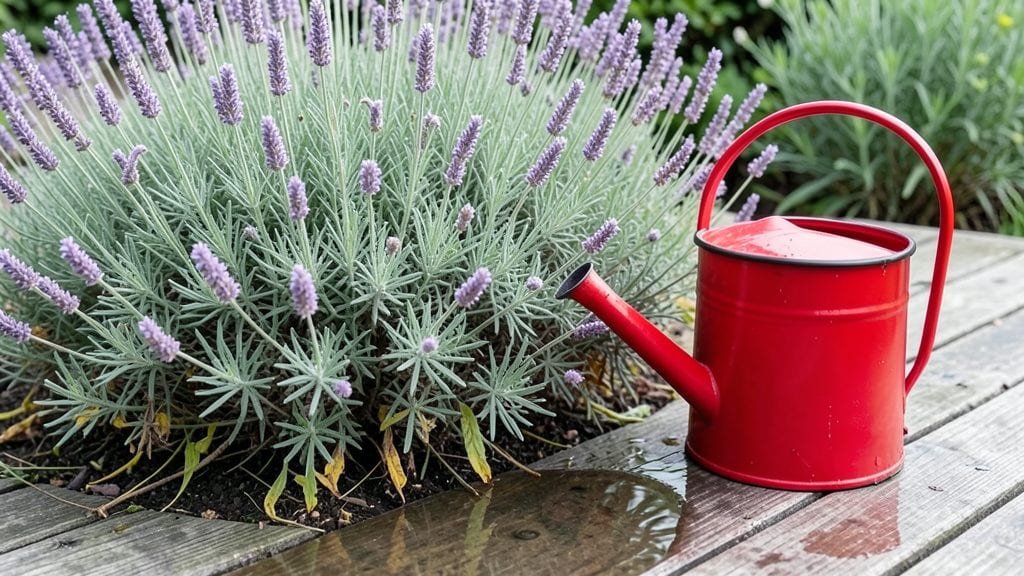
That sad, overwatered lavender plant with its drooping stems and yellowing leaves isn’t beyond saving—just a sign it’s been getting too much love (and water). 🌿 I’ve nursed back more than a few lavenders from this exact problem, and the fix is simpler than you’d think.
The key is stopping the watering, improving drainage, and giving those roots a chance to breathe again.
Lavender thrives on neglect, not attention—it’s the plant that tells you when it’s happy by looking almost dead. Most people overwater because they assume drought-loving plants need constant moisture, but lavender’s roots rot faster than they recover.
The good news? Once you cut back, you’ll see fresh growth within 2-3 weeks, and those signature purple spikes will be back stronger than ever.
Start by letting the soil dry out completely between waterings—stick your finger in the dirt, and if it’s damp past your first knuckle, wait. Mix in coarse sand or perlite to improve drainage, and consider repotting if the current container doesn’t have drainage holes.
A little less water and a lot more airflow are all your lavender needs to bounce back.
This works for both in-ground lavender and container-grown plants, whether you’re dealing with a single pot on your patio or a small border in your backyard. The same principles apply—just adjust the water volume to match the plant’s size. Let’s bring that lavender back to life!
Root Causes Of Overwatering
If your lavender plant is looking more like a soggy sponge than a fragrant beauty, overwatering is likely the culprit. Lavender is a drought-tolerant Mediterranean shrub, meaning it thrives in dry, well-drained conditions—not in a swampy pot.
Understanding why this happens helps you adjust your care routine before it’s too late. Let’s break down the key reasons your lavender might be getting too much love (in the form of water).
Lavender roots hate sitting in wet soil, yet many gardeners unknowingly trap them in containers without proper drainage. Here’s why this backfires:
- Compacted or heavy soil (like clay or garden soil) holds excess moisture, suffocating roots. Lavender needs fast-draining, gritty soil—think sandy loam mixed with perlite or coarse sand.
- No drainage holes in pots turn watering into a one-way trip to the root zone. Without escape routes, water pools at the bottom, leading to root rot (a fungal infection that kills roots).
- Overpotting with too much soil volume can trick you into thinking the plant needs more water. Lavender prefers root-bound conditions—a slightly snug pot encourages deeper, healthier roots.
Pro tip: 💡 Always use terracotta or fabric pots with drainage holes, and elevate containers to prevent waterlogging from saucers.
Lavender doesn’t follow your calendar—it follows weather and soil conditions. Here’s how rigid watering habits lead to overwatering:
- Ignoring soil dryness: Sticking to a "every Tuesday and Friday" routine assumes consistent moisture, but lavender needs water only when the top 1–2 inches of soil are bone-dry. Stick your finger in the soil—if it’s damp, wait.
- Overestimating evaporation: Potted lavender loses moisture faster in hot, windy, or sunny conditions, but gardeners often compensate by watering more instead of less. In reality, lavender in full sun may need less frequent but deeper watering to encourage root growth.
- Rainfall misjudgment: A heavy downpour can saturate soil for days. If you water on a schedule without checking, you’re essentially double-watering.
Pro tip: ✨ Use a moisture meter or the finger test—if the soil feels moist below the surface, skip watering.
Lavender’s native habitat is rocky, arid, and sunny—far from the humid, shady conditions many gardeners provide. These factors trick plants into thinking they’re thirsty:
- Humidity traps: High humidity (common indoors or in shaded gardens) slows evaporation, keeping soil wet longer. Lavender needs low humidity and good airflow to dry out between waterings.
- Shade confusion: Lavender in partial or full shade grows slower and holds moisture longer, mimicking "thirst" when it’s actually stressed. Move potted lavender to 6+ hours of direct sun to mimic its natural environment.
- Cold or wet winters: Overwatering in cooler months accelerates rot because roots are less active and can’t dry out. Reduce watering by 50% in fall/winter.
Pro tip: 🌡️ If your lavender is indoors, use a small fan to improve airflow and reduce humidity around the plant.
Lavender roots need oxygen, not a soggy swamp. The wrong soil mix is a silent overwatering culprit:
- Too much organic matter (like compost or peat) retains moisture and feeds fungal growth. Lavender soil should be mineral-rich and fast-draining—think 60% sandy soil, 30% perlite/pumice, 10% compost.
- Clay or loam soil compacts easily, creating waterlogged pockets. Amend heavy soil with coarse sand or grit to improve drainage.
- No mulch (or too much): A thick layer of mulch can smother roots and trap moisture. Lavender needs minimal or no mulch—just a light dusting of gravel to deter weeds.
Pro tip: 🔥 For potted lavender, repot with a cactus/succulent mix amended with 20% coarse sand for optimal drainage.
Fixing Overwatered Lavender: Step-by-Step Rescue
Don’t panic—your lavender isn’t beyond saving! 🌿 Overwatering can wilt stems and invite root rot, but with the right care, your plant can bounce back to its fragrant, purple glory. Below are targeted solutions based on the root causes of overwatering, plus tips to keep your lavender thriving long-term.
First things first: halt all watering. Lavender is drought-tolerant and hates soggy soil. Let the roots recover by giving them a break from moisture. If the soil is still damp after 1–2 inches down, wait another day or two before checking again.
Poor drainage is often the culprit behind overwatering. Fix it with these quick actions:
🔧 For Potted Lavender:
- 🔥 Drain the excess: Empty any saucer or tray under the pot to prevent water from pooling.
- 🍳 Repot if needed: If the soil stays soggy, transfer your lavender to a pot with drainage holes (or add a layer of gravel at the bottom).
- 👨🍳 Swap the soil: Use a well-draining mix like:
| 50% Cactus/Succulent Soil | 30% Perlite or Pumice | 20% Coarse Sand |
|---|
Avoid garden soil—it compacts and traps moisture.
🏡 For Garden Lavender:
- ⏰ Amend the soil: Mix in gritty materials like perlite, sand, or crushed gravel to break up clay-heavy soil.
- 🔪 Prune surrounding plants: Overcrowding can trap moisture. Trim back nearby foliage to improve airflow.
Drooping stems often recover once the plant dries out, but you can speed up the process:
- 🌡️ Trim dead growth: Snip off any mushy, blackened stems (signs of rot) with clean scissors. Healthy stems should be firm and green.
- ✨ Prop up weak stems: Gently tie floppy branches to small stakes to prevent further damage while they recover.
- 💡 Boost humidity (temporarily): If your air is very dry, mist the leaves lightly—but avoid wetting the soil.
Prevention is key! Lavender thrives on neglect, not attention. Follow this watering rule:
- 📊 Water deeply but infrequently:
- Potted lavender: Water only when the top 2 inches of soil are bone-dry (usually every 1–2 weeks).
- Garden lavender: Water sparingly, even in summer. Aim for 1 inch of water every 2–3 weeks.
- 🌡️ Time it right: Water in the morning so excess moisture evaporates by evening.
- 🎯 Avoid wetting foliage: Water at the base to prevent fungal issues.
Once your plant recovers, lock in its success with these expert tricks:
- 🌡️ Full sun is non-negotiable: Lavender needs 6–8 hours of sunlight daily. Move potted plants to a sunny spot if indoors.
- 🔥 Prune in spring: Trim back 1/3 of the plant after flowering to encourage bushier growth.
- ✨ Mulch lightly: Use a thin layer of gravel (not organic mulch) to deter weeds and improve drainage.
- 💪 Fertilize sparingly: Lavender doesn’t need much—use a balanced, low-nitrogen fertilizer once in spring.
With these fixes, your lavender should perk up in 1–2 weeks. Remember: less water = happier lavender! 🌿✨
Frequently asked questions
Why does my lavender look sad after watering?
Overwatered lavender shows signs like yellowing leaves, drooping stems, or mushy stems—all signals the roots are suffocating. Lavender thrives in dry conditions, so soggy soil blocks oxygen, causing roots to rot. The plant wilts because it can't absorb nutrients properly when its roots are waterlogged.
How long does it take for lavender to recover from overwatering?
With proper care, you’ll see improvement in 1-2 weeks. Stop watering immediately and let the soil dry completely. Prune any blackened stems, improve drainage, and place in bright light. Most plants bounce back fully within 3-4 weeks if root rot hasn't set in.
Can I save lavender with black stems?
Black, mushy stems mean root rot has spread—trim these immediately with clean scissors. If more than 50% of the plant is affected, the lavender may not recover. For early-stage rot, repot in fresh, dry soil and reduce watering drastically. Healthy stems should be firm and green.
Is it better to underwater or overwater lavender?
Underwatering is far safer than overwatering! Lavender is drought-tolerant and prefers bone-dry soil between waterings. The key is checking soil moisture—if the top 1-2 inches are dry, it's time to water. Overwatering causes root rot, while underwatering just makes lavender tougher.
How do I know if my lavender pot has good drainage?
Test drainage by filling the pot with water and checking how quickly it drains. Good drainage means water flows out within 5-10 minutes. If water pools at the bottom, your pot lacks drainage holes or the soil is too dense. Use terracotta pots or add a layer of gravel at the bottom to improve drainage.