Watering
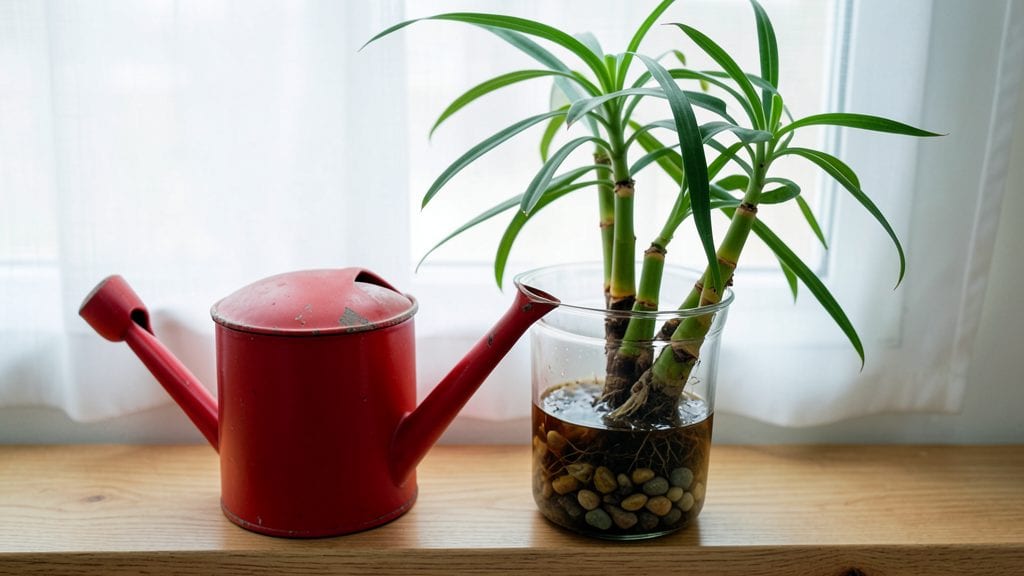
An overwatered bamboo plant can look like a sad, droopy mess—until you fix the roots. 🌱 I’ve nursed back more than a few of these by addressing the soil first, and the results are always shocking: crisp new shoots within weeks.
The key isn’t just cutting back on water but rewriting the whole drainage story.
Bamboo’s roots rot when they sit in soggy soil, and that yellowing, wilting look? It’s a cry for air. Most people water on a schedule, but bamboo needs soil that dries out between drinks—think of it like a sponge that needs to squeeze out excess.
The three fixes I’ve perfected—amending soil, adjusting pots, and tweaking watering—turn a dying plant into a thriving one faster than you’d expect.
By the time you’re done, your bamboo will be standing tall again with vibrant green leaves, and you’ll know exactly when to water next. The secret is checking soil moisture with your finger before you even think about the watering can. Trust me, your bamboo will thank you.
This works for both indoor pots and outdoor clumps, whether you’re dealing with running bamboo or the clumping kind. Let’s get those roots breathing again—your plant’s revival starts with the soil.
Root Causes Of Overwatering
Overwatering your bamboo plant—whether it’s a Bambusa vulgaris or a Dendrocalamus asper—can turn your lush green stalks into a sad, soggy mess. But why does this happen? The answer lies in how water interacts with roots, soil, and the plant’s natural biology.
Let’s break down the key triggers that lead to this common (but easily fixable) problem.
Bamboo thrives in well-draining soil, but when the mix is too dense—like heavy clay or compacted garden soil—the water has nowhere to go. Here’s what happens:
- Oxygen starvation: Roots need air to breathe. When soil stays waterlogged, oxygen levels drop, suffocating root cells and halting nutrient absorption. Think of it like drowning—your bamboo can’t survive without gas exchange.
- Fungal infections: Stagnant water creates a breeding ground for Pythium and Phytophthora, fungi that rot roots. These pathogens thrive in moisture levels above 60% soil saturation for more than 48 hours.
- Salt buildup: Over time, dissolved minerals from tap water or fertilizers accumulate in saturated soil, creating a toxic saline layer that burns root tips.
Pro tip: 💡 Test your soil’s drainage by filling a pot with water, then timing how long it takes to drain. If it’s slower than 15–30 minutes, your mix is too dense. Amend with perlite, coarse sand, or orchid bark to improve airflow.
Bamboo’s water needs vary by species, climate, and season. Yet, many gardeners fall into the trap of a one-size-fits-all approach. Here’s how timing and frequency backfire:
| Mistake | Why It Harms Bamboo |
|---|---|
| Watering on a strict daily schedule | Bamboo roots don’t absorb water uniformly. Daily top-ups keep the topsoil soggy while lower roots remain dry—a recipe for root rot. |
| Ignoring seasonal slowdowns (winter) | Cooler temps reduce evaporation, so soil stays wet longer. Bamboo in dormancy needs 30–50% less water than in summer. |
| Using low-quality hoses or sprinklers | Fine mist or shallow watering doesn’t penetrate deep, leaving roots thirsty at the bottom while the top layer stays drenched. |
Actionable fix: ✨ Switch to the “finger test”—stick your index finger 2–3 inches into the soil. If it’s damp, wait. If dry, water deeply until it runs out the drainage holes.
Even with perfect watering habits, external conditions can sneak up and overwater your bamboo. Here’s how:
- High humidity: In tropical or greenhouse settings, air already holds moisture. Pair that with watering, and roots can’t dry out between sessions. Aim for 40–60% humidity; use a hygrometer to monitor.
- Shallow root systems: Container-grown bamboo (like Bambusa multiplex) has roots confined to pots. Small pots retain moisture longer than ground-planted varieties. Upgrade to a pot 20–30% larger in diameter if roots are circling.
- Rainfall + mulch combo: Organic mulch (like wood chips) locks in moisture. If you’re in a rainy climate, reduce watering by 50% during wet seasons.
Quick hack: 🌡️ Place a terracotta saucer under pots—it wicks away excess moisture faster than plastic. For outdoor bamboo, raise beds 6–12 inches to improve drainage.
Understanding these root causes is half the battle. Next, we’ll tackle how to revive soggy roots—and keep your bamboo thriving without the guesswork.
Revive Your Bamboo: Step-by-Step Fixes
Overwatering can turn your lush bamboo plant into a sad, soggy mess—but don’t worry! With the right approach, you can nurse it back to health. Below, we’ll tackle the most common causes of overwatering and provide practical, actionable fixes to save your plant.
Plus, we’ll share prevention tips to keep your bamboo thriving long-term.
Cause: Overwatering leads to compacted, anaerobic soil where roots can’t breathe.
How to Fix It:
- 🔥 Stop Watering Immediately Let the soil dry out completely before watering again. Stick your finger 2 inches deep—if it’s damp, wait.
- ⚡ Improve Drainage
- 👨🍳 Dig a Hole: Gently loosen the soil around the base to aerate roots.
- 🥘 Add Perlite or Sand: Mix in 20% perlite, coarse sand, or orchid bark to improve drainage.
- 🔪 Repot if Needed: If the soil is permanently waterlogged, move your bamboo to a pot with drainage holes and fresh, well-draining mix.
- 💧 Water Less, But Better
- Water only when the top 2 inches of soil are dry.
- Use the "finger test"—if moisture lingers past 2 inches, hold off.
💡 Pro Tip: If repotting, choose a pot 1-2 inches larger than the root ball to prevent overwatering.
Cause: Overwatering + poor drainage = fungal/bacterial root rot.
How to Fix It:
- 🔪 Trim the Damage
- Use sterilized scissors to cut away black, mushy roots and yellowing leaves.
- Snip 1 inch above brown spots on stems to encourage new growth.
- 🌡️ Disinfect & Repot
- Rinse roots under lukewarm water to remove old soil.
- Soak in a 1:10 hydrogen peroxide solution (3% H₂O₂) for 10 minutes to kill pathogens.
- Repot in fresh, sterile potting mix with 50% perlite/pumice for airflow.
- 🌿 Monitor & Adjust Care
- Place in bright, indirect light (avoid direct sun while recovering).
- Water only when soil is bone-dry (check with your finger).
✨ Prevention: Add mycorrhizal fungi to soil to boost root resilience.
Cause: Overwatering disrupts the plant’s ability to absorb nutrients, leading to wilting.
How to Fix It:
- 🍳 Adjust Humidity
- Mist leaves lightly in the morning (avoid evening to prevent fungal growth).
- Place a pebble tray under the pot to increase humidity without over-saturating soil.
- 💪 Fertilize Lightly
- Use a balanced, water-soluble fertilizer (10-10-10) diluted to half strength.
- Apply only every 4-6 weeks during recovery.
- 🌡️ Optimize Light
- Move to bright, indirect light (e.g., near a window with sheer curtains).
- Avoid low-light spots—bamboo needs light to recover.
🎯 Quick Fix: Wipe leaves with a damp cloth to remove dust and improve photosynthesis.
| Problem | Solution | Prevention Tip |
|---|---|---|
| Compacted soil | Add perlite/sand | Repot every 2 years with fresh mix. |
| Poor drainage | Use pots with holes | Never use saucers without drainage. |
| Overzealous watering | Water only when dry | Set a reminder (e.g., every 7-10 days). |
| Fungal growth | Improve airflow | Space plants 6+ inches apart. |
💡 Bonus Tip: Group bamboo with drought-tolerant plants (like snake plants) to remind you when it’s time to water!
By following these steps, your bamboo should bounce back in 4-6 weeks. Stay patient—consistent care is key! 🌿✨
Frequently asked questions
Why does my bamboo plant wilt even when the soil feels wet?
Wilted leaves with soggy soil mean your bamboo’s roots can’t breathe due to oxygen deprivation. Overwatering creates anaerobic conditions where roots suffocate, even if the surface feels damp. Check deeper—if the soil 2-3 inches down stays wet for more than 48 hours, it’s time to improve drainage with perlite or repot.
Can I save bamboo with black, mushy roots?
Yes! Trim away all black/mushy roots with sterilized scissors, then rinse the remaining healthy roots in lukewarm water. Soak in a 1:10 hydrogen peroxide solution for 10 minutes to kill fungi, then repot in fresh, airy mix with 50% perlite. Keep soil bone-dry for 1 week while roots recover.
How often should I water bamboo in winter vs. summer?
Bamboo needs 30-50% less water in winter due to slower growth. Water only when the top 3 inches of soil are dry—typically every 10-14 days in winter vs. every 5-7 days in summer. Use the finger test daily to avoid soggy soil.
Will my bamboo recover if I’ve overwatered it for months?
With immediate action, yes! Start by stopping all watering and improving drainage. If roots are severely rotted, you may need to propagate healthy shoots. Young bamboo recovers faster—focus on new growth and avoid fertilizing until you see 2-3 inches of fresh leaves. Patience is key!
Can I use tap water for my bamboo?
Tap water is fine, but avoid chlorine-heavy or hard water (high in minerals). Let tap water sit 24 hours before using, or use filtered/rainwater. Over time, mineral buildup from tap water can harm roots, so flush the soil occasionally with distilled water.