Diseases
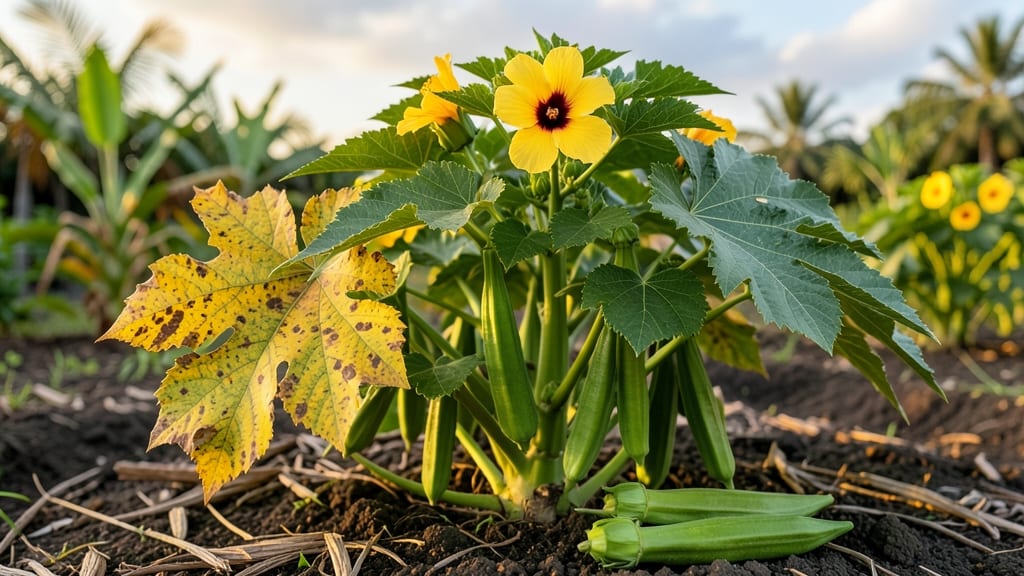
Okra plant diseases can turn your thriving crop into a sad, spotted mess if you don't catch them early. 🌱 I've seen powdery mildew turn lush green pods into ghostly white webs, and bacterial blight reduce plants to skeletal remains in weeks.
The good news? Most of these problems have simple fixes once you know what to look for.
Fungal diseases like powdery mildew and leaf spot thrive in warm, humid conditions—exactly what okra loves. Bacterial blight, on the other hand, spreads through water splashing on leaves, especially after heavy rain.
Proper spacing (18-24 inches apart) and watering at the base (not overhead) cuts down on both issues dramatically. Crop rotation with non-legumes every 3 years keeps soil-borne pathogens in check too.
You'll spot powdery mildew as white, powdery patches on leaves that wipe off with your thumb. Leaf spot shows up as brown or yellow spots with dark edges, while bacterial blight starts with water-soaked spots that turn yellow.
The key is acting fast—prune infected leaves immediately and toss them in the trash (not compost), then spray with neem oil or copper fungicide for prevention.
With the right prevention, you can grow okra that stays healthy all season. The payoff? Pods that stay crisp, flavorful, and free of those nasty diseases that ruin harvests. Let's get your plants back on track before the next heatwave hits.
Why it happens
Okra plants, like any other crop, face a variety of diseases that can stunt growth, reduce yield, or even kill the plant entirely. Understanding why these issues arise is the first step toward prevention and effective treatment.
Below, we break down the key factors that create the perfect storm for okra plant diseases—whether fungal, bacterial, or environmental.
🌱 Pathogen Overload: Fungal and Bacterial Invaders
Most okra diseases are caused by pathogens—microscopic organisms like fungi and bacteria that thrive in specific conditions. These invaders often enter through wounds, natural openings (like stomata), or even healthy tissue if conditions are ideal for their growth.
- Fungi (e.g., Fusarium, Phytophthora, Colletotrichum):
- Spread via spores in wind, water, or contaminated soil.
- Flourish in warm, humid, or waterlogged conditions—think of them as tropical vacationers that love damp environments.
- Some fungi, like Fusarium wilt, survive in soil for years, waiting for the right host (your okra plants) to strike.
- Bacteria (e.g., Xanthomonas, Pseudomonas):
- Enter through injuries (e.g., pruning cuts, insect bites) or natural openings.
- Thrive in high humidity and poor air circulation, often spreading via splashing water or contaminated tools.
- Some bacteria, like those causing bacterial blight, can overwinter in plant debris, ready to reinfect the next season.
Why it matters: If your garden has a history of okra diseases, the pathogens may already be lurking in the soil or on old plant residue. Crop rotation and sterilizing tools are your first lines of defense.
💦 Water Woes: Too Much or Too Little
Water is essential for okra, but improper irrigation is a top trigger for disease. Here’s how it backfires:
- Overwatering or poor drainage:
- Creates waterlogged soil, which suffocates roots and invites Phytophthora (a water mold) and Pythium (a root rot pathogen).
- Leaves foliar moisture for long periods, giving fungi like Alternaria (which causes leaf spot) a perfect breeding ground.
- Underwatering or irregular watering:
- Weakens plants, making them more susceptible to stress-related diseases like Fusarium wilt.
- Allows soil to dry out unevenly, creating cracks where bacteria can enter.
- Water splashing:
- Spreads bacterial and fungal spores from soil to leaves, accelerating infections like bacterial leaf spot.
Pro tip: Water at the base of the plant in the early morning to allow foliage to dry quickly. Use drip irrigation or soaker hoses to minimize leaf wetness. 🌡️
🌡️ Climate and Weather: The Perfect Storm
Okra diseases don’t strike randomly—they wait for the right weather. Here’s how temperature and humidity play a role:
| Condition | Disease Triggered | Why It Happens |
|---|---|---|
| High humidity (70%+) | Powdery mildew, downy mildew, bacterial blight | Slow-drying leaves create a moisture film that fungi and bacteria love. Spores germinate faster in these conditions. |
| Hot, dry weather | Fusarium wilt, Verticillium wilt | Stress from heat weakens plant defenses, making them vulnerable to soil-borne pathogens that thrive in dry, compacted soil. |
| Cool, wet springs | Phytophthora root rot, early blight | Slow plant growth + excess moisture = ideal conditions for root and foliar infections. |
| Sudden temperature drops | Bacterial leaf spot, Alternaria leaf spot | Shock weakens plants, making them more susceptible to secondary infections. |
Actionable tip: Monitor local weather forecasts and adjust care during high-risk periods. For example, prune for airflow before humidity spikes or mulch to regulate soil temp during heatwaves. ⏰
🌿 Poor Plant Health: Weak Defenses
Healthy okra plants resist diseases better than stressed ones. Common stressors that lower defenses include:
- Nutrient deficiencies:
- Low potassium or calcium weakens cell walls, making them easier targets for pathogens.
- Yellowing leaves (chlorosis) from nitrogen deficiency can signal poor vigor, inviting fungal infections.
- Physical damage:
- Insect bites (e.g., aphids, spider mites) create entry points for bacteria.
- Mechanical injury (e.g., from hail or rough handling) opens wounds where pathogens can colonize.
- Overcrowding:
- Reduces air circulation, trapping humidity near leaves and speeding up fungal growth.
- Competes for nutrients and water, weakening individual plants.
- Improper planting:
- Planting too deep or close to the surface can stress roots, making them prone to rot.
- Ignoring soil pH (okra prefers 6.0–6.8) can hinder nutrient uptake, leaving plants vulnerable.
Prevention tip: Start with healthy seedlings, space plants 12–18 inches apart, and rotate crops to avoid depleting soil nutrients. 🌱
🔄 Contaminated Tools and Soil
Even the most careful gardener can accidentally introduce diseases through:
Quick Fixes for Common Okra Ailments
Okra plants can fall victim to a variety of fungal, bacterial, and environmental stressors, but the good news is that most issues have practical, actionable solutions. Below, we’ve mapped out targeted fixes for each cause, paired with prevention tips to keep your okra thriving.
Whether you’re dealing with wilting leaves, powdery coatings, or stubborn spots, these steps will help you restore your plants to peak health—without overcomplicating things.
Fungi thrive in damp, warm conditions, so speed is key when treating infections like powdery mildew, leaf spot, or root rot.
🍳 Prune and Isolate Infected Plants
- ✂️ Remove infected leaves or stems (don’t compost them—toss in the trash or burn).
- 🚪 Isolate affected plants at least 10 feet away from healthy ones to prevent spores from jumping.
- 🌬️ Improve airflow by spacing plants 18–24 inches apart and pruning nearby foliage.
👨🍳 Apply Fungicidal Sprays (Organic or Chemical)
| Disease | Recommended Treatment | Frequency |
|---|---|---|
| Powdery Mildew | Neem oil spray (1 tsp neem oil + 1 tsp soap per quart of water) or baking soda mix (1 tbsp baking soda + 1 quart water + a drop of soap). | Every 7–10 days until cleared. |
| Leaf Spot | Copper fungicide (follow label rates) or milk spray (1 part milk to 9 parts water). | At first sign, then weekly. |
| Root Rot | Stop overwatering immediately—let soil dry between waterings. Repot in sterilized, well-draining soil with added perlite. | Monitor soil moisture daily. |
🌡️ Adjust Growing Conditions
- ⚡ Reduce humidity with a fan or shade cloth (especially in greenhouses).
- ☀️ Ensure 6–8 hours of sunlight daily—fungi love shady, moist spots.
- 💡 Pro Tip: Water early in the morning so foliage dries quickly.
Bacterial infections (like bacterial leaf spot or blight) spread rapidly and can’t be cured—only contained. Act fast!
🔪 Remove and Destroy Infected Parts
- 🗑️ Snip off infected leaves/stems and sterilize pruners with rubbing alcohol between cuts.
- 🚫 Avoid composting—bacteria can survive and reinfect.
🧴 Use Copper-Based Bactericides
- 💊 Spray with copper hydroxide or copper sulfate (follow label instructions).
- 🌿 Add a preventive spray (like 1 tbsp hydrogen peroxide per gallon of water) every 2 weeks.
🌧️ Prevent Future Outbreaks
- 💦 Water at the base (never overhead) to keep leaves dry.
- 🌱 Rotate crops—don’t plant okra in the same spot next year.
- 🔥 Solarize soil (cover with clear plastic for 4–6 weeks in hot weather) to kill bacteria.
Sometimes, the problem isn’t a pathogen but poor growing conditions. Yellowing, wilting, or stunted growth often point to nutrient deficiencies, over/under-watering, or soil issues.
💡 Diagnose the Issue
| Symptom | Likely Cause | Solution |
|---|---|---|
| Yellow lower leaves | Nitrogen deficiency | Add compost or blood meal to soil. |
| Wilting (even with water) | Root rot or compacted soil | Loosen soil with a fork, improve drainage. |
| Purple stems/leaves | Phosphorus deficiency | Mix in bone meal or use a balanced fertilizer. |
| Stunted growth | Poor soil or pests | Test soil pH (ideal: 6.0–6.8), add worm castings. |
🌱 Boost Soil Health
- 🔄 Mulch with straw or grass clippings (2–3 inches thick) to retain moisture and suppress weeds.
- 🌿 Add organic matter like well-aged manure or coconut coir for better structure.
- 💧 Water deeply 1–2 times per week (check soil moisture—top inch should dry out between waterings).
The best defense is a strong offense. Here’s how to prevent problems before they start:
- 🌱 Start with healthy seeds/transplants—buy from reputable nurseries or grow from sterilized seeds.
- 🧼 Sterilize tools (pruners, trowels) with rubbing alcohol or bleach solution (1 part bleach to 9 parts water).
- 🌿 Practice crop rotation—don’t plant okra in the same spot for at least 3 years.
- 🚫 Remove weeds and debris regularly to eliminate hiding spots for pathogens.
- 🌡️ Monitor humidity—use a hygrometer to keep levels below 70%.
- 💡 Pro Tip: Interplant okra with marigolds or basil—these act as natural pest/disease repellents!
By tackling issues early and methodically, your okra plants will bounce back stronger. Stay vigilant, adjust conditions, and treat aggressively—your harvest will thank you! 🌱💪
Frequently asked questions about okra plant diseases
What are the most common signs of fungal infections in okra plants?
Look for white powdery patches on leaves (powdery mildew), brown/yellow spots with dark edges (leaf spot), or yellowing lower leaves with wilting (root rot). Fungal spores thrive in warm, humid conditions, so check undersides of leaves where moisture lingers. Act fast by pruning infected areas and improving airflow.
Can I save my okra plants if they have bacterial blight?
Unfortunately, bacterial infections like blight can't be cured—only contained. Remove infected leaves immediately (don't compost them) and sterilize tools with rubbing alcohol. Apply copper-based bactericides every 2 weeks, but expect some yield loss. Prevention is key: water at the base and rotate crops annually.
Why does my okra keep getting powdery mildew even after treatment?
Powdery mildew often returns if humidity stays high (>70%) or airflow is poor. Try these fixes: space plants 18-24 inches apart, water only in the morning, and use a fan for circulation. For stubborn cases, mix 1 tbsp baking soda + 1 quart water + soap and spray every 7 days.
Is it safe to eat okra pods from diseased plants?
Only if the disease is purely cosmetic (like minor leaf spots) and hasn't affected the pods. Avoid eating pods from plants with bacterial infections or root rot, as pathogens may contaminate the edible parts. When in doubt, harvest from healthy plants and discard infected ones completely.
How can I prevent okra diseases before they start?
Start with disease-resistant varieties, sterilize tools between plants, and practice 3-year crop rotation. Space plants properly, water at the base, and mulch to reduce soil splashing. Interplant with marigolds or basil to deter pests. Healthy soil (pH 6.0-6.8) and proper spacing cut infection risks by 70%.