How To
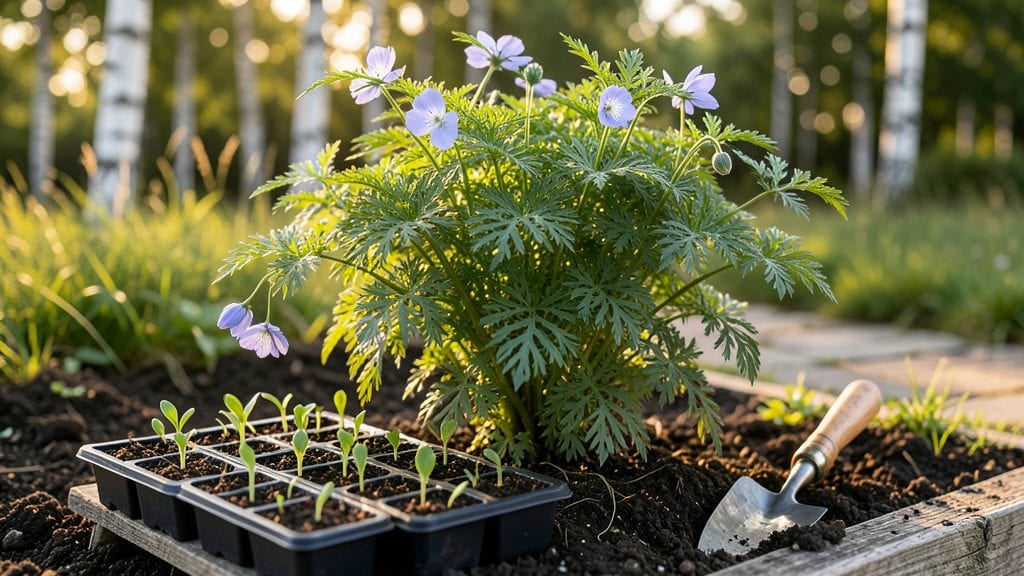
Planting Nigella sativa 🌱 in well-timed spring or fall windows unlocks its self-seeding magic, turning your garden into a fragrant, edible oasis.
Want to grow Nigella sativa—the delicate, self-seeding flower with edible seeds and medicinal benefits—but struggling with slow germination or weak seedlings? The secret lies in mastering the perfect timing and soil conditions, which can transform your success rate from hit-or-miss to effortless.
In Zone 6, your best bets are late March through April for spring planting or September to October for fall—both times when soil stays cool and moisture levels are just right.
Too hot or too cold, and you’ll end up with seeds that refuse to sprout or seedlings that bolt before they even get started.
Below, I’ll walk you through the exact soil prep, planting depth, and watering schedule that turns 50% germination rates into a lush, self-sustaining patch of Black Cumin—plus the one mistake even experienced gardeners make that kills seedlings before they begin.
Best months to plant Nigella sativa for maximum germination success
Timing is everything when planting Nigella sativa, especially since its seeds need consistent soil temperatures between 60°F and 75°F to germinate reliably. Plant too early, and you risk cold soil stress or bolting before seeds mature.
Too late, and your plants may struggle in summer heat without proper care. The key is aligning your planting schedule with your USDA hardiness zone and local climate patterns.
For most gardeners in USDA Zones 5-8, the ideal planting windows are early spring (March-April) and early fall (September-October). These periods offer moderate soil temperatures and reduced competition from weeds.
However, gardeners in warmer climates (Zones 9-10) should focus on fall planting to avoid summer bolting and prioritize shade cloth during peak heat.
Here’s how to adapt your planting schedule based on your climate zone:
If you’re in a transition zone (e.g., Zone 7b), consider staggered planting—sow a small batch in late winter under row covers and another in early fall.
This extends your growing season and ensures continuous blooms. For container growers, start seeds indoors 4-6 weeks before your last frost date to give seedlings a head start.
In warm climates, where soil temperatures can exceed 80°F in summer, avoid planting until late summer (August-September). Use shade cloth (30-50%) to protect seedlings from intense sunlight and heat stress.
I’ve found that drip irrigation in the afternoon helps maintain consistent moisture without wetting the foliage, which can lead to fungal issues.
For early spring planting, test your soil temperature with a soil thermometer—aim for at least 60°F before sowing. If temperatures are below 55°F, delay planting or use black plastic mulch to warm the soil faster.
In my Zone 6 garden, I’ve had the most success planting Nigella sativa in late April when the soil reaches 65°F consistently.
One common mistake is planting too deeply—Nigella sativa seeds need light to germinate, so scatter them on the soil surface or press them in just 1/4 inch deep.
If you’re planting in fall, choose a spot with partial shade to prevent early bolting from winter chill. Always water lightly after sowing to settle seeds without displacing them.
Adjust your planting schedule if you notice seedlings bolting prematurely—this often happens when days are too long or soil is too warm. In Zone 9, I’ve had to move my fall planting to October instead of September to avoid this issue.
Pay attention to your plants’ cues: healthy seedlings should have blue-green leaves and slow, steady growth.
For container gardening, use well-draining pots and plant in late spring (May-June) to avoid root rot from overwatering. Place containers in a sunny spot and keep soil consistently moist but not soggy.
I’ve grown Nigella sativa successfully in 5-gallon pots on a balcony in Zone 7, and the plants even self-seeded for the next year!
Finally, remember that Nigella sativa is a
Soil secrets: the exact conditions Nigella sativa needs to germinate fast
Nigella sativa thrives when you mimic its native Mediterranean soil conditions—light, airy, and nutrient-rich without being heavy. The key to fast germination lies in balancing pH, drainage, and organic matter ratios. Skip the dense, waterlogged soil, and you’ll see those delicate sprouts emerge in just 7-14 days instead of weeks. Even a slight misstep in soil prep can leave your seeds sitting idle or rotting.
Start by testing your soil’s pH level—Nigella sativa demands a range of 5.5 to 7.0. Too acidic (<5.5) or alkaline (>7.0) will stunt germination. If your soil falls outside this range, amend it with lime (to raise pH) or sulfur (to lower pH).
For example, if your soil tests at 6.0, no adjustments are needed. But if it’s 4.5, add 1 lb of lime per 100 sq ft and retest in 2-3 weeks.
Soil Factor
Ideal Specification
Amendment Tips
pH Level
5.5–7.0
Test with kit; adjust with lime (raise) or sulfur (lower)
Drainage
Fast-draining (no standing water)
Add perlite or coarse sand to heavy clay; use raised beds for poor soil
Organic Matter
20–30% (compost/peat)
Mix 2–3 inches of compost into top 6 inches of soil
Texture
Loamy (not sandy or compacted)
For sandy soil: Add 50% compost; for clay: Add 30% perlite
Container Mix
50% potting soil, 30% perlite, 20% compost
Ensure pots have drainage holes; avoid garden soil
For container planting, blend 50% potting mix, 30% perlite, and 20% compost to create the perfect lightweight medium. Nigella sativa’s roots are shallow, so a 6-inch-deep pot suffices for seedlings.
If you’re planting in-ground, loosen the top 12 inches of soil and work in 2–3 inches of compost. This mimics the airy, fertile conditions of its native habitat and prevents seed rot.
Heavy clay soil? Break up compaction by tilling in 30% perlite or coarse sand to improve aeration. Sandy soil? Boost water retention by adding 50% compost or coconut coir.
Pro tip: Mix in a handful of worm castings for a gentle nutrient boost—these tiny powerhouses enhance microbial activity, which speeds up germination. Avoid fresh manure; it can burn delicate seeds.
Troubleshooting slow germination? Check for these red flags: waterlogged soil (seeds rot), compacted soil (seeds can’t push through), or low organic matter (seeds starve). If your soil drains too slowly, create a raised bed with a mix of 60% topsoil, 30% perlite, and 10% compost.
This ensures excess water drains away while retaining enough moisture for those tiny seeds.
Once your soil is prepped, scatter seeds lightly on the surface—Nigella sativa needs light to germinate, so don’t bury them. Press them into the soil just enough to ensure contact, then water gently with a spray bottle.
Keep the soil consistently moist (not soggy) until sprouts appear. Within 7–14 days, you’ll see those first lacy green leaves breaking through—proof your soil conditions are perfect.