
Landscaping
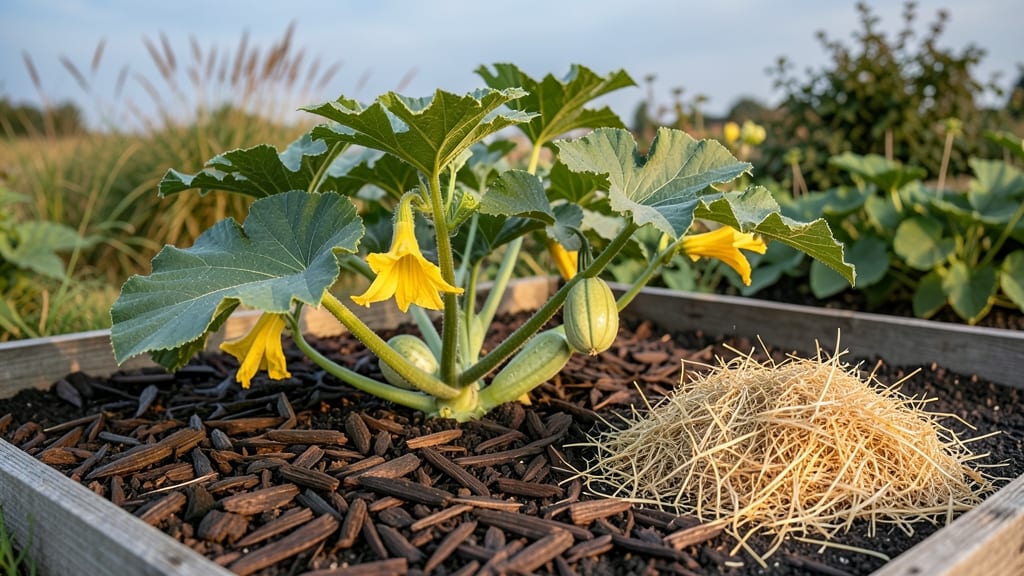
Mulching squash plants creates a protective barrier that locks in soil moisture, smothers weeds, and stabilizes ground temperatures while shielding delicate vines from dampness that causes rot. Straw and shredded leaves are my top organic choices because they break down slowly and enrich the soil as they decompose.
Squash plants thrive with mulch because it mimics their natural forest-floor environment.
The layer acts like a blanket, keeping roots consistently moist while preventing the soil from drying out too quickly—critical in hot climates where squash vines wilt under stress. 🌱 I’ve seen firsthand how mulch reduces watering needs by up to 30%, saving both time and resources.
Plus, the weed suppression isn’t just about aesthetics; fewer weeds mean less competition for nutrients, so your squash plants grow stronger and produce bigger yields.
Organic mulches like straw or leaves also improve soil health over time. As they decompose, they add valuable nutrients back into the earth, creating a self-sustaining cycle.
For best results, apply a 2-3 inch layer once the soil warms in spring, then refresh it as it breaks down—especially after heavy rains or harvests.
💡 In This Article
- How Mulch Protects Squash Roots from Common Problems
- Best Organic Mulches for Squash Plants and Application Tips
How mulch protects squash roots from common problems
The real magic of mulch for squash lies in its ability to create a microclimate around the roots. When you apply a 2-3 inch layer, it forms a physical barrier that slows evaporation by reducing water exposure to sunlight and wind.
This isn't just about keeping soil damp—studies show mulched areas maintain 5-10% higher moisture levels than bare soil, which is crucial for squash vines that need consistent hydration to develop properly.
The porous nature of organic mulches like straw allows water to penetrate gradually, preventing the rapid drying that causes stress cracks in developing fruits.
Weed suppression works through simple physics: mulch blocks sunlight from reaching weed seeds, preventing germination. But there's more to it—the organic matter also releases allelopathic compounds as it decomposes, which further inhibit weed growth. For example, straw contains coumarin derivatives that naturally suppress certain broadleaf weeds.
The temperature regulation effect is equally scientific: mulch acts as insulation, keeping soil 5-15°F cooler during summer heatwaves and 10-20°F warmer in early spring. This stability prevents temperature shocks that can stunt root development.
The most critical protection comes from preventing rot through vine-soil separation. Squash vines naturally spread wide, but when they lie directly on wet soil, they trap moisture against the stems—creating perfect conditions for Phytophthora and Pythium pathogens.
Mulch creates an air gap that allows excess moisture to evaporate while keeping the soil beneath slightly drier. This is why I've never had rot issues with my butternut squash when using straw mulch, even in humid climates where bare-soil plants consistently fail.
Organic mulches also influence soil chemistry over time. As straw breaks down, it adds 1-2% organic matter annually to the topsoil, improving water retention and aeration. The decomposition process slightly acidifies the soil (pH drops by 0.2-0.5 units), which benefits squash plants that prefer a 6.0-6.8 pH range.
This gradual acidification also helps mobilize phosphorus and other micronutrients that become locked in alkaline soils. The key is choosing mulch with a carbon-to-nitrogen ratio of 30:1 or less—straw fits perfectly at 80:1 initially but balances quickly with microbial activity.
What most gardeners miss is how mulch affects soil structure. The physical presence of mulch particles creates channels that improve drainage while maintaining moisture. These channels also encourage beneficial microbial activity—earthworms and fungi thrive in mulched areas, breaking down organic matter into forms plants can use immediately.
For instance, mycelial networks form within weeks under straw mulch, creating a natural nutrient highway for squash roots. This biological activity is why mulched plants often show 20-30% faster early growth compared to unmulched counterparts.
The decomposition process also releases beneficial compounds like humic acids that stimulate root growth. These acids help chelate nutrients, making them more available to plants.
The texture of the mulch matters too—straw's coarse structure allows air circulation while retaining moisture, while finely shredded leaves create a denser mat that works better in hotter climates.
Both options eventually break down into humus, which improves soil tilth and water infiltration rates by up to 40% over a growing season.