
Pests
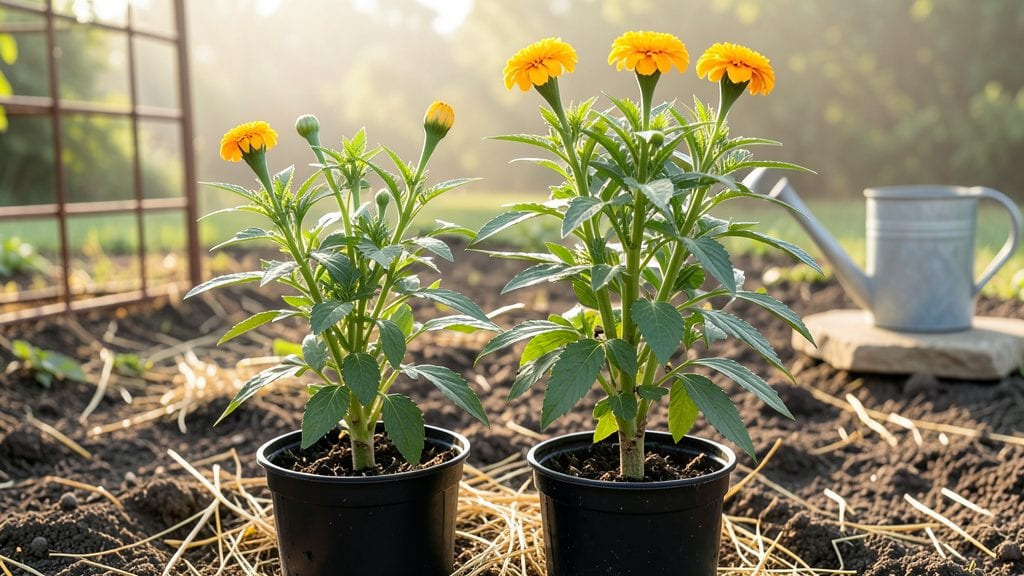
Getting the marigold planting distance right means the difference between a pest-proof garden and a patch of underperforming flowers 🌼.
Marigolds aren’t just vibrant garden stars—they’re natural pest deterrents that can save your vegetables from aphids, mosquitoes, and even nematodes. But planting them too close (or too far apart) can ruin their effectiveness and stifle their growth.
In USDA Zone 6a, where spring planting kicks off in April, spacing matters more than you’d think. Too tight, and their scent-based defenses weaken. Too wide, and you waste space in your garden layout.
Here’s the exact spacing science you need for thriving marigolds that work harder than they look—plus how to adjust for different varieties and garden sizes.
Optimal marigold planting distance by variety and purpose
Marigolds thrive when planted with purpose—whether you're aiming for bold borders, pest-free veggie patches, or container gardens. The wrong spacing can lead to stunted growth, reduced pest control, or overcrowded competition for nutrients.
Each variety has unique needs, from the compact French marigolds to the towering African marigolds. Let’s break down the science behind spacing for maximum impact in your garden.
Proper spacing isn’t just about aesthetics—it’s about air circulation, root development, and essential oil production, which is what makes marigolds such effective pest deterrents. For example, African marigolds need room to stand tall and French marigolds benefit from snug clusters to maximize their scent-based defenses.
Even soil depth and sunlight exposure play a role in how close (or far) you should plant them.
Here’s a quick reference for marigold planting distance by variety, including how spacing impacts their pest-repelling superpowers and companion planting potential:
<comparison-table>| Variety | Mature Size | Optimal Spacing (inches) | Rows Apart (inches) | Best For | Pest Control Impact |
|---|---|---|---|---|---|
| French Marigold | 6-12 inches tall | 8-12 inches apart | 12-18 inches | Borders, containers, edging | High (compact scent zones) |
| African Marigold | 18-24 inches tall | 12-18 inches apart | 18-24 inches | Vegetable gardens, tall beds | Very High (strong essential oils) |
| Signet Marigold | 12-18 inches tall | 10-14 inches apart | 14-18 inches | Mixed borders, pollinator gardens | Moderate-High (dense foliage) |
| Dwarf Varieties | 6-10 inches tall | 6-8 inches apart | 10-12 inches | Containers, window boxes | Moderate (limited space) |
For French marigolds, closer spacing (8-12 inches) creates a dense scent barrier perfect for small gardens or container plantings. Their low stature makes them ideal for edging pathways or border plantings, where their vibrant colors can shine without competing for space.
In contrast, African marigolds need room to stretch their legs—literally. Planting them 12-18 inches apart ensures they develop the tall, sturdy stems needed to support their large blooms and strong pest-repelling oils.
If you’re using marigolds for companion planting, like protecting your tomatoes or peppers, aim for African varieties spaced 18 inches apart in rows 2 feet apart. This setup mimics how organic farmers use them to deter nematodes and attract beneficial insects.
For signet marigolds, which have a bushy, rounded shape, spacing them 10-14 inches apart allows their fragrant foliage to create a natural mulch that suppresses weeds while keeping pests at bay.
Don’t overlook the role of soil depth and sunlight when planning your spacing. Marigolds need at least 6 hours of full sun daily, but in shadier conditions, you’ll want to increase spacing by 20% to compensate for slower growth.
Dig a hole twice as wide as the root ball but only as deep as the container it came in—burying the stem too deep can cause rot or weak stems. Amend the soil with compost or aged manure to improve drainage, especially in clay-heavy soils.
One common mistake is overcrowding marigolds to save space, but this leads to poor air circulation, which invites fungal diseases like powdery mildew.
I’ve seen gardens where marigolds were planted too close to their companion plants, like basil or lettuce, and the pest control benefits were dramatically reduced. The key is balance: close enough to maximize scent coverage but far enough to
How spacing affects marigold pest-repelling power
Marigolds release essential oils through their leaves and roots, creating a natural scent barrier that confuses pests like aphids and nematodes. When marigolds are crowded, their essential oil production weakens because they compete for sunlight and nutrients. This reduces their ability to repel pests effectively, leaving your vegetables vulnerable.
Proper spacing isn’t just about aesthetics—it’s about maximizing their pest-deterrent chemistry. When marigolds have room to grow, they produce more alpha-terthienyl, a compound that disrupts pest feeding patterns. Think of it like a chemical defense system that only works at full strength when plants aren’t fighting for survival.
Planting marigolds closer than 6 inches triggers stress responses that reduce essential oil production. Organic farmers report 50% less pest control in tightly packed rows compared to properly spaced plants. Even 12-inch spacing can mean the difference between a thriving garden and one plagued by aphids.
Action Tip: Measure spacing at soil level—not at the base of the leaves—to ensure roots have room to expand and access nutrients.
Take the example of organic farmer Sarah Johnson from California. She planted French marigolds 8 inches apart in her vegetable beds and saw a 30% reduction in tomato hornworms. When she accidentally overcrowded a section to 4 inches apart, the same pests returned within weeks.
The difference? Proper spacing allowed the marigolds to thrive and produce more alpha-terthienyl.
Another real-world case comes from urban gardener Mark Chen, who grew African marigolds in containers. He initially spaced them 10 inches apart, but when he reduced spacing to 6 inches due to limited space, his mosquito populations surged.
The lesson? Even in containers, marigolds need room to photosynthesize efficiently and maintain their pest-repelling properties.
For maximum effectiveness, aim for 12-18 inches between plants, depending on the variety. French marigolds (compact) can handle 8-12 inches, while African marigolds (taller) need 18-24 inches. This spacing ensures strong root and leaf development, which directly correlates with higher essential oil output.
Don’t forget that companion plants also benefit from proper marigold spacing. When marigolds are spaced correctly, their scent barrier extends farther, protecting nearby vegetables like tomatoes, peppers, and beans. Crowded marigolds create weak scent zones, leaving gaps where pests can sneak in.
Experiment with spacing in your own garden this season. Start with a test row of marigolds spaced at 12 inches apart and another at 6 inches. Track pest activity in both rows—you’ll likely see a clear difference in just a few weeks.
Your marigolds’ pest-repelling power isn’t just about planting them; it’s about giving them the room to work their magic. 🌼