Diseases
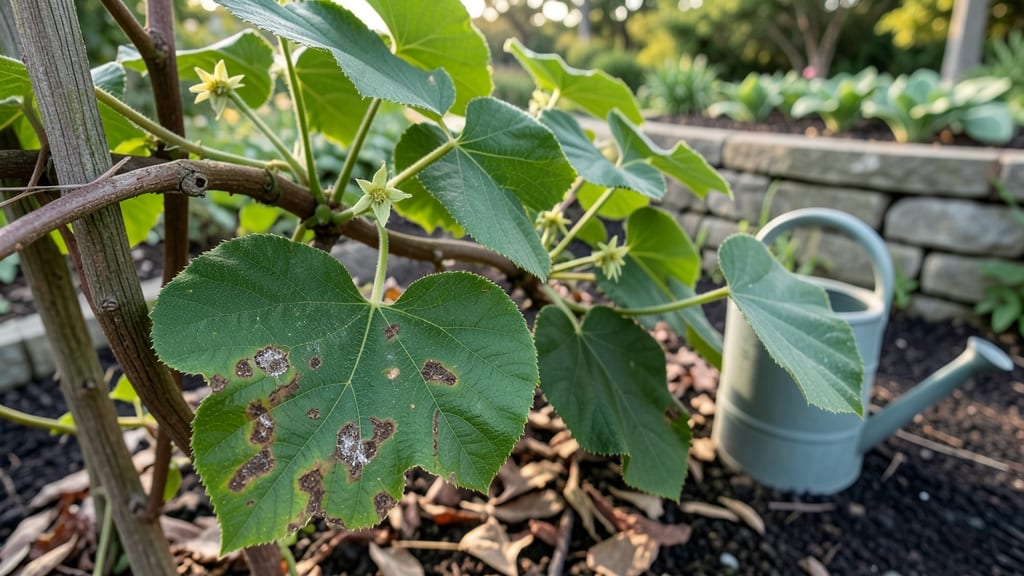
The plant diseases plaguing my kiwi vines looked like a fungal freight train—yellowing leaves, oozing cankers, and vines that just gave up. 🌿 The problem? I ignored those early warning signs until the damage was done.
Bacterial canker and vine decline don’t announce themselves with a knock; they sneak in through cuts or wet foliage, then turn your prize plants into sad, struggling shadows.
Here’s the good news: you can stop the spread with sharp tools, copper sprays, and a few smart habits. Prune out infected wood immediately—don’t wait for “maybe it’ll get better”—and sanitize your pruners between cuts.
The soil matters too; kiwis hate soggy roots, so improve drainage or raise beds if your yard holds water like a sponge. I’ve saved multiple vines this way, and the key is acting fast before the disease does.
📚 In This Guide
- What you need
- Instructions
- Tips and common mistakes
- Wrapping up and next steps
What you need
- ● Pruning shears or sharp bypass pruners – 1 pair (sterilized with rubbing alcohol or bleach solution)
- ● Gloves (nitrile or rubber) – 1 pair (to protect from bacteria and sharp tools)
- ● Fungicide (copper-based or sulfur-based) – 1 bottle (16–32 oz) (e.g., Copper Fungicide or Neem Oil)
- ● Bacterial spray (e.g., Copper Hydroxide or Streptomycin) – 1 bottle (16 oz) (for bacterial infections like Pseudomonas)
- ● Hose with adjustable nozzle – 1 (for thorough spraying)
- ● Spray bottle (16–32 oz) – 1–2 (for targeted treatments)
- ● pH testing kit – 1 (to check soil pH, ideal range: 5.5–6.5 for kiwi plants)
- ● Disinfectant (rubbing alcohol or bleach solution) – Small bottle (for sterilizing tools)
- ● Plastic bags or paper towels – 1 roll (for collecting infected leaves or debris)
- ● Notebook and pen – 1 (to track symptoms and treatments)
- ● Handheld magnifying glass – 1 (for closer inspection of symptoms)
- ● Digital thermometer/hygrometer – 1 (to monitor humidity and temperature)
- ● Garden twine or stakes – 5–10 ft (to support vines during recovery)
- ● Compost or organic mulch – 5–10 gallons (to improve soil health post-treatment)
- ● Labeling tags – Pack of 10–20 (to mark treated plants)
How to diagnose and treat kiwi plant diseases
Kiwi vines face a few stubborn fungal and bacterial foes—here's how to spot them early and stop the spread.
🌿 Step 1: Inspect Leaves for Early Signs of Disease
Start by examining the undersides of leaves first—this is where fungal spores often hide. Look for yellowing patches that grow darker over days, or small black spots with white centers (a classic sign of anthracnose). Bacterial infections might show as water-soaked areas that turn brown and crispy.
Run your fingers gently over the leaf surfaces. Healthy kiwi leaves feel smooth, while infected ones may have a velvety texture from fungal growth. Check the youngest leaves first—they're often the first to show symptoms. If you see spiderweb-like mold on the undersides, that's powdery mildew, which spreads fastest in humid conditions.
💧 Step 2: Check Stem and Branch Health
Examine stems for cankers—sunken, discolored areas that ooze sap or have cracked bark. These are common with bacterial canker, which weakens the vine over time. Scrape away a small section of bark gently with your fingernail to check for dark streaks inside the wood, a sure sign of infection.
Look for dieback—branches that suddenly stop growing and turn brown. This often means the disease has cut off nutrient flow. Prune any affected branches 6 inches below the damage using sterilized pruners (wipe blades with rubbing alcohol between cuts). Don't leave stubs—they'll just reinfect the plant.
☀️ Step 3: Test Soil and Airflow Conditions
Kiwi vines thrive in well-draining soil with pH 6.0-7.0. Dig a small hole near the base of the plant and feel the moisture level—if it's soggy, that's your first clue for root rot. Healthy soil should feel damp but not wet. Overwatering creates the perfect breeding ground for fungal spores.
Check the airflow around your vine. Kiwi plants need good circulation to dry quickly after rain. If branches are crowded or the vine grows too close to a fence, prune to open it up. I like to space vines 10-12 feet apart for optimal airflow. Install a small fan on low setting near the plant if your climate stays humid—this mimics natural wind movement.
✂️ Step 4: Apply Targeted Treatments Based on Diagnosis
For fungal diseases like anthracnose or powdery mildew, spray the vine thoroughly with a copper fungicide (follow label rates) every 7-10 days until new growth appears. I always apply treatments in the early morning so the solution has time to dry before evening humidity sets in. Remove and destroy all infected leaves—don't compost them.
Bacterial issues require a different approach. Prune out infected branches immediately, then paint the cuts with pruning sealant. For bacterial canker, I've had success with a 1:10 dilution of bleach solution (1 part bleach to 10 parts water) applied directly to cankers. Always wear gloves—bleach can irritate skin. After treatment, space out future waterings to keep foliage dry.
🌱 Step 5: Prevent Recurrence Through Seasonal Care
Start prevention in early spring by applying 2-3 inches of organic mulch around the base of the vine. This keeps soil temperatures stable and reduces splash-up from irrigation. I use straw mulch because it breaks down slowly and improves soil structure over time.
Monitor your vine weekly during growing season. Healthy kiwi leaves should be deep green and glossy on top with no spots. If you notice new symptoms, act immediately—kiwi vines recover better from early intervention. In fall, clean up all leaf litter and debris from under the plant. This removes overwintering spores that would reinfect next season.
Tips & tricks for diagnosing and treating kiwi plant diseases
Saving your kiwi vine doesn't have to be a guessing game—these practical tips will help you catch problems early and treat them effectively.
Leaf Inspection Technique: In Step 1, when checking for fungal spores, use a magnifying glass if possible—it helps you spot those tiny black spots with white centers (anthracnose) that can be easy to miss with the naked eye. I've caught infections early by focusing on the youngest leaves first, since they often show symptoms before older leaves. The velvety texture clue is especially important—it's your first sign that fungal growth has started.
Pruning Best Practices: When pruning infected branches in Step 2, always sterilize your pruners between cuts using rubbing alcohol. I keep a small bottle handy and wipe blades thoroughly—this prevents cross-contamination between healthy and infected parts. Remember the 6-inch rule: cutting too close leaves stubs that can reinfect the plant. For stubborn cankers, I've found that making clean cuts with sharp tools reduces stress on the vine.
Soil Testing Shortcut: If you're unsure about your soil pH in Step 3, grab a simple soil test kit from your garden center—most cost under $10. The ideal 6.0-7.0 range is crucial because kiwi vines can't absorb nutrients properly outside this range. I've seen root rot problems disappear completely after adjusting pH and improving drainage with compost. For soggy soil, consider adding coarse sand or perlite to improve drainage.
Treatment Timing Strategy: For the 7-10 day fungicide schedule in Step 4, I set calendar reminders on my phone—it's easy to forget when you're busy. Early morning application is key because it gives the solution time to dry before evening humidity sets in. When dealing with bacterial canker, I've had the most success with the bleach solution when applied immediately after pruning. Just remember: always wear gloves when handling bleach, and never apply it when rain is forecasted.
Pro Tips for Kiwi Plant Diseases
- Saving your kiwi vine doesn't have to be a guessing game—these practical tips will help you catch problems early and treat them effectively.
- I've caught infections early by focusing on the youngest leaves first, since they often show symptoms before older leaves.
- Pruning Best Practices: When pruning infected branches in Step 2, always sterilize your pruners between cuts using rubbing alcohol.
Frequently asked questions
Got questions about kiwi plant diseases?
You’re not alone—growers often worry about spotting issues early or choosing the right treatments. Here are answers to the most common concerns to help your kiwi vines stay healthy and productive.
What are the most common signs of kiwi plant diseases?
Look for yellowing leaves (often a sign of bacterial canker or nutrient deficiency), black spots or mold (fungal infections like anthracnose), and cracked or oozing bark (bacterial canker). Wilting or dieback in branches can also indicate stress from disease. Act fast—early detection makes treatment easier!
When is the best time to treat kiwi diseases?
Treat before symptoms appear if your region has a history of fungal/bacterial outbreaks (spring and early summer are high-risk). For active infections, apply fungicides or bactericides at the first sign of trouble—don’t wait! Prune infected branches during dry weather to prevent spread. Consistency is key!
Are there natural remedies for kiwi plant diseases?
Yes! Try a baking soda spray (1 tbsp baking soda + 1 quart water + a drop of dish soap) for fungal issues like powdery mildew. For bacterial canker, copper-based sprays (like Bordeaux mixture) work well. Neem oil can also help prevent fungal growth. Always test on a small area first!
How do I prevent kiwi diseases from spreading to other plants?
Start with sterilized tools (clean pruners with rubbing alcohol between cuts). Remove and dispose of infected plant debris (don’t compost it!). Avoid overhead watering—water at the base to keep foliage dry. Quarantine new plants for a few weeks to spot issues early.
Can a kiwi plant recover from disease once it’s infected?
It depends! Mild fungal infections (like powdery mildew) may be treatable with proper care, but severe bacterial canker can kill vines if left untreated. Prune infected areas aggressively and treat with fungicides/bactericides. For advanced cases, consider replacing the plant to save your garden from further spread.
Wrapping up and next steps
Protecting your kiwi plants from diseases doesn’t have to be overwhelming—just stay vigilant, proactive, and patient! 🌱 With the right knowledge, early action, and a few preventive habits, you can keep your vines thriving and bountiful. Start today by inspecting your plants regularly and applying the remedies you’ve learned—your future harvest will thank you!
🚀 Your Next Step:
- Bookmark this guide for quick reference.
- Share these tips with fellow gardeners to spread the word!
- Experiment with organic solutions to keep your kiwi plants happy and healthy.