
Planting
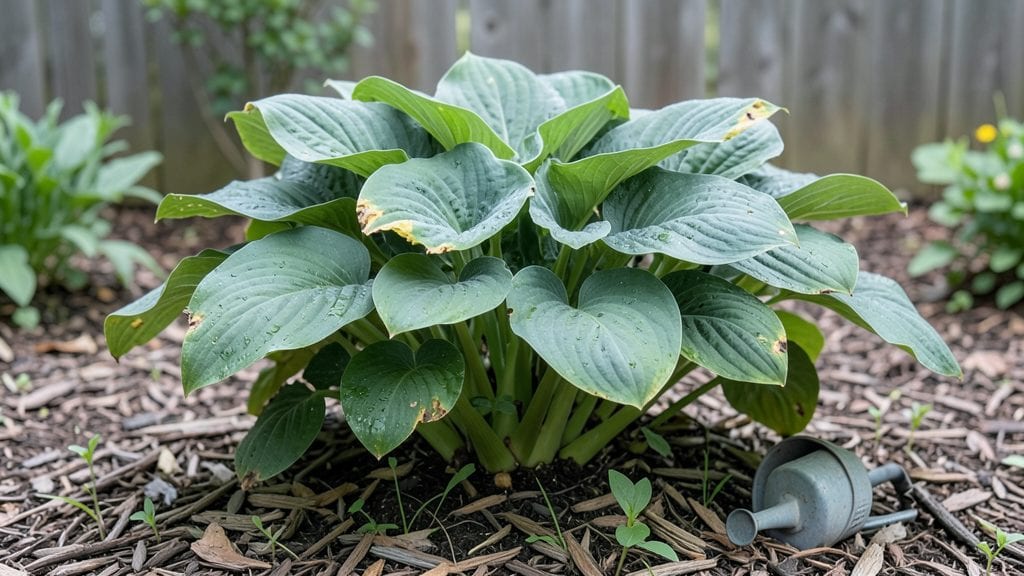
Hostas thrive when their care matches their natural habitat—moist, shaded woodland areas. 🌿 The right soil mix (think leaf mold or compost) keeps roots happy, while partial shade prevents those unsightly brown patches.
I’ve found that mulching with shredded bark not only locks in moisture but also deters weeds, giving your hostas the best fighting chance against heat stress.
Another key detail is timing: prune only after the plant’s dormant period, never during active growth. This prevents shock and encourages fresh foliage. For slug-prone areas, I swear by beer traps—just bury a shallow container filled with beer near the plants.
The slugs crawl in and drown, leaving your hostas untouched.
💡 In This Article
- Optimal Growing Conditions for Healthy Hostas
- Step-by-Step Hosta Pruning and Care Guide
Optimal growing conditions for healthy hostas
Hostas evolved in shaded forest floors where soil stays consistently moist but well-aerated. Their ideal pH range is 6.0-7.5, slightly acidic to neutral—think of the rich, decomposed leaf litter in their native habitats.
The key is a soil mix that mimics this environment: 60% organic matter (compost or aged manure) blended with 40% mineral content (sand or perlite) to prevent compaction. Too much clay? Amend with 2-3 inches of compost per year to maintain porosity.
Drainage is non-negotiable—hostas hate soggy roots, which leads to rot. Test your soil by digging a 12-inch hole: if water pools after 24 hours, add coarse sand or gravel.
In containers, use pots with drainage holes and a mix of 50% potting soil, 30% perlite, and 20% worm castings. The science here is simple: roots need oxygen, and compacted soil suffocates them, triggering fungal diseases like crown rot.
Light exposure follows a morning sun, afternoon shade rule. Direct afternoon sun (especially in summer) causes leaf scorch—those crispy brown edges—because UV rays intensify at 2-4 PM when temperatures peak. Morning sunlight provides just enough energy for photosynthesis without overheating.
In hot climates, dappled shade from trees is ideal, while cooler regions can tolerate 3-4 hours of direct sun daily. Humidity matters too: hostas thrive in 40-60% humidity, so misting leaves or using a pebble tray helps in dry indoor settings.
Seasonal adjustments are critical. In winter, mulch with 3-4 inches of shredded bark to insulate roots from freezing temperatures (below 20°F) while allowing moisture to penetrate.
Spring is the time to fertilize with a balanced 10-10-10 or slow-release organic fertilizer—hostas are heavy feeders but sensitive to salt buildup, so dilute to half-strength. Summer heat? Water deeply 1-2 inches per week, focusing on the soil (not leaves) to avoid fungal issues like powdery mildew.
Here’s what’s actually happening with humidity: hosta leaves have stomata (tiny pores) that regulate moisture and gas exchange. In dry air (30% humidity), these stomata close to prevent water loss, stunting growth.
The result? Smaller leaves and duller variegation. To fix this, group hostas together to create a microclimate or use a humidifier nearby. In containers, elevated trays with water and pebbles add 10-15% humidity locally.
Pro tip: Observe your hostas’ color. Deep green with vibrant veins? Perfect conditions. Yellowing leaves? Too much sun or poor drainage. Brown edges? Not enough water or high salt levels. Adjust gradually—hostas are forgiving but thrive when their environment mimics their woodland roots. 🌿