Diseases
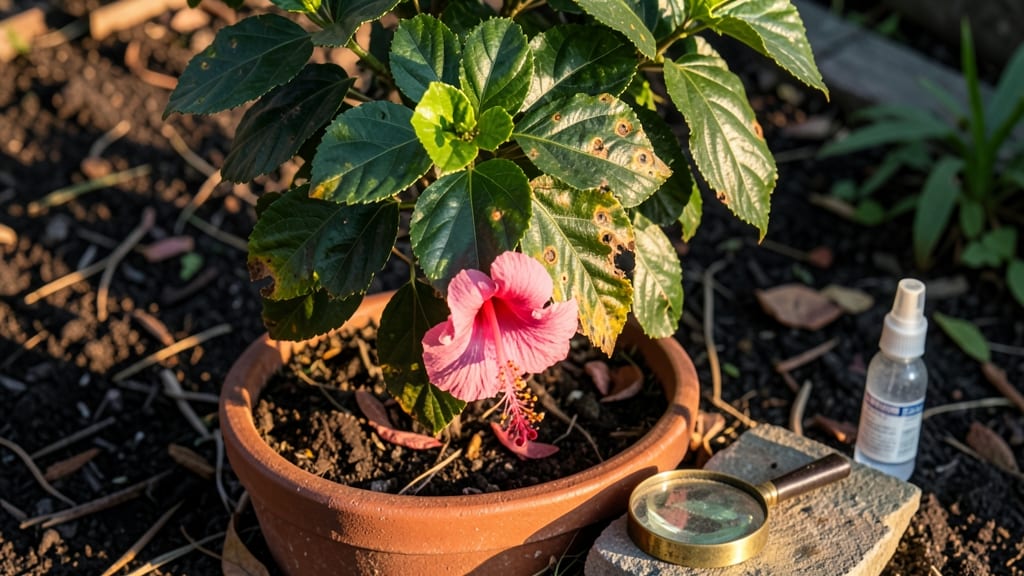
Hibiscus plant diseases can turn your lush blooms into a sad, spotted mess—here’s how to spot and stop the most common fungal and bacterial threats before they wreck your plants. 🌿 I’ve watched hibiscus go from vibrant reds to yellowing, wilted disasters in just weeks, and the fix starts with knowing the enemy.
The good news? Most issues respond to simple fixes if you catch them early.
Fungal infections like powdery mildew and leaf spot show up as white fuzz or brown spots, while bacterial problems cause dark, water-soaked patches that ooze when touched. Overwatering, poor airflow, and wet foliage create the perfect storm for these pests.
The key is acting fast—prune infected leaves, improve drainage, and treat with neem oil or copper fungicide to stop the spread.
With the right approach, you’ll save your hibiscus from decline and keep those bold blooms coming all season. We’ll cover organic sprays, pruning techniques, and when to call in reinforcements for stubborn cases. Your hibiscus deserves to thrive—let’s get it back in top shape.
This guide works for both patio hibiscus and garden varieties, whether you’re dealing with tropical humidity or dry climates. Prevention is easier than cleanup, so we’ll focus on keeping your plants happy before problems start. Ready to rescue your hibiscus?
Root Causes Of Hibiscus Trouble
Hibiscus plants, with their vibrant blooms and lush foliage, can quickly fall victim to diseases when environmental or biological conditions align. Understanding why these issues arise is the first step to prevention and treatment.
Below, we break down the key factors that create the perfect storm for hibiscus plant diseases—from fungal infections to bacterial blights.
Fungi thrive in humid, damp conditions, and hibiscus plants are particularly susceptible when their leaves, stems, or soil remain consistently wet. Here’s why:
- Poor Drainage 🌧️: Hibiscus roots need well-draining soil to prevent waterlogging.
If soil stays soggy for extended periods, fungal spores like Phytophthora or Fusarium multiply rapidly, leading to root rot or leaf spot diseases. - Overhead Watering 💦: Splashing water onto leaves (especially in the evening) creates a film that traps moisture, inviting fungal spores to germinate.
This is how diseases like anthracnose or powdery mildew take hold. - High Humidity ☁️: While hibiscus loves humidity, excessive moisture in the air (above 80%) without proper airflow encourages fungal spores to spread via wind or splashing water.
Pro Tip: 💡 Always water at the base of the plant in the morning, and ensure pots have drainage holes. Space plants to improve airflow—fungi hate competition for oxygen!
Bacteria like Xanthomonas (causing bacterial blight) or Pseudomonas (leaf spot) enter hibiscus plants through openings in the plant’s defenses. Here’s how it happens:
- Pruning Wounds ⚔️: Dirty pruning shears can transfer bacteria from infected plants to healthy ones.
Even small cuts expose the plant to invasion. - Insect Damage 🐜: Pests like aphids or thrips create tiny wounds while feeding, providing entry points for bacteria. - Contaminated Soil or Mulch 🌱: If old mulch or compost harbors bacterial pathogens, it can infect hibiscus roots or stems during planting or top-dressing.
Pro Tip: ✨ Sterilize pruning tools with rubbing alcohol (70% or higher) before and after use. Remove and destroy infected plant debris immediately to stop the spread.
A hibiscus plant under stress from poor nutrition or imbalanced soil pH is far more vulnerable to diseases. Here’s the science:
- Nitrogen Deficiency 🌿: While nitrogen fuels leafy growth, too little weakens cell walls, making plants susceptible to fungal attacks. Conversely, excess nitrogen promotes soft, lush growth that’s prone to bacterial infections. - Low Phosphorus or Potassium 💊: These nutrients strengthen cell membranes and disease resistance.
Deficiencies leave hibiscus plants struggling to fight off pathogens. - Acidic or Alkaline Soil 📉📈: Hibiscus prefers slightly acidic soil (pH 6.1–6.5). Soil pH outside this range disrupts nutrient uptake, weakening the plant’s immune response.
Pro Tip: 🌡️ Test your soil annually and amend with balanced fertilizer (10-10-10) or compost to boost defenses. Avoid over-fertilizing—hibiscus plants prefer moderation over excess.
Extreme temperatures or sudden changes can shock hibiscus plants, lowering their resistance to diseases:
- Heat Stress 🔥: Temperatures above 90°F (32°C) for prolonged periods weaken hibiscus, making them prone to sun scorch (which creates entry points for fungi). - Cold Snaps ❄️: Hibiscus is tropical—sudden drops below 50°F (10°C) can cause chilling injury, stressing the plant and inviting fungal infections like gray mold. - Poor Air Circulation 🌀: Stagnant air traps moisture and spores.
Overcrowded hibiscus or those in shaded, enclosed spaces (like greenhouses) are at higher risk.
Pro Tip: 🎯 If you live in a hot climate, provide afternoon shade during peak summer. In cooler areas, use row covers or move potted hibiscus indoors during frost warnings.
Some insects don’t just feed—they spread diseases like silent assassins:
- Aphids & Whiteflies 🐛: These sap-suckers excrete honeydew, a sticky residue that fosters sooty mold (a fungal growth) and attracts other pests.
- Japanese Beetles 🐞: Their feeding scars on leaves create wounds where bacteria can enter, leading to bacterial blight.
- Scale Insects 🛡️: Their waxy shells trap moisture against the plant, creating a fungal-friendly microclimate.
Pro Tip: 🔥 Introduce beneficial insects (like ladybugs) or use neem oil to control pests before they become disease vectors. Inspect new plants for hitchhiking insects!
Quick Fixes for Hibiscus Troubles
When your hibiscus shows signs of distress, acting fast can save its life—and your garden’s beauty. Below are practical, step-by-step solutions tailored to each common disease, plus prevention tips to keep your plants thriving. Think of this as your hibiscus first-aid kit!
Fungal diseases thrive in damp, stagnant conditions, so drainage and airflow are your first line of defense.
🍄 Powdery Mildew: The White Web
Fix it: 🔥 Prune aggressively – Remove infected leaves (sterilize shears with rubbing alcohol) to stop spores from spreading. 🍳 Spray with neem oil – Mix 1 tbsp neem oil + 1 tsp mild soap in 1 quart of water.
Spray early morning (avoid direct sun) every 7–10 days. 👨🍳 Boost airflow – Space plants 3–4 feet apart and trim nearby foliage blocking circulation. ⏰ Water at the roots – Use drip irrigation or a soaker hose to keep leaves dry.
Prevent it: ✨ Morning sun is key – Hibiscus love 6+ hours of sunlight; mildew fades in dry conditions. 🌡️ Avoid overhead watering – Wet leaves = fungal buffet. Water at soil level.
🍂 Rust: Orange Pustules on Leaves
Fix it: 🔥 Collect and destroy – Remove all infected leaves (don’t compost them—burn or trash). 🍳 Copper fungicide spray – Use a ready-made copper fungicide (like Bonide Copper Fungicide) every 2 weeks until new growth appears. 👨🍳 Sanitize tools – Disinfect pruners with 10% bleach solution (1 part bleach to 9 parts water) between cuts. ⏰ Reduce humidity – Use a fan on low setting near plants or improve drainage.
Prevent it: 💡 Mulch properly – Use gravel or pine bark (not organic mulch) to prevent soil-borne spores. 🎯 Rotate crops – If rust is recurrent, replant hibiscus in a different spot next year.
💀 Root and Stem Rot: The Silent Killer
Fix it: 🔥 Dig it up and inspect – Remove the plant and check roots. Healthy roots = firm and white; rotten roots = mushy and brown. 🍳 Trim the damage – Cut away blackened or soft roots with sterilized shears. 👨🍳 Repot in fresh soil – Use a well-draining potting mix (add perlite or sand) and a pot with drainage holes. ⏰ Adjust watering – Let soil dry 2–3 inches deep between waterings.
Use a moisture meter if needed.
Prevent it: 🌡️ Raise containers – If growing in pots, elevate them to prevent water pooling. 💡 Avoid soggy soil – Hibiscus hate "wet feet." Ensure pots drain within 30 minutes of watering.
Bacteria spread via water splashes, so cleanliness is critical.
🩸 Bacterial Leaf Spot: Black Spots with Yellow Halos
Fix it: 🔥 Remove infected leaves – Snip off spots before they spread.
Bag and discard them. 🍳 Copper-based spray – Apply copper fungicide (like Copper Soap) every 10 days for 3 weeks. 👨🍳 Disinfect everything – Sterilize tools, pots, and even gloves between plants. ⏰ Water in the morning – Wet leaves dry faster in daylight, reducing bacterial growth.
Prevent it: 🎯 Space plants widely – 4+ feet apart reduces splash spread. 💡 Use a spray nozzle – Avoid overhead watering; opt for drip or soaker hoses.
🌱 Bacterial Blight: Wilting and Black Streaks
Fix it: 🔥 Isolate the plant – Move it far from other hibiscus to prevent spread. 🍳 Prune severely – Cut back all wilted or streaked growth.
Sterilize tools between cuts. 👨🍳 Apply streptomycin – Use a 100–200 ppm streptomycin spray (follow label instructions) every 7 days. ⏰ Adjust care – Reduce nitrogen fertilizer (too much = weak, susceptible plants).
Prevent it: 🌡️ Avoid wounding – Rough handling or pruning invites bacteria. Use sharp, clean tools. 💡 Test soil pH – Keep it slightly acidic (6.0–6.5); bacteria thrive in alkaline soil.
If your plant is chronically sick, it’s time for a full recovery plan:
- 🔄 Repot in fresh soil – Dump old soil (it may harbor pathogens). Use a sterilized mix (baking soda in soil can help).
- ☀️ Boost sunlight – Hibiscus need full sun (6+ hours/day) to fight diseases naturally.
- 💧 Water wisely – Deep but infrequent watering (1–2 times per week) prevents fungal growth.
- 🌿 Fertilize smartly – Use a balanced, slow-release fertilizer (like 10-10-10) once a month in growing season.
- 🚫 Stop overhead watering – Switch to drip irrigation or a watering wand at the base.
💡 Pro Tip: Keep a plant journal! Note when diseases appear, weather patterns, and your care routine. Patterns will help you predict and prevent future outbreaks.
By following these fixes, your hibiscus can bounce back stronger—and with the right prevention, stay disease-free for years! 🌺✨
Frequently asked questions about hibiscus plant diseases
What are the most common hibiscus plant diseases I should watch for?
The top issues include powdery mildew (white fuzzy coating), rust (orange pustules), root rot (mushy brown stems), and bacterial blight (black streaks on leaves). These thrive in humid conditions or poor airflow. Early detection is key—check leaves weekly for spots or discoloration.
Can I save a hibiscus plant with fungal diseases like powdery mildew?
Yes! Start by pruning infected leaves and spraying with neem oil (1 tbsp per quart of water). Improve airflow by spacing plants 3–4 feet apart and watering at the base. Repeat treatments every 7–10 days until new growth appears. Most fungal issues respond well to these steps if caught early.
How do I tell if my hibiscus has bacterial blight vs. fungal leaf spot?
Bacterial blight shows as dark, water-soaked streaks that ooze when touched, while fungal leaf spots appear as dry, brown patches with yellow halos. Bacteria spread via water splashes, so check for overhead watering or wet foliage. Use copper fungicide for fungal spots and streptomycin spray for bacterial blight.
Why does my hibiscus keep getting root rot even with good drainage?
Root rot often stems from overwatering or poor-quality potting mix. Let soil dry 2–3 inches deep between waterings and use a mix with perlite or sand for better aeration. If repotting, sterilize the container with bleach solution (1:9 ratio) to kill lingering pathogens. Elevated pots also prevent water pooling.
Are there organic treatments for hibiscus diseases?
For fungi, try neem oil or baking soda spray (1 tsp baking soda + 1 quart water + drop of soap). Bacterial issues respond to copper fungicide (organic versions exist) or hydrogen peroxide (3%) diluted to 1:10 ratio. Always test sprays on a small leaf first. Organic methods work best when combined with improved airflow and watering habits.