Picking
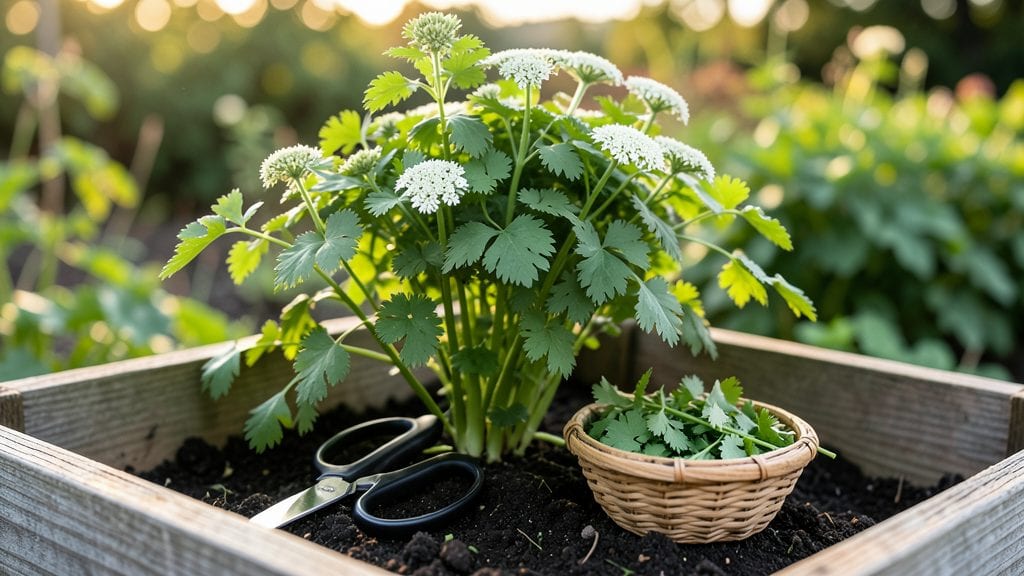
Harvesting cilantro plants at the right time keeps them sweet and productive instead of bitter and bolted. 🌿 I used to pull entire plants when they got woody, but now I snip just what I need—and the regrowth stays tender for weeks.
The secret is timing: harvest outer leaves first, before the stems get thick, and you'll avoid the herb store's sad, bitter cilantro fate.
You only need a sharp pair of scissors or clean fingers for this. Grab the plant by the outer leaves, not the center growth, and cut just above a leaf node where new leaves will sprout.
This encourages bushier regrowth instead of that sad, leggy look. Most people overlook the little side shoots—those are where future harvests come from.
What you end up with is fresh, bright green cilantro that stays sweet for 4-6 weeks of regular harvesting. Store it wrapped in a damp paper towel in the fridge, or freeze chopped leaves in ice cube trays for cooking.
The flavor stays vibrant, not that harsh aftertaste that ruins salsa.
If your cilantro bolts anyway, don't waste it—harvest the seeds for coriander spice. The plant will still produce flavorful flowers and seeds even when the leaves turn bitter. This two-for-one approach means you never throw away a cilantro plant, just harvest it differently as it matures.
📚 In This Guide
- What you need
- Instructions
- Tips and common mistakes
- Wrapping up and next steps
What you need
- ● Mature cilantro plants: 1–5 plants (depending on your needs), ideally 6–8 weeks old and 6–12 inches tall.
- ● Sharp pruning shears or kitchen scissors: Clean, sterilized, and with a 4–6 inch blade for precision cuts.
- ● Glass or stainless-steel bowl: Large enough to hold freshly cut stems (avoid plastic to prevent browning).
- ○ Cold water: A sink or basin filled with ice water for rinsing (optional but recommended).
- ● Paper towels or clean kitchen towel: For drying leaves gently.
- ● Air-tight container or reusable bag: For storage (e.g., a quart-sized mason jar or ziplock bag with holes).
- ● Food-safe sanitizer: A 1:9 vinegar-water solution to dip shears in before cutting.
- ● Salad spinner: For thorough drying if you’re prepping for long-term storage.
- ● Labeling tags: If storing multiple harvests (e.g., for freezing or drying).
- ● Gloves: Lightweight gardening gloves to protect hands from prickly stems.
- ● Small colander: For rinsing larger batches efficiently.
Step-by-step instructions for harvesting cilantro plants
Here's how to keep your cilantro fresh and flavorful—no bitter surprises or wasted leaves.
✂️ Step 1: Identify the Right Time to Harvest
Harvest cilantro when the plants reach 6-8 inches tall and have 4-6 mature leaves. You'll notice the outer leaves are fully unfurled and deep green, while the inner leaves remain tender. Cutting too early stunts growth, but waiting too long risks bolting—when the plant sends up a flower stalk and turns bitter.
Real talk: Morning harvests taste best. The leaves are crispest after a night's rest and before the midday heat saps their moisture. Snip just above a leaf pair or small stem to encourage bushier regrowth. This prevents the plant from becoming leggy and sparse.
🌿 Step 2: Use the Proper Cutting Technique
Grab a sharp pair of clean scissors or pruning shears and make your first cut 1-2 inches above the soil line. This encourages new growth from the base. Angle the cut slightly to prevent water from pooling on the stem, which can cause rot.
If you prefer harvesting individual leaves, pinch them off at the base where they meet the stem. This method works well for container-grown cilantro but may slow regrowth compared to cutting the whole stem. Always use clean tools to avoid introducing diseases like bacterial leaf spot.
💧 Step 3: Rinse and Store for Maximum Freshness
Rinse your harvested cilantro under cool running water to remove dirt and debris. Shake off excess water gently and pat dry with a clean kitchen towel or paper towels. Wet leaves wilt faster and develop mold in storage.
Store cilantro in a sealed container or plastic bag with a damp paper towel to retain moisture. Place it in the crisper drawer of your refrigerator where it stays cool and humid. This keeps cilantro fresh for 5-7 days—far longer than if left on the counter.
☀️ Step 4: Encourage Regrowth After Harvesting
After cutting, water the base of your cilantro plant deeply but gently to encourage new growth. Avoid overhead watering, which can cause fungal issues. Place the plant in a spot with partial shade for a few days to help it recover from the harvest.
You'll see new leaves emerge within 7-10 days if the plant is healthy. To prevent bolting, keep the soil consistently moist but not soggy. If your cilantro starts flowering, harvest the stems immediately and compost the plant—bolted cilantro is best used in pesto or other cooked dishes where bitterness won't ruin the flavor.
Tips & tricks for perfect cilantro harvesting
Here's what nobody tells you about keeping your cilantro plants productive and flavorful—these tricks save me from bitter surprises every season.
Timing Secret: The 6-8 inch height guideline is your best friend, but don't just measure—check the leaf development. Look for the outer leaves to be fully unfurled and deep green while the inner leaves remain tender. This tells you the plant has reached its ideal harvest window. I've learned the hard way that waiting until the plant bolts (sends up a flower stalk) turns those beautiful leaves bitter—no amount of cooking can fix that. Morning harvests are non-negotiable for me now; the leaves are at their crispest and most flavorful after the night's rest.
Cutting Technique: When you make that first cut 1-2 inches above the soil line, angle your scissors slightly to create a sloped cut. This prevents water from pooling on the stem, which can lead to rot and fungal issues. I use clean kitchen scissors dedicated just to my herbs—it's worth the small investment to avoid cross-contamination with other plants. For container-grown cilantro, I've found that cutting the whole stem at once encourages bushier regrowth than pinching individual leaves, though both methods work.
Storage Wisdom: That damp paper towel trick in the sealed container is a game-changer for extending freshness. I've tried every storage method—plastic bags, airtight containers, even wrapping in damp paper towels without sealing—and this combination keeps cilantro crisp for that full 5-7 days. Pro tip: Place a piece of bread in the container with your cilantro. The bread absorbs excess moisture and keeps the leaves from wilting too quickly. It sounds odd, but it works like magic.
Regrowth Rescue: After harvesting, don't just water normally—give that base a good, deep drink to encourage new growth. I've ruined several cilantro plants by not watering properly after harvest, so I now make it a point to water deeply and place the plant in partial shade for a few days. This gives the plant the best chance to recover and start growing those tender new leaves within that 7-10 day window. If you notice any yellowing or wilting during this time, it's a sign of stress—adjust your watering or move to a shadier spot immediately.
Pro Tips for Harvesting Cilantro Plant
- Here's what nobody tells you about keeping your cilantro plants productive and flavorful—these tricks save me from bitter surprises every season.
- Timing Secret: The 6-8 inch height guideline is your best friend, but don't just measure—check the leaf development.
- Cutting Technique: When you make that first cut 1-2 inches above the soil line, angle your scissors slightly to create a sloped cut.
Frequently asked questions
Got questions about harvesting cilantro? You’re not alone!
Here are answers to the most common concerns—from timing to troubleshooting—so you can keep your cilantro fresh, flavorful, and ready for your next dish.
When is the best time to harvest cilantro?
Harvest cilantro in the morning after the dew has dried but before the heat of the day sets in. This ensures the leaves are crisp and packed with flavor. For continuous harvests, pick outer leaves first, leaving the inner growth intact. Avoid harvesting when plants are wet (to prevent disease) or under stress (like extreme heat).
How often should I harvest cilantro to prevent bolting?
Harvest cilantro every 2–3 weeks to encourage bushier growth and delay bolting (when it flowers and turns bitter). If you see tall stems or yellow flowers, it’s too late—bolt-resistant varieties (like ‘Santo’) or cooler climates help. For a second harvest, replant seeds every 2–3 weeks for a steady supply.
Why does my cilantro taste bitter after harvesting?
Bitterness often means your cilantro is bolting (flowering) or stressed. Harvest younger leaves first, and avoid letting plants dry out or overheat. If it’s already bitter, try soaking leaves in ice water for 10 minutes before using—this can mellow the flavor. For future crops, opt for slow-bolting varieties or shade cloth in hot weather.
Can I harvest cilantro roots and use them like parsley?
Yes! Cilantro roots (called recaito or cilantro roots) are edible and add a peppery, parsley-like flavor to soups, stews, and stir-fries. Harvest by gently pulling the whole plant, then rinse and chop the roots. Store them in the fridge for up to a week or freeze for longer use. Pro tip: Use young roots—they’re milder and more tender!
What should I do if my cilantro bolts before I can harvest it?
Don’t toss it! Harvest the leaves immediately (they’re still edible, though stronger). Save seeds for next season (let some flowers go to seed, then dry and store). For future crops, try:
- Shade cloth (to block heat)
- Regular watering (keep soil moist but not soggy)
- Slow-bolting varieties (like ‘Calypso’ or ‘Slow Bolt’)
- Succession planting (sow new seeds every 3 weeks)
What’s the best way to store harvested cilantro?
Store cilantro in the crisper drawer of your fridge, wrapped in a damp paper towel inside a plastic bag (with a few air holes). For longer shelf life (up to 2 weeks), trim stems and place in a glass of water like flowers, then cover loosely with a bag. Freeze tip: Chop leaves, spread on a tray to freeze solid, then transfer to a bag for cooking later!
Wrapping up and next steps
Harvesting cilantro at the right time and with the right techniques ensures a fresh, flavorful harvest every time—no bitter surprises or wasted effort! 🌿 Whether you’re clipping leaves, snipping stems, or even harvesting seeds, consistency is key to keeping your plants happy and productive.
Now that you’re armed with the best practices, why not try harvesting a small batch today and experiment with your favorite recipes?
Ready to take your cilantro game to the next level? Start small, stay consistent, and enjoy the rewards of your green thumb! 🌱