Shrubs
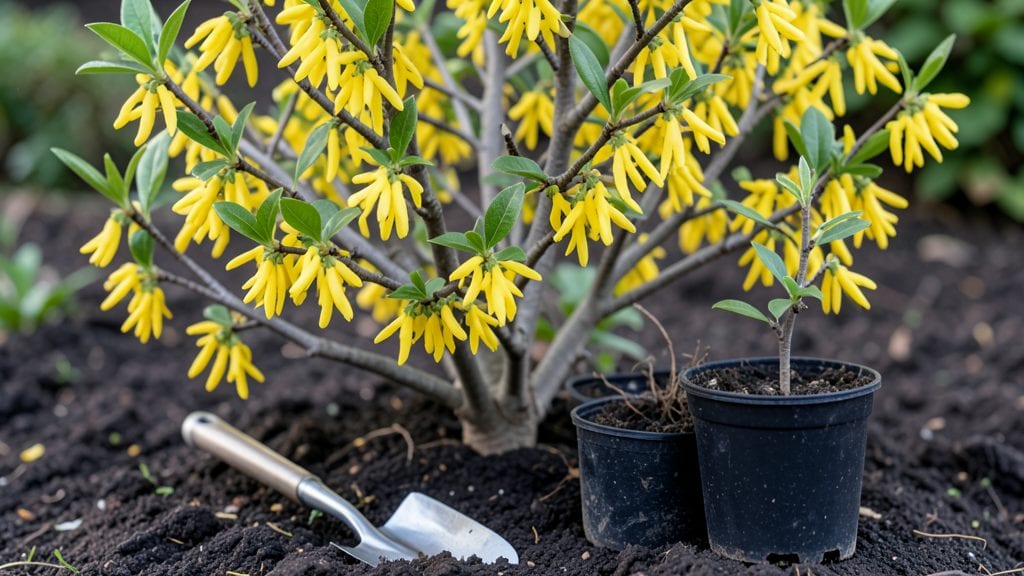
The correct forsythia planting distance—about 6 feet between shrubs—is the secret to those showstopping, fluffy yellow blooms that make neighbors do double-takes every spring. I learned this the hard way—my first two forsythias ended up competing for sunlight, resulting in sparse blooms and leggy growth.
The right distance isn’t just about looks; it’s about giving each plant room to breathe, develop strong branches, and put on a reliable bloom show year after year.
Most forsythia varieties—like the classic Forsythia x intermedia—thrive when planted 6 to 8 feet apart, but dwarf types can squeeze into 4 to 5 feet without crowding.
The key is matching spacing to your climate: in hotter zones, give them a little more room to handle the heat, while cooler regions can play it slightly tighter.
Pair this with full sun (at least 6 hours daily) and well-draining soil, and you’ve got the perfect setup for vigorous growth.
When done right, proper spacing transforms your forsythia into a bloom machine—think thick, lush canopies bursting with flowers instead of scraggly stems fighting for space.
You’ll also prune less aggressively because the plants won’t get overcrowded, and companion plants like dwarf conifers or ornamental grasses can tuck in nicely around them without stealing their spotlight. The payoff? A front yard that wakes up the neighborhood every March.
Here’s the kicker: spacing affects more than just blooms. Well-spaced forsythias resist diseases like powdery mildew better, and their roots establish deeper, making them drought-tolerant once established. If you’re working with limited space, consider container planting—just ensure the pot is at least 18 inches wide to avoid root-bound stress.
Ready to turn your shrubs into a golden-hued spectacle?
📚 In This Guide
- What you need
- Instructions
- Tips and common mistakes
- Wrapping up and next steps
What you need
- ● Forsythia shrubs: 3–6 plants (depending on desired coverage; 3–4 feet tall at planting time).
- ● Well-draining soil: Amended with compost or aged manure (5–10 gallons per plant).
- ● Organic mulch: 3–4 inches of shredded bark, pine straw, or wood chips (spread in a 2-foot radius around each plant).
- ● Slow-release fertilizer: 10–10–10 or 5–10–5 (1–2 pounds per 100 sq. ft. of planting area).
- ● Watering can or hose with a gentle spray nozzle.
- ● Gloves and knee pads (for comfort during planting!).
- ● Shovel or trowel: For digging holes (12–18 inches wide and deep).
- ● Measuring tape or string with stakes (to mark 6-foot spacing between plants).
- ● Pruning shears (to trim dead or damaged branches post-planting).
- ● Garden hose or soaker hose (for deep watering).
- ● Plant tags (to label varieties if planting multiple types).
- ● Epsom salt (1 tablespoon per hole for magnesium boost).
- ● Plant food spikes (for slow-release nutrients).
- ● Landscape fabric (to suppress weeds around mulch).
Instructions for planting forsythia with optimal spacing
Here’s how to position forsythia shrubs for maximum blooms and airflow—no guesswork involved.
Choose Planting Locations Based on Mature Size
Forsythia grows 6–12 feet wide at maturity, so spacing 6 feet apart ensures branches don’t crowd each other, which reduces airflow and invites fungal diseases. Measure between the outer edges of the root balls, not the center of the plants. If your variety leans toward the smaller end (like Forsythia ovata), you can plant 5 feet apart, but larger cultivars like Forsythia × intermedia need the full 6 feet to thrive.
I always sketch a rough layout first. Use a 12-foot tape measure to mark planting spots in a straight line or staggered pattern—this prevents future pruning headaches. Forsythia’s arching branches naturally spread, so avoid planting too close to fences or walls unless you’re okay with trimming back growth later. The goal is unobstructed sunlight on all sides for those showstopping yellow blooms.
Dig Holes Twice as Wide as the Root Ball
Use a spade or shovel to dig holes 12–18 inches wide and 12 inches deep—about twice the width and depth of the root ball. Loosen the soil at the bottom with your hands or a trowel to encourage root expansion. If your soil is heavy clay, amend the hole with 2–3 inches of compost mixed into the native soil. This improves drainage and gives roots a nutrient boost right away.
Don’t rush this step. Pressing compacted soil around the roots later will strangle new growth. I like to backfill the hole in three layers, gently tamping each one with my hands to eliminate air pockets. This ensures the root ball settles naturally without shifting. Water each layer lightly as you go—this helps the soil adhere to the roots and prevents transplant shock.
Position Plants at the Correct Depth
Place the forsythia in the hole so the top of the root ball sits 1 inch above ground level. This prevents soil from washing into the graft union (if planting a grafted variety) or smothering the stem. If the root ball is wrapped in burlap, remove it before planting—it can girdle the stem as the plant matures. Spread the roots outward gently, ensuring they’re not curled or folded.
Fill the hole with the remaining soil, pressing lightly to eliminate gaps. Water deeply until the soil 1 inch below the surface feels moist. Mulch the area with 2–3 inches of organic mulch (like shredded bark) in a 3-inch-wide ring around the base, keeping it 6 inches away from the stem. This conserves moisture and regulates soil temperature while preventing weed competition.
Water Deeply and Monitor Soil Moisture
After planting, water the forsythia once daily for the first week, then taper to twice weekly for the next month. The soil should stay evenly moist but not soggy—think of a wrung-out sponge. Overwatering suffocates roots, while underwatering stresses the plant, both of which weaken its ability to establish new growth. Use a soil moisture meter or your finger to check: stick it 2 inches deep—if it’s dry, water again.
Here’s the thing—forsythia is drought-tolerant once established, but the first year is critical. I’ve seen newly planted shrubs wilt dramatically within days if neglected. If the leaves droop slightly in the afternoon, that’s normal heat stress, but if they stay limp overnight, water immediately. By fall, your forsythia should have new shoots at the base—this means it’s rooting well and ready for winter.
Prune for Shape and Airflow in Early Spring
Wait until after flowering (usually late spring) to prune, as forsythia blooms on old wood. Remove 1–2 old stems at the base each year to encourage new growth and maintain an open center. This also improves airflow, reducing the risk of powdery mildew. Cut back any crossing branches or those growing inward to prevent a dense, tangled mess. Use clean, sharp pruners to make cuts at a 45-degree angle just above a bud or lateral branch.
I like to step back after pruning to visualize the shape. Forsythia’s natural arching habit makes it a standout, but without regular thinning, it can become leggy and sparse. If you notice bare stems or weak growth, that’s your cue to fertilize lightly in early spring with a balanced 10-10-10 formula. Too much fertilizer leads to lush foliage but fewer blooms—forsythia rewards restraint.
Tips & tricks for perfect forsythia planting distance
These spacing secrets will help you create a thriving forsythia hedge that bursts with color every spring.
Mature Size Matters: The 6-foot spacing recommendation accounts for how forsythia naturally expands over time. Measure from the outer edge of one root ball to the next—not the center—to prevent future crowding. For smaller varieties like Forsythia ovata, you can reduce spacing to 5 feet, but larger cultivars like Forsythia × intermedia absolutely need that full 6 feet to develop properly. I've seen overcrowded plantings where branches rub together, creating wounds that invite fungal diseases like powdery mildew.
Layout Planning: Before digging, sketch your planting layout using a 12-foot tape measure. A staggered pattern mimics natural growth better than a straight line and prevents future pruning nightmares. Mark planting spots with small flags or stakes to avoid misplacement. Remember, forsythia's arching branches need room to spread outward—planting too close to fences or walls means you'll be trimming back growth every year, which reduces flowering potential.
Soil Preparation: The three-layer backfilling technique in Step 2 is crucial for root establishment. Each layer should be gently tamped to eliminate air pockets while maintaining loose soil structure. When amending heavy clay soil with 2-3 inches of compost, mix it thoroughly into the native soil rather than creating a separate compost layer. This prevents root circling and encourages outward growth. I've found that adding a handful of mycorrhizal fungi to the planting hole can also give roots a helpful boost during establishment.
Watering Wisdom: After planting, the first week's daily watering is non-negotiable. Use your finger to check soil moisture 2 inches deep—if it's dry, water immediately. The key is maintaining even moisture without creating soggy conditions. I recommend watering in the morning to allow foliage to dry before evening, which helps prevent fungal issues. By fall, you should see new shoots at the base—this is your sign that roots have established properly.
Pro Tips for Forsythia Planting Distance
- These spacing secrets will help you create a thriving forsythia hedge that bursts with color every spring.
- Mature Size Matters: The 6-foot spacing recommendation accounts for how forsythia naturally expands over time.
- Layout Planning: Before digging, sketch your planting layout using a 12-foot tape measure.
Frequently asked questions
Got questions about spacing your forsythia for the best blooms? You’re in the right place!
Here are answers to the most common queries—from timing to troubleshooting—so you can plant with confidence.
What’s the ideal forsythia planting distance for a hedge?
For a dense, uniform hedge, space forsythias 4–6 feet apart. If you want a more natural, wild look, stretch it to 6–8 feet. Remember: These shrubs spread over time, so give them room to avoid overcrowding and improve airflow (which prevents disease).
Can I plant forsythia in fall or winter?
Yes! Forsythias are hardy and flexible—plant them in late fall or early winter (before the ground freezes) for strong root establishment. Avoid spring planting if possible, as it can stress the shrub. Just ensure the soil isn’t waterlogged or frozen when you dig.
What if I already planted forsythias too close together?
No worries! Prune the oldest stems back to the ground to encourage new growth from the base. Thin out crowded branches annually to improve airflow. Over time, your forsythia will recover, but blooms may be sparser until it adjusts. Patience is key!
Are there dwarf forsythia varieties that need less space?
If space is tight, try ‘Little Miss’ or ‘Northern Gold’—both stay compact (3–5 feet tall/wide). These varieties still produce vibrant blooms but thrive in 3–4 feet of spacing. Perfect for small gardens or containers!
Why aren’t my forsythias blooming well despite proper spacing?
Poor blooms often stem from over-fertilizing (especially with high nitrogen) or pruning at the wrong time. Prune right after flowering to avoid cutting off next year’s buds. Also, ensure they get full sun (6+ hours/day) and well-draining soil. A little yellowing? That’s normal—forsythias are tough!
Pro Tip:
For maximum blooms, mulch around your forsythias with 2–3 inches of organic mulch (like shredded bark) to retain moisture and regulate soil temperature. Just keep it away from the trunk to prevent rot.
Wrapping up and next steps
Planting forsythia with the right spacing—ideally 6 feet apart—sets the stage for vibrant, long-lasting blooms and a thriving shrub. Proper distance ensures airflow, sunlight, and easy maintenance while preventing overcrowding. With these secrets in hand, you’re ready to transform your yard into a cheerful springtime spectacle! 🌸
Now that you’re armed with the knowledge, grab your gloves and get planting—your future forsythia grove will thank you! For extra inspiration, explore pruning tips or companion plants to elevate your garden game.