Fertilization
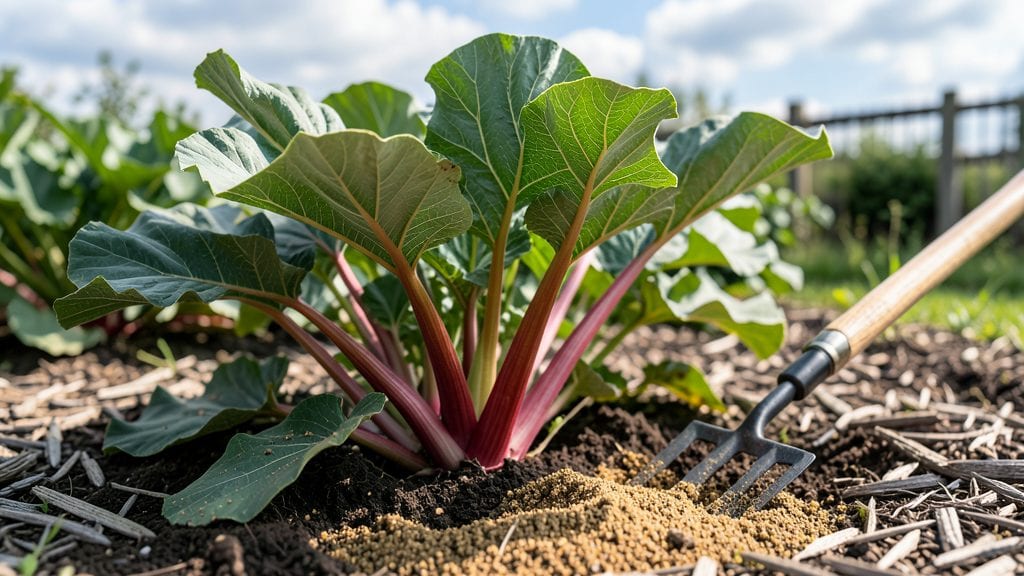
Fertilizing rhubarb plants 🍃 is the secret to unlocking those plump, tangy stalks you’ve been dreaming of—if you do it right.
Rhubarb plants reward patience with vibrant stalks and sweet-tart flavors—but only if you fertilize them just right. Too little, and growth stalls; too much, and you’ll choke the roots. I’ve seen both mistakes firsthand, and the difference is night and day.
This isn’t just about throwing down fertilizer and hoping for the best. Rhubarb thrives when you feed it the right nutrients at the right time, avoiding common pitfalls like overloading the soil or skipping critical stages.
The good news? With a few simple tweaks, you can boost your harvest by 30%—or more.
Here’s exactly when to fertilize, what to use, and how to avoid the costly mistakes that leave your plants struggling. Let’s get those stalks growing strong.
Best fertilizers for rhubarb plants: organic vs synthetic options
Rhubarb thrives with the right nutrients, but its unique growth habits demand careful fertilization. Unlike leafy greens, rhubarb needs a balanced approach to nitrogen, phosphorus, and potassium—plus micronutrients like magnesium and boron to prevent stalk deformities.
Organic options build soil health long-term, while synthetic fertilizers offer quick nutrient boosts. Let’s break down the best choices for your patch.
Start by testing your soil’s pH—rhubarb prefers 6.0 to 6.8. If your soil is too acidic, amend it with lime before fertilizing. Overly alkaline soil? Add sulfur or peat moss.
Once balanced, focus on fertilizers that support stalk development without overfeeding the leaves. Rhubarb’s deep roots mean slow nutrient uptake, so moderation is key to avoid burning delicate roots.
Organic fertilizers like compost and well-aged manure (chicken or cow) release nutrients gradually, improving soil structure over time. Synthetic options, such as 10-10-10 NPK blends, provide immediate results but require precise dosing. For micronutrients, consider Epsom salt (magnesium) or borax (boron) sparingly—too much can harm the plant.
Here’s how the top fertilizers compare for rhubarb:
| Fertilizer Type | N-P-K Ratio | Micronutrients Included | Best For | Application Rate |
|---|---|---|---|---|
| Compost | Varies (0-0-0) | Magnesium, boron | Soil health, long-term growth | 2-3 inches per plant annually |
| Well-aged manure | 1-2-1 (approx.) | Trace minerals | Early spring boost | 1 cup per plant |
| 10-10-10 NPK | 10-10-10 | None (unless micronutrient blend) | Quick stalk growth | 1 tbsp per plant |
| Fish emulsion | 5-1-1 | Calcium, magnesium | Foliar feed, weak plants | 1 tbsp per gallon water |
| Epsom salt | 0-0-0 (magnesium) | Magnesium | Preventing yellowing leaves | 1 tbsp per gallon water |
For organic gardeners, I recommend mixing compost with well-aged manure in early spring. Spread a 2-inch layer around the plant’s base, avoiding direct contact with stalks. Fish emulsion is a great foliar option if your rhubarb looks pale or stunted—spray it on leaves every 2 weeks until growth improves.
Just dilute it to 1 tbsp per gallon of water to avoid leaf burn.
Synthetic fertilizers like 10-10-10 NPK work well for quick results, but use them sparingly. Overdoing it can lead to excessive leaf growth at the expense of stalks.
If you choose synthetic, apply it in early spring and again after harvesting. Always water thoroughly after fertilizing to prevent root burn.
Don’t overlook micronutrients—rhubarb is particularly sensitive to boron deficiency, which causes hollow stalks or cracked crowns. A light dusting of borax (1/4 tsp per plant) in early spring can prevent these issues. Test your soil annually to monitor levels, especially if you’ve fertilized heavily in past years.
Pro tip: Mulch heavily with straw or shredded leaves after fertilizing. This locks in moisture, regulates soil temperature, and slows nutrient leaching. Mulch also suppresses weeds, reducing competition for nutrients your rhubarb needs to thrive.
Remember, rhubarb is a perennial, so focus on building soil fertility over time rather than quick fixes. Rotate fertilizers annually to avoid nutrient imbalances, and always follow the less-is-more rule. A well-fed rhubarb plant will reward you with bold, crisp stalks for years to come. 🌱
Step-by-step fertilizing schedule: when to feed rhubarb for maximum yield
Timing is everything when fertilizing rhubarb plants. Unlike annuals, rhubarb thrives on a gentle, seasonal approach—overfeeding in the wrong season can stunt growth or even kill your plants. The key is feeding when the plant is actively growing but avoiding heavy doses during dormancy.
For maximum yield, focus on two critical windows: early spring and late summer. This schedule aligns with rhubarb’s natural growth cycles, ensuring your plants build strong roots and produce vibrant, plump stalks.
Rhubarb’s deep roots mean they benefit from slow-release nutrients rather than quick fixes. Organic options like compost or well-aged manure release nutrients gradually, while synthetic balanced fertilizers (10-10-10) provide immediate but controlled boosts.
The goal is to mimic nature—feeding lightly when growth resumes in spring and tapering off as temperatures rise. This prevents nutrient burn and encourages the plant to focus energy on stalk production rather than leafy foliage.
- Early Spring (March-April): Apply 1 tbsp of 10-10-10 fertilizer or compost around the base when new shoots emerge. This kickstarts growth after winter dormancy. Water thoroughly after application to help nutrients penetrate the soil.
- Late Spring (May): Lightly top-dress with compost or aged manure to replenish nutrients. Avoid synthetic fertilizers—rhubarb can become leafy and weak if overfed during peak stalk production.
- Summer (June-August): Skip fertilization entirely. Rhubarb enters a maintenance phase; feeding now encourages foliage over stalks. Focus on mulching to retain moisture and regulate soil temperature.
- Early Fall (September): Apply a final light feeding of compost or a low-nitrogen fertilizer (5-10-10) to strengthen roots before dormancy. This prepares the plant for winter without stimulating late-season growth.
- Winter (October-February): No fertilization needed. Rhubarb is dormant; feeding can damage roots or attract pests. Use this time to test soil pH (ideal: 6.0-6.8) and plan next year’s schedule.
Application method matters just as much as timing. For established rhubarb plants, I recommend top-dressing—sprinkling fertilizer or compost around the base, then gently working it into the top 1-2 inches of soil. Avoid piling fertilizer directly on the crown, as this can cause root damage.
For young plants (first year), reduce the dose by half to prevent stress. Always water after applying to help nutrients reach the roots.
Watch your rhubarb’s growth cues to fine-tune your schedule. If stalks are thin or leggy, a light spring feeding may be needed. Conversely, if leaves turn yellow or crispy, you’ve overdone it—flush the soil with water and pause fertilization for a month.
The goal is consistent, moderate feeding that aligns with the plant’s natural rhythm, not a one-size-fits-all approach.
Pro tip: Pair fertilization with regular mulching using straw or shredded leaves. This retains moisture, regulates soil temperature, and slowly releases nutrients as it breaks down. Over time, this reduces reliance on synthetic fertilizers while keeping your rhubarb patch lush and productive. Think of mulch as nature’s slow-release fertilizer!
Remember, rhubarb is a perennial powerhouse—with the right feeding schedule, it can thrive for decades. By following this seasonal rhythm, you’ll enjoy bountiful harvests year after year, with minimal effort and maximum reward. Happy gardening!